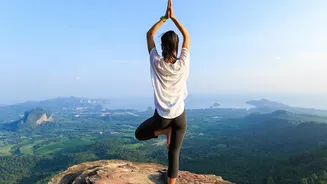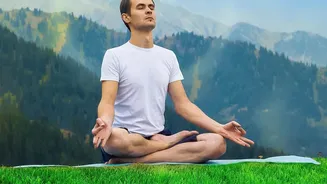


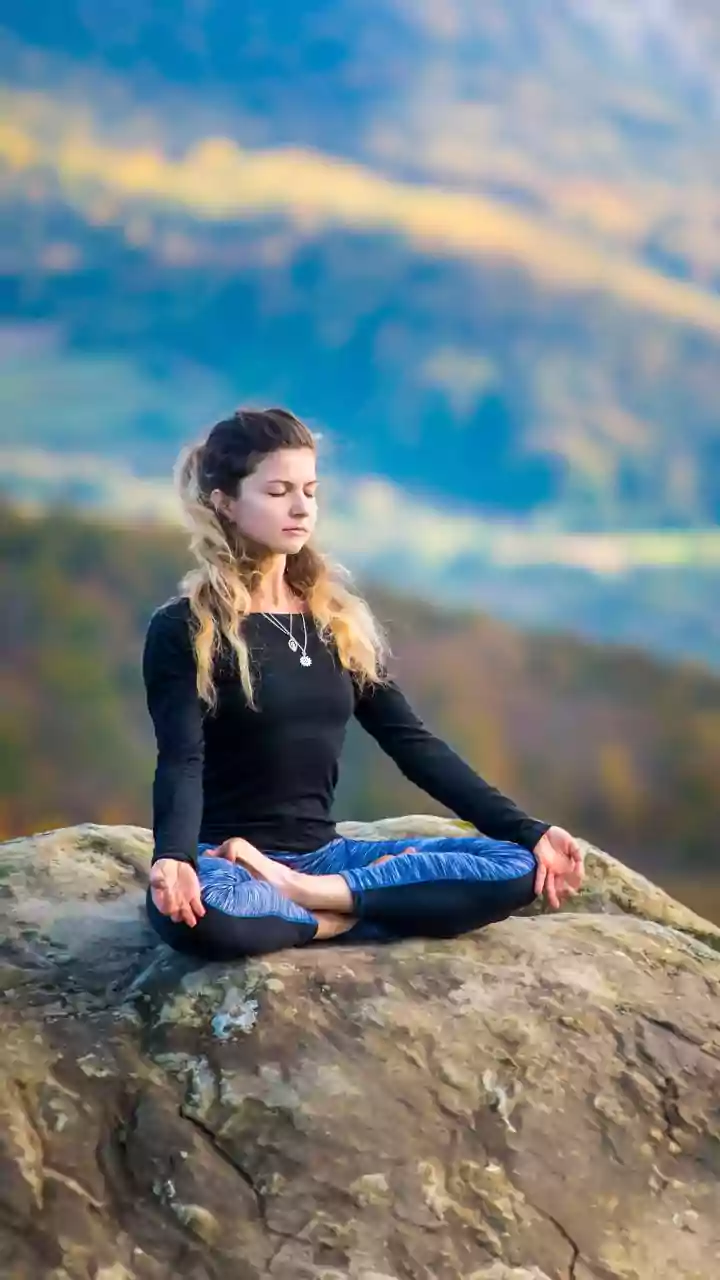
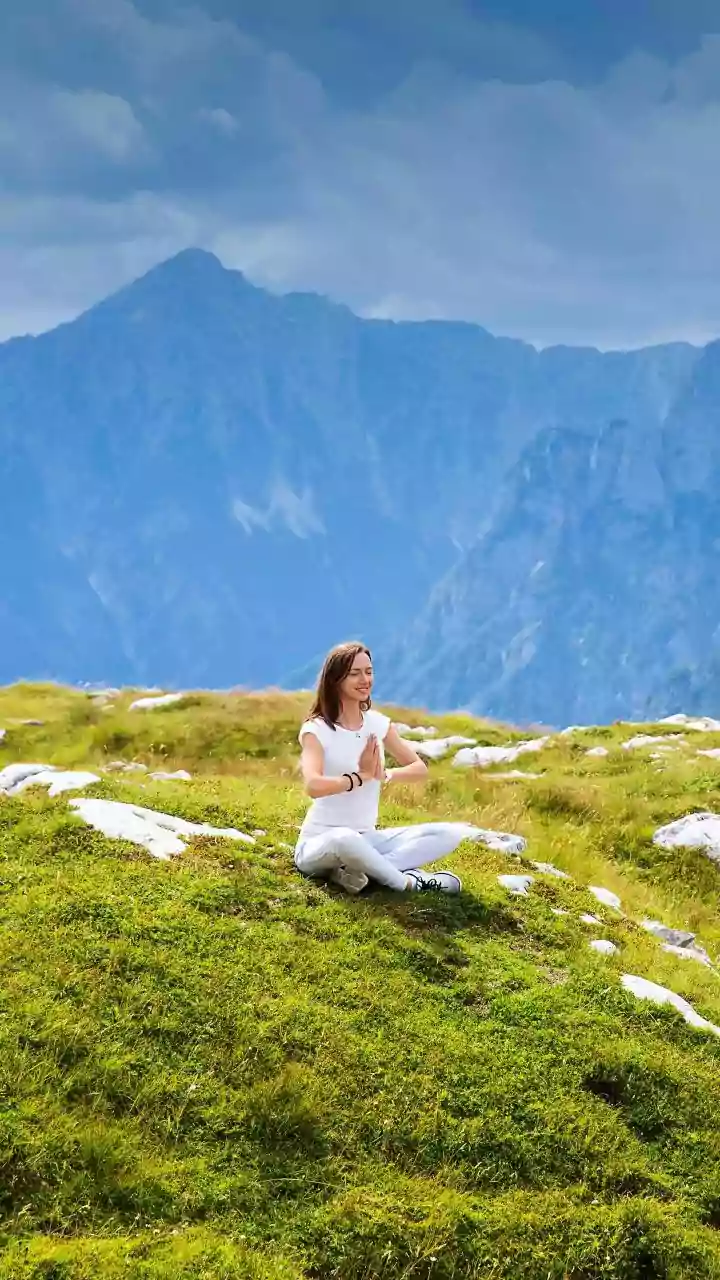


From boutique studios in Mumbai to crowded parks in New York, yoga is everywhere. But behind the stretchy pants and colourful mats lies a rich, 5,000-year-old history that traces back to ancient India. This is the story of its transformation.
The Dawn of Yoga
The story
of yoga begins thousands of years ago in ancient India. While its precise origins are shrouded in antiquity, the earliest mentions of yoga-like practices can be found in the Rig Veda, one of the oldest sacred texts in the world. These early references were not about physical postures, but about yoking the mind and spirit for discipline and spiritual insight. In yogic lore, Lord Shiva is often revered as the 'Adiyogi' or the first yogi, who imparted his knowledge to seven great sages. Archaeological findings from the Indus-Saraswati Valley civilization, some dating back to 2700 BCE, depict figures in meditative poses, suggesting that the core ideas of stillness and focus were present from the very beginning.
The Classical Era and Patanjali's Sutras
The classical period, from around 500 BCE to 800 CE, is arguably the most significant in yoga's history. During this time, the sage Patanjali compiled the Yoga Sutras, a collection of 196 short verses that systemized the practice and philosophy of yoga. The Sutras are not a guide to physical postures; in fact, asana is only mentioned a handful of times. Instead, they offer a profound roadmap for the human mind. Patanjali defines yoga as 'the cessation of the fluctuations of the mind'. He outlines the famous 'eight-limbed path' of Ashtanga yoga, which includes ethical principles (yama), personal observances (niyama), physical postures (asana), breath control (pranayama), withdrawal of the senses (pratyahara), concentration (dharana), meditation (dhyana), and finally, enlightenment (samadhi). This text remains the foundational philosophical manual for nearly all forms of yoga practiced today.
The Shift Towards the Physical
In the post-classical period, from roughly 800 to 1700 AD, a new school of thought began to emerge that placed greater emphasis on the physical body as a vehicle for enlightenment. This led to the development of Hatha yoga. Unlike the Raja yoga of Patanjali, which focused primarily on meditation, Hatha yoga traditions explored physical purification techniques and postures (asanas) as a means to control the body and, by extension, the mind. Texts like the 'Hatha Yoga Pradipika' detailed various asanas and breathing exercises designed to awaken spiritual energy. This era laid the groundwork for the physical practice that many people associate with yoga today, seeing the body not as a distraction but as an essential tool on the spiritual path.
A Bridge to the Western World
For centuries, yoga remained a practice largely confined to India. That began to change in the late 19th century, thanks to one pivotal figure: Swami Vivekananda. In 1893, the charismatic monk travelled to Chicago to speak at the Parliament of the World's Religions. He did not teach a single asana. Instead, he introduced the West to the philosophical depths of Vedanta and Raja Yoga, emphasizing concepts of universal religion, self-realization, and meditation. His eloquence and universal message captivated the American audience, sparking a wave of interest in Eastern spirituality. Vivekananda opened the door, creating the first significant bridge for yogic philosophy to cross from India to the West.
The Father of Modern Postural Yoga
While Vivekananda introduced the philosophy, another master is credited with shaping the physical yoga we know today. Tirumalai Krishnamacharya, often called 'the father of modern yoga', was a brilliant scholar and teacher in 20th-century India. Though he never travelled abroad, his influence was immense. At his school in the Mysore Palace, he developed a dynamic and structured approach to asana practice, adapting sequences for the individual needs of his students. Prior to his era, the emphasis on asana was much smaller within the broader yogic tradition. Krishnamacharya's major contribution was systematizing a physically dynamic approach and combining postures with breath (vinyasa). His teachings live on through his most famous students, including B.K.S. Iyengar, who pioneered the use of props and precise alignment, and K. Pattabhi Jois, who developed the vigorous Ashtanga Vinyasa system.
A Global Lifestyle Movement
In the decades since Krishnamacharya's students began teaching, yoga has exploded into a global phenomenon. It has transformed from an esoteric spiritual discipline into a mainstream lifestyle and wellness industry, embraced for its physical benefits like flexibility and strength, as well as its capacity for stress reduction and mindfulness. This evolution has seen countless new styles emerge, from Hot Yoga to Flow Yoga, each adapting the ancient practice for a modern audience. While some purists worry that the spiritual essence has been diluted, others see this adaptability as yoga's greatest strength. Its core principle, the union of mind, body, and spirit, remains a timeless pursuit that continues to resonate with millions around the world, proving its enduring power across cultures and generations.