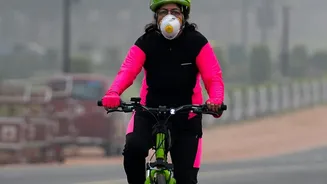




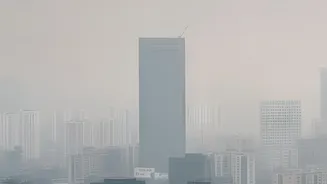


For fitness enthusiasts in India, the drive to push harder is constant. But what if your biggest opponent isn't on the track, but in the air you breathe? Rising air pollution poses an invisible threat, triggering a cascade of inflammation.
The Unseen Adversary in Every Breath
When you exercise,
your breathing rate increases, and you tend to inhale more deeply and through your mouth. This means you take in a much larger volume of air—and any pollutants it contains. While at rest you might inhale 6 litres of air per minute, this can jump to over 90 litres during a high-intensity workout. This amplifies your exposure to a cocktail of harmful substances commonly found in urban Indian air, such as fine particulate matter (PM2.5), nitrogen dioxide (NO₂), and ground-level ozone (O₃). These pollutants bypass your nasal passages, which normally filter some particles, and travel deep into your lungs.
How Pollution Sparks Inflammation
Think of inflammation as your body's defence mechanism. But when triggered by constant exposure to pollutants, this defence goes into overdrive. Tiny PM2.5 particles are small enough to penetrate deep into lung tissue and even enter the bloodstream. Once there, they are treated as foreign invaders, triggering an inflammatory response. Your body releases inflammatory markers like interleukins, and studies show these are elevated in athletes after exercising in polluted conditions. This isn't just a localized issue in the lungs; it becomes a systemic, body-wide state of low-grade inflammation that can hinder recovery and overall physiological function.
From Inflammation to Performance Slump
This state of chronic inflammation has tangible effects on athletic performance. Athletes often report that exercise feels harder in polluted air. Symptoms can include coughing, wheezing, a tight chest, and unusual fatigue. Internally, the impacts are significant. Inflammation can lead to reduced lung function, making it harder to breathe efficiently. It can also place extra strain on the cardiovascular system, with some studies showing increased blood pressure and lower heart rate variability (HRV) after exposure. Research on marathon runners has even linked higher levels of pollutants like nitrogen dioxide to slower finishing times. Recovery is also compromised, as inflammation slows down the muscle repair process.
Training Smarter in Polluted Environments
Avoiding outdoor exercise entirely isn't always the answer, as the benefits of physical activity are significant. The key is to exercise strategically. Before heading out, always check the local Air Quality Index (AQI). In India, an AQI above 150 is generally considered unhealthy for prolonged exertion. On days with poor air quality, consider moving your workout indoors. If you do exercise outside, try to avoid peak traffic hours and areas with heavy congestion. Choosing parks or quieter streets can significantly reduce your exposure. Some experts also suggest that a diet rich in antioxidants may help combat the oxidative stress caused by pollution. For those with pre-existing conditions like asthma, extra caution is essential, and on days with very poor air quality, staying indoors is the safest bet.