

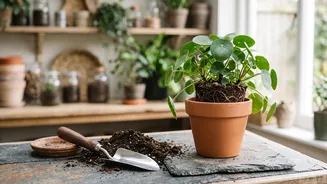
Is It Time for a New Home?
Before you get your hands dirty, it's crucial to confirm your plant actually needs a new pot. Repotting every 12 to 18 months is a general rule, but specific signs are more reliable indicators. Look for roots growing through the drainage holes or becoming
visible on the soil's surface. Another key sign is slowed or stunted growth, where your plant isn't producing new leaves despite getting proper care. If you find yourself watering more frequently because the soil dries out almost immediately, it’s a strong hint that the root system has become too dense for the pot.
Gather Your Tools and Soil
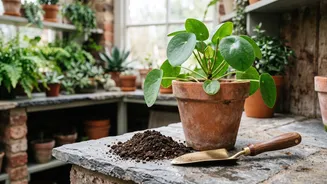
Preparation prevents panic. Having everything ready makes the process smooth and reduces stress on both you and your plant. You'll need a new pot, fresh potting mix, and possibly some sterilized shears. When choosing a new pot, select one that is only 1 to 2 inches wider in diameter than the current one. A pot that's too large can hold excess moisture, leading to root rot. Ensure the new pot has drainage holes. For soil, never use garden soil, which is too dense for containers and can suffocate roots. A quality indoor potting mix is essential, as it’s designed to provide the right balance of aeration and moisture retention.
Choosing the Right Potting Mix
Not all potting mixes are created equal. While a general-purpose mix works for many houseplants, some plants have specific needs. Cacti and succulents, for example, require a special mix with extra drainage. Epiphytic plants like many orchids and Hoyas thrive in a mix containing bark or extra perlite to ensure their roots get plenty of air. A good quality potting mix for most foliage plants is often a blend of peat moss or coconut coir for moisture, perlite or vermiculite for drainage and aeration, and compost for nutrients. Using the wrong soil is a common repotting mistake that can negate all your other efforts.
The Gentle Removal Process
To minimize shock, water your plant thoroughly a day or two before you plan to repot it. Moist soil holds together better and makes the roots more flexible and less prone to breaking. To remove the plant, turn the pot on its side and gently squeeze or tap the container to loosen the soil. Support the base of the plant and the soil surface with one hand, and slide the pot off with the other. Never pull a plant out by its stem, as this can cause severe damage.
Inspect and Loosen the Roots
Once the plant is out, examine the root ball. Healthy roots are typically firm and light-colored. If you see brown, mushy, or smelly roots, this is a sign of root rot; trim these away with your sterilized shears. If the plant is 'root-bound'—meaning the roots are a dense, circling mass—it’s important to gently loosen them with your fingers. This encourages the roots to grow outwards into the new soil rather than continuing to strangle themselves. Don't be afraid to break a few tiny roots; most plants can handle it, but be gentle and avoid tearing major ones.
Settling Into the New Pot
Add a layer of fresh potting mix to the bottom of the new pot. Place your plant in the center, ensuring the top of the root ball sits about an inch below the rim of the pot to leave room for watering. The plant should be at the same depth it was in its original pot; burying the stem can lead to rot. Fill in the space around the root ball with new soil, gently firming it down to eliminate large air pockets without compacting it too tightly. Roots need oxygen as well as water.
Essential Aftercare
After settling your plant, give it a thorough watering until water runs from the drainage holes. This helps the new soil settle around the roots. It's normal for a plant to show minor signs of stress, like wilting, for a few days after repotting. Place it back in the same lighting conditions it was used to, as changing its location at the same time can add to the shock. Hold off on fertilizing for at least a month; the fresh potting mix has plenty of nutrients, and you want to give the roots time to heal and establish themselves before encouraging new growth.