








From Passive Looking to Active Seeing
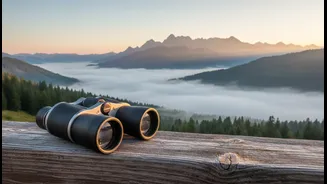
A weekend trip can easily become a checklist of sights. We snap a photo of a mountain range, glance at a historic building, and move on. Binoculars fundamentally change this dynamic. By raising them to your eyes, you are making a conscious decision to stop
and focus. This simple action transforms you from a passive tourist into an active observer. Instead of just seeing ‘a bird,’ you see the intricate pattern of its feathers. Instead of just ‘a building,’ you notice the weathered face of a gargoyle perched five storeys up. This deliberate act of focusing slows down your pace and encourages mindfulness, pulling you into the present moment and fostering a deeper connection to your surroundings. It’s a shift from consuming a view to truly engaging with it.
Unlock a Hidden World of Nature
The most obvious use for binoculars is in the great outdoors, but their effect is more than just making distant things appear closer. On a hike, they can reveal a herd of deer on a faraway ridge you would have otherwise missed. At the coast, what looks like a bobbing shape on the horizon becomes a pod of dolphins at play. Birdwatching is perhaps the most accessible entry point. You don’t need to be an expert to appreciate the flash of colour from a songbird in a treetop. Binoculars invite you into the quiet, often-unseen drama of the natural world that is constantly happening around us. This act of seeking and finding adds a layer of playful discovery to any outdoor excursion, making it more of an adventure.
Discover the Details in the Cityscape
It’s a common misconception that binoculars are only for nature lovers. They are a surprisingly powerful tool for urban exploration. Stand in the middle of a bustling city square and use them to appreciate the intricate architectural details high above street level that go unnoticed by the crowds. Admire the ceiling frescoes in a grand cathedral or the clock face on a historic tower as if you were standing right next to them. From a cafe window, you can observe the theatre of daily life from a respectful distance. A city trip, which can often feel overwhelming, becomes a detailed treasure hunt, revealing layers of history, art, and human activity that are hidden in plain sight.
An Accessible Window to the Cosmos
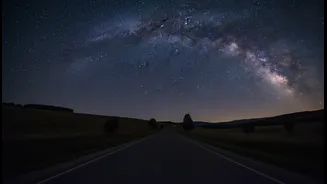
When night falls, the utility of your binoculars doesn't end. They are an excellent and accessible tool for beginner stargazing, often more user-friendly than a telescope. While a telescope focuses on a tiny patch of sky, binoculars offer a wide field of view, making it easier to scan the constellations and get your bearings. On a clear night, away from city lights, you can see the craters of the moon in sharp relief, spot the four Galilean moons orbiting Jupiter, and resolve fuzzy patches of light into sparkling star clusters. It’s a humbling and awe-inspiring way to end a day of exploration, connecting you not just to the place you’re visiting, but to the universe itself.
Choosing Your Travel Companion
You don't need a powerful, heavy, or expensive pair of binoculars for travel. In fact, compact and lightweight models are ideal. When choosing, you’ll see numbers like 8x42 or 10x25. The first number is the magnification (how many times closer an object appears), and the second is the diameter of the main lenses in millimetres (which affects brightness). For general travel, a magnification between 7x and 10x is perfect. An 8x magnification offers a stable image and a wide field of view, making it easy to find and track subjects. Look for a pair that feels comfortable to hold and isn't a burden to carry in a daypack. The best binoculars are the ones you actually bring with you.