







Why the Sudden Move?
The timing of this decision is directly linked to the festive calendar, which sees a significant spike in household sugar consumption for making traditional sweets and delicacies. In recent months, concerns over hoarding and speculative trading have grown,
contributing to a rise in sugar prices despite adequate national supplies. The government's intervention is a pre-emptive strike against artificial scarcity and price gouging, aiming to ensure that sugar remains affordable and accessible for everyone during high-demand periods like Diwali. Authorities reported finding instances of excess holding and other irregularities during physical verification of stocks, prompting the need for stricter controls.
Understanding the New Rules
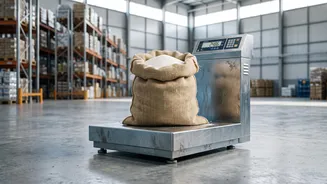
The Department of Food and Public Distribution has progressively tightened the rules. Initially, in August, the stock limit for dealers was set at 4,000 quintals. This was then halved to 2,000 quintals from September 15. The latest and strictest order, effective from October 15 until November 30, 2026, brings the limit down to 1,000 quintals for most parts of the country. Additionally, traders are not allowed to hold any stock for more than 15 days from the date of receipt. An exception has been made for Kolkata and its surrounding metropolitan areas, as well as the state of Assam, where the limit is 2,000 quintals to account for their role as distribution hubs for the eastern and northeastern regions.
How Will This Affect Your Wallet?
The primary goal of these stock limits is to cool down retail prices. By forcing a steady flow of sugar from mills to the market, the government prevents traders from holding back stock to create artificial price hikes. According to the Food Ministry, retail prices have already fallen by about 15% from their peak in August, and this move is expected to bring them down further. For the average consumer, this should mean more stable, if not lower, prices at the local kirana store. The government expects the benefits of lower ex-mill prices—the price at which mills sell to bulk buyers—to be passed on to consumers more quickly.
The Bigger Picture for Sugar
While this policy addresses immediate price concerns, the broader outlook for sugar is mixed. The United States Department of Agriculture (USDA) has forecast that India's sugar production for the 2026-27 marketing year may decline to 29.5 million metric tonnes due to erratic rainfall and pest issues in key states like Maharashtra and Karnataka. This projected output is slightly less than the country's estimated consumption of around 30.8 million tonnes. However, the government has taken other steps to secure domestic supply, including restricting the diversion of sugarcane for ethanol production, which is expected to improve availability for consumption. Therefore, the current stock limits are less about a real shortage and more about managing the flow of available supply efficiently.
A Familiar Government Playbook
Imposing stock limits on essential commodities is a standard tool in the Indian government's arsenal to manage inflation. Similar measures have been used in the past for other staples like onions, wheat, and pulses whenever there is a threat of runaway prices due to hoarding or supply chain bottlenecks. The move is based on the Essential Commodities Act, which empowers the government to regulate the production, supply, and distribution of items deemed essential to prevent practices detrimental to consumer interests. This action serves as a strong signal to the market that the market that the government is actively monitoring prices and will intervene to protect consumers, especially during sensitive periods like the festive season.