


The Challenge of Balcony Watering
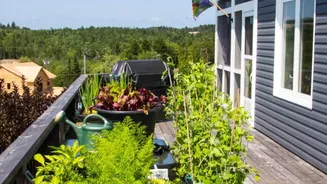
Urban gardening in containers presents a unique set of challenges compared to planting in the ground. Potting soil dries out much faster than garden soil, especially on a sunny or windy balcony. At the same time, pots without adequate drainage can easily
become waterlogged, leading to root rot, one of the most common killers of container plants. Different plants have different needs, and a one-size-fits-all watering schedule often fails. A tiny pot of basil will have a thirstier schedule than a large succulent. This constant monitoring can feel like a full-time job, turning a relaxing hobby into a source of anxiety. Guessing when to water based on the soil's surface appearance can be misleading, as the soil deeper down at the root level may still be perfectly moist or completely dry.
What Are Micro-Engineered Sensors?
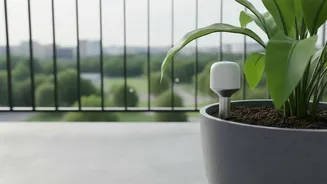
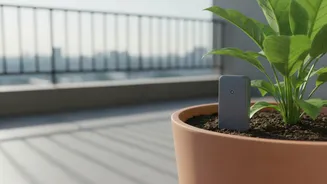
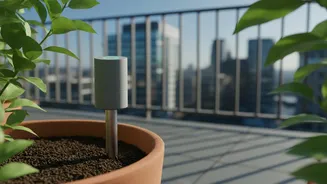
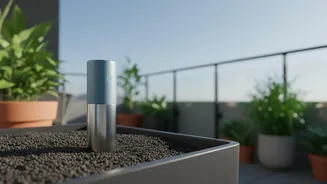
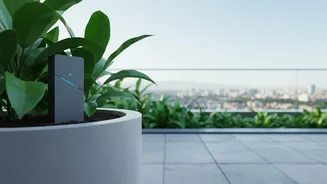
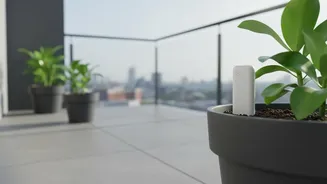
Enter the soil moisture sensor, a tool designed to give you an accurate reading of what’s happening beneath the surface. While these have been used in large-scale agriculture for years, modern "micro-engineered" versions are smaller, smarter, and specifically designed for home gardeners. These are not the simple, often inaccurate analog probes of the past. Today’s sensors are typically slim, wireless devices you insert into the soil. They use technologies like capacitive sensing to measure the soil’s ability to store an electrical charge, which is directly related to its water content. This method is far more precise than older resistive models and is less affected by salt or pH levels in the soil, providing a more reliable picture of your plant’s environment.
Precision Data at Your Fingertips
The magic of these modern sensors lies in the data they provide. Instead of a vague "wet" or "dry" reading, many smart sensors connect wirelessly to an app on your smartphone. This allows you to see the exact moisture percentage in your soil in real time. You can track trends over days or weeks, learning exactly how quickly your pots dry out after watering. Many apps come with vast plant databases, allowing you to select your specific plant—be it a tomato, a petunia, or a fiddle-leaf fig—and receive customized watering recommendations based on its known needs. This removes all ambiguity. The app can send you a notification when the moisture level drops below the optimal threshold for that particular plant, essentially telling you, "It's time to water your lavender!".
Benefits Beyond Just Watering
The primary benefit is preventing over- and underwatering, leading to healthier roots and more vibrant plants. But the advantages don't stop there. By watering only when necessary, you conserve water—a significant benefit in urban areas. Furthermore, many advanced sensors are multi-functional, also measuring other critical factors for plant health. They can monitor sunlight exposure, telling you if your plant is getting too much harsh afternoon sun or not enough light to thrive. Some track soil temperature and even the level of nutrients or fertilizer in the soil, measured via electrical conductivity (EC). This holistic view empowers you to make small adjustments that can have a huge impact on your plant's overall well-being.
Choosing the Right Sensor for You
When selecting a sensor, consider a few key factors. First, check the probe length to ensure it's appropriate for your pot sizes; you want the sensor to measure moisture in the plant's active root zone. For most potted plants, a probe that reaches 5-15 cm deep is sufficient. Also, evaluate the power source and battery life, as you don't want the inconvenience of frequent changes. Look at the app's interface and features. Is it user-friendly? Does it support the plants you grow? Some brands offer multi-packs, allowing you to monitor several plants in different pots independently. While some sensors simply display data, others can integrate with smart watering systems for a fully automated setup. For most balcony gardeners, a reliable, easy-to-use sensor with a good companion app is the perfect starting point.