




A Crucial Safety Drill in the Sky
The Indian Space Research Organisation (ISRO) is meticulously piecing together the complex puzzle of human spaceflight, and the latest piece to be validated involves the all-important Crew Escape System (CES). The headline test focuses on the systems
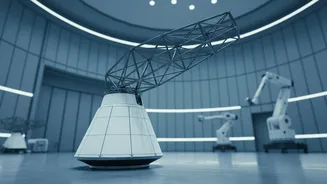
that would separate the crew module from the main rocket in a high-altitude emergency. Think of it as a highly sophisticated ejector seat for a space capsule. In the unlikely event of a rocket malfunction during ascent, the CES is designed to fire powerful, quick-acting solid motors that pull the capsule and its crew away from danger at lightning speed. This system is non-negotiable for a human-rated mission; ensuring it works flawlessly is paramount before any astronaut boards the rocket. Every test, from the ground up, is about building confidence in the vehicle's ability to protect its precious human cargo.
Simulating a High-Stakes Scenario
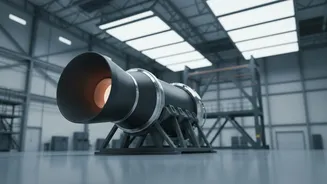
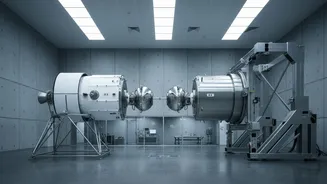
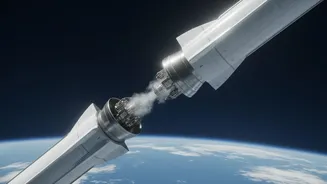
The recent tests are part of a long series of validation exercises designed to prove the reliability of every component. These tests often simulate worst-case scenarios to push the systems beyond their expected operational limits. For a motor separation test, this involves firing the actual motors that would be used in an abort. Engineers measure the thrust, the quickness of ignition, and the cleanliness of the separation. A successful test, like the recent ones for Gaganyaan, demonstrates that the pyrotechnic devices fire exactly as commanded and that the crew module can be jettisoned without any issue. This process has included multiple stages, from Pad Abort Tests (simulating an emergency on the launchpad) to in-flight abort tests at various altitudes and speeds, which are designed to qualify the system across the entire ascent phase.
The Technology of a Safe Escape
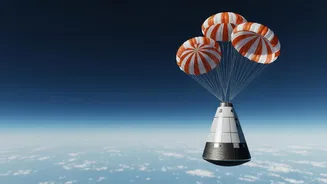
The Crew Escape System for Gaganyaan is a marvel of engineering, comprising several types of solid motors. These include the High Altitude Escape Motor (HEM) and Low Altitude Escape Motor (LEM), which are responsible for pulling the crew module away with immense force. The system must not only separate the module but also steer it onto a safe trajectory away from the failing launch vehicle. Once at a safe distance, another set of procedures takes over. The escape motors are jettisoned, and a complex sequence of parachutes is deployed to slow the capsule's descent. This multi-stage parachute system, which includes drogue and main parachutes, is designed to reduce the capsule's speed from hundreds of kilometers per hour to a gentle splashdown velocity, ensuring the crew lands safely in the ocean.
Building a 'Human-Rated' Rocket
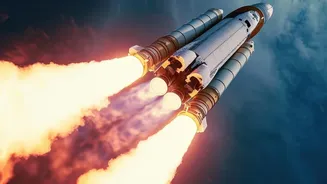
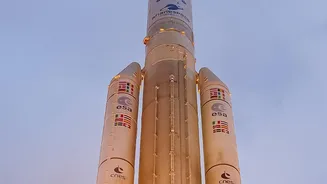
The term 'human-rated' is central to the Gaganyaan programme. It means that every system, from the LVM3 launch vehicle (re-designated HLVM3 for the human mission) to the smallest bolt on the crew capsule, has been designed, tested, and validated to the highest possible standards of safety and reliability. Unlike a satellite launch, where a failure results in the loss of equipment, a human mission has zero room for error. This is why ISRO's approach is one of methodical, incremental progress. According to recent updates provided to Parliament, ISRO has completed major development and testing milestones for propulsion, structures, life-support, and safety systems, including the static testing of all five motor types for the Crew Escape System.
The Path to India's Manned Mission
These successful tests clear important hurdles on the path to the first uncrewed Gaganyaan flight, a critical precursor to the main event. This uncrewed mission will test the entire system in a real-world space environment, from launch and orbit to re-entry and splashdown, with a humanoid robot named 'Vyommitra' on board to monitor vehicle performance. Following the uncrewed flights, the four astronaut-designates, all decorated Indian Air Force pilots, will undertake India's first crewed mission. Each successful test, from the separation of an umbilical cord to the firing of an escape motor, brings India one step closer to joining the elite club of nations—the US, Russia, and China—that have independently sent their citizens into space.