


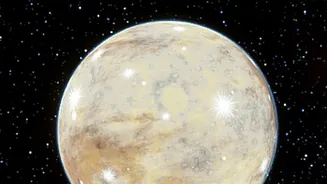

An Ocean World in Deep Space
Why travel 2.9 billion kilometres to a frozen moon? Because beneath its icy shell, Europa is thought to hide a colossal secret: a global ocean of liquid saltwater containing more than twice the water in all of Earth's oceans combined. For decades, scientists
have gathered evidence pointing to this hidden sea, making Europa one of the most compelling places in our solar system to search for habitable environments beyond Earth. The key ingredients for life as we know it—water, chemistry, and energy—may all be present. The moon's constant stretching and squeezing from Jupiter's immense gravity generates tidal heat, keeping the ocean liquid and possibly powering hydrothermal vents on the seafloor, similar to those on Earth that teem with life.
The Clipper's Toolkit for Discovery
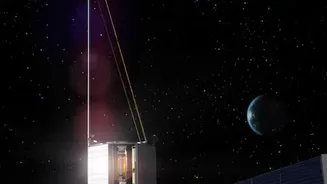
Launched in October 2024, the Europa Clipper is not designed to find life directly, but rather to be a robotic detective searching for clues of habitability. To do this, it carries a sophisticated suite of nine scientific instruments. An ice-penetrating radar will map the thickness of the ice shell and search for pockets of water trapped within it. A magnetometer will measure the magnetic field around Europa, which will help confirm the existence of the ocean and even tell us about its depth and saltiness. Cameras and spectrometers will capture high-resolution images of the moon's chaotic, cracked surface and analyze its composition, looking for salts and organic molecules that might have seeped up from the ocean below.
A Long and Winding Road
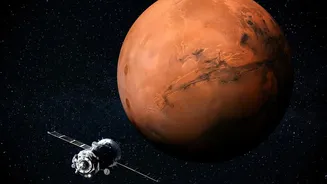
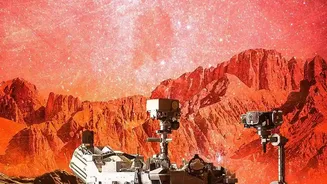
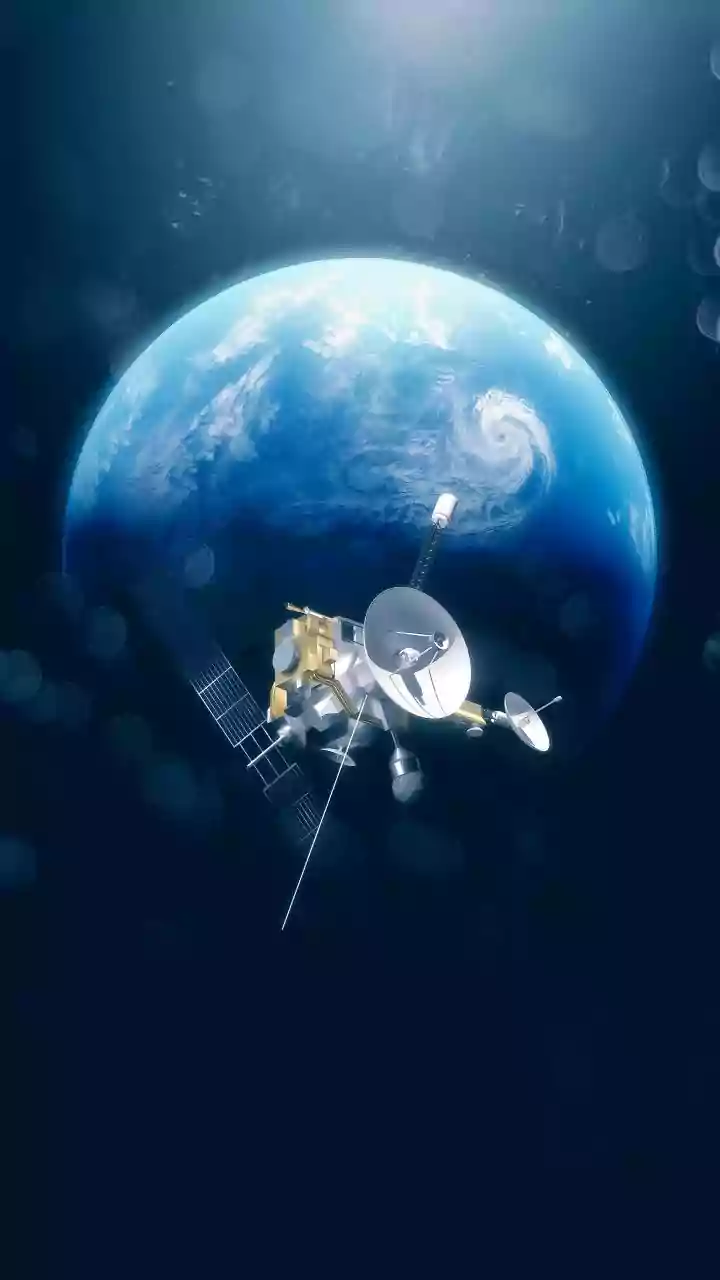
Getting to Jupiter is no simple task. As of August 2026, the Clipper is well into its five-and-a-half-year journey. To gain the incredible speed needed to reach the outer solar system, the spacecraft is performing a series of gravity-assist flybys. After a pass by Mars in 2025, it is now heading back toward home for a final gravitational slingshot from Earth in December 2026. This flyby will provide the last major push, flinging the spacecraft onto its final trajectory toward Jupiter. It is scheduled to arrive in the Jupiter system in April 2030, where it will begin its detailed scientific investigation.
Dancing with a Dangerous Giant
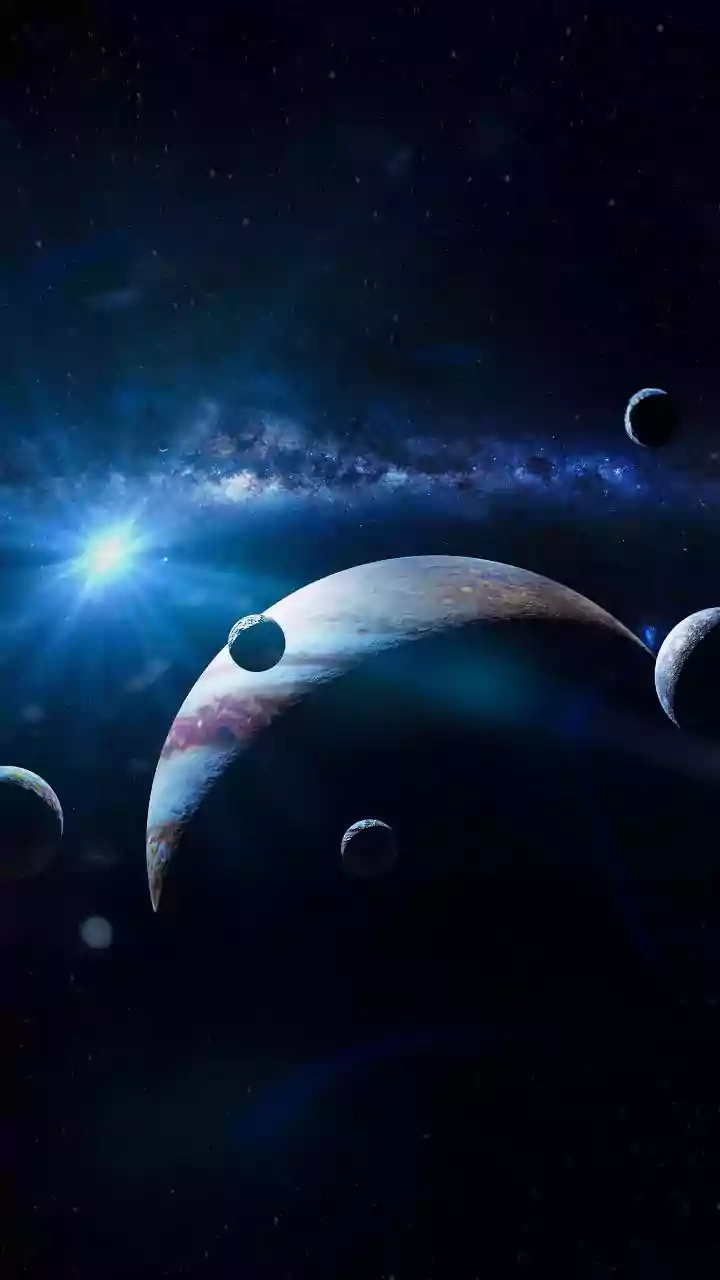
Once it arrives, the Clipper won't orbit Europa directly. Jupiter is surrounded by intense radiation belts that would quickly destroy the spacecraft's electronics. Instead, it will enter a long, looping orbit around Jupiter and perform dozens of close, high-speed flybys of Europa—some as low as 25 kilometres above the surface. This 'clipper' strategy allows the spacecraft to gather immense amounts of data during each pass before retreating to the comparative safety of a wider orbit. Over nearly four years, these 49 planned flybys will allow scientists to scan almost the entire moon, building a comprehensive picture of this mysterious world and its potential to harbor life.
What Success Looks Like
Success for Europa Clipper isn't about finding little green men. It's about answering fundamental questions. Does a liquid water ocean truly exist, and how does it interact with the ice shell and the rocky seafloor? Are there chemical nutrients and energy sources available? The mission will also keep an eye out for one of the most exciting possibilities: plumes of water vapor that may be erupting from the ocean into space. Flying through and sampling one of these plumes would offer a direct taste of the ocean's chemistry without having to drill through miles of ice. Finding the right conditions would make Europa an even higher priority for future missions, perhaps one day sending a lander to search for life itself.