


From Ancient Courts to Viral Videos
The use of rice water is far from new. For centuries, women across Asia have used the starchy liquid left after rinsing rice for cooking. Historical accounts trace the practice back to the Heian period in Japan (794–1185 AD), where court ladies were known
for their floor-length hair, believed to be maintained with daily rice water rinses. In China, the Yao women of Huangluo village, famous for their exceptionally long and healthy hair, also credit fermented rice water as a central part of their hair care ritual. This practice wasn't a luxury but a humble, everyday act of self-care passed down through generations, using a simple byproduct from the kitchen. Now, social media has revived this tradition, transforming it into a global wellness phenomenon.
The Science of a Simple Soak
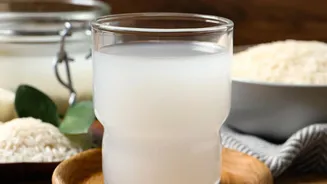
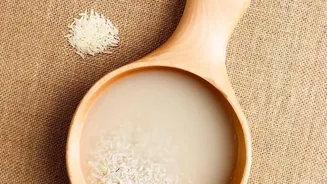
So, what's actually in rice water? The liquid contains starches, amino acids, B vitamins, vitamin E, and minerals. It also contains inositol, a carbohydrate that has been shown to help reinforce the hair cuticle and reduce friction. The process of fermentation is said to enhance these benefits. Fermentation lowers the liquid’s pH to be closer to that of healthy hair and scalp, which helps seal the hair cuticle, leading to increased shine and reduced frizz. The process may also make the nutrients more bioavailable, meaning they are more easily absorbed by the hair and skin. Some proponents claim fermentation creates 'Pitera', a substance lauded for promoting cell regeneration.
Beauty Claims vs. Clinical Reality
The biggest claim made by wellness creators is that fermented rice water makes hair grow faster. While the anecdotal evidence from traditions like the Yao women is compelling, there are currently no clinical studies that prove rice water stimulates new hair growth from the follicle. Experts suggest that the visible results are more likely due to length retention. The nutrients in rice water may strengthen the hair shaft and reduce surface friction, which leads to less breakage. When less hair breaks off at the ends, it appears to grow longer, faster. For skin, the anti-inflammatory and antioxidant properties are said to soothe irritation and brighten the complexion, but rigorous scientific proof remains limited.
A Simple DIY Guide
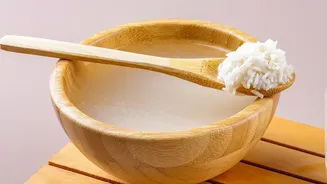
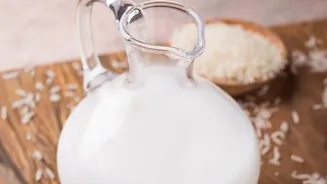
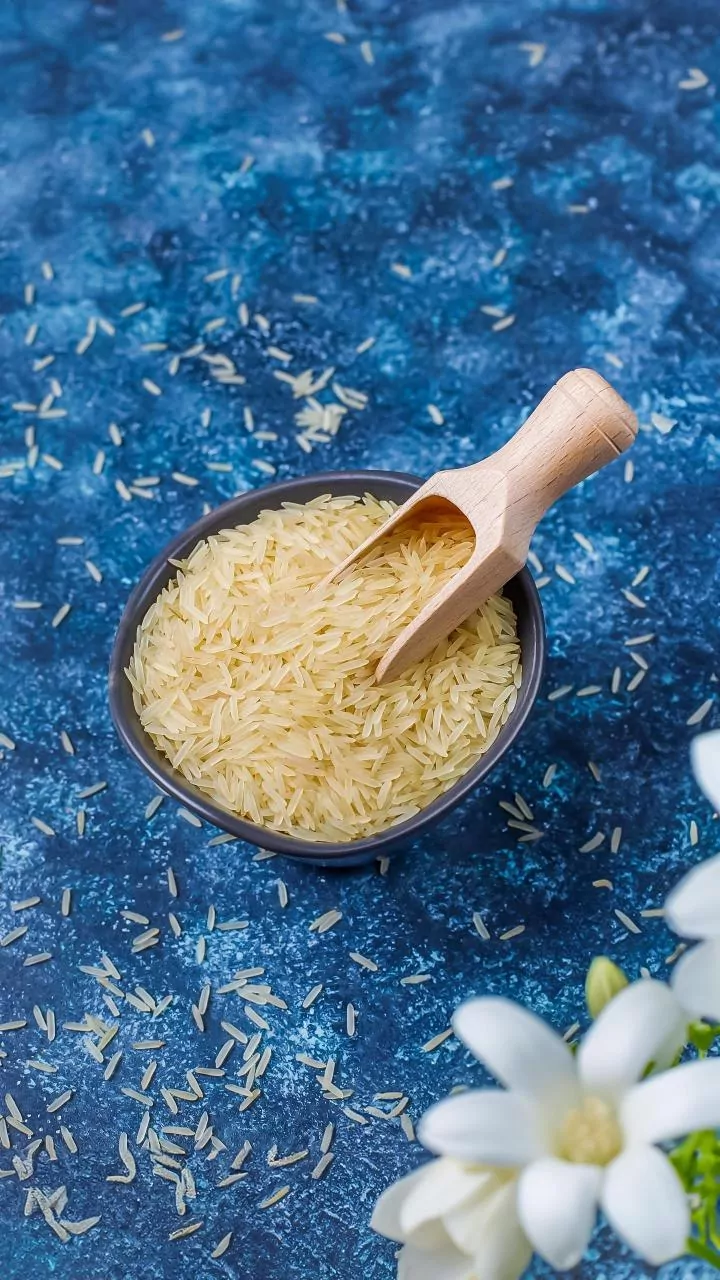
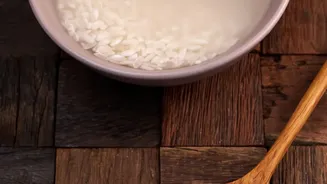
Curious to try it yourself? Making a basic fermented rice water rinse is simple, but hygiene is key to avoid uncontrolled bacterial growth. Start by rinsing a half-cup of uncooked rice to remove impurities. Then, soak the rice in about two cups of water for at least 30 minutes. Strain the water into a clean jar, discarding the rice. Loosely cover the jar and leave it at room temperature for 12 to 48 hours. The water is fermented when it develops a slightly sour smell. For use on hair, it's best to dilute the potent mixture with plain water. Apply it after shampooing, let it sit for up to 20 minutes, and then rinse thoroughly. For skin, you can apply it with a cotton pad as a toner, but always rinse it off.
Potential Risks and What to Watch For
While generally considered safe for most, fermented rice water isn't without risks. Because it is rich in protein-like compounds, overuse can lead to 'protein overload' for certain hair types, causing strands to become stiff, brittle, and prone to breakage. This is especially a risk for those with low-porosity or fine hair. Furthermore, improper fermentation can introduce harmful bacteria, which may irritate the scalp or skin, leading to itchiness or flaking. If you have sensitive skin or a scalp condition like eczema, it's wise to perform a patch test first or consult a dermatologist before incorporating it into your routine.