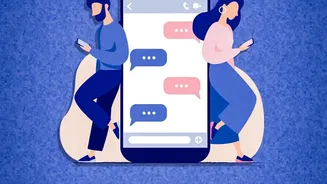







It’s 2 a.m. and your teen is typing on their phone. But they aren't messaging a friend; they’re confiding in an AI chatbot. For many parents, this is a startling reality. As AI becomes a fixture in adolescent life, experts are urging a new approach.
First, Understand the 'Why'
Before
you can have a productive conversation, it helps to understand why a teen might turn to a chatbot. For many, it offers a private, non-judgmental space to process thoughts and feelings. Unlike friends who might gossip or parents who might worry, a chatbot is always available, never seems tired, and won't roll its eyes. It can feel like a safe place to explore identity, ask questions they’re embarrassed to ask out loud, or simply vent after a hard day. For teens feeling anxious or misunderstood, this can provide a sense of relief. Recognizing this need for a safe outlet is the first step toward an empathetic conversation, rather than a confrontational one.
Start with Curiosity, Not Accusation
If you discover your teen is using AI for emotional support, psychologists advise against panic or judgment, which can shut down communication instantly. The most effective strategy is to lead with genuine curiosity. Instead of asking, 'Are you cheating on your homework?', try, 'Can you show me how you use that for school?'. Open-ended questions like, 'What do you like about talking to it?' or 'How is it different from talking to friends?' invite your teen to share their experience. This approach frames you as an interested ally, not an enforcer. The goal isn't to catch them doing something wrong, but to open a line of communication that makes them feel safe coming to you in the future.
Discuss the Risks and Limitations Together
Once the door is open, you can explore the technology's limitations collaboratively. Teens may not realize that chatbots can be confidently incorrect, a phenomenon experts call 'hallucinations'. They also may not consider data privacy and the fact that their conversations may be stored and shared. A crucial point to discuss is that while AI can simulate empathy, it does not have real feelings or understanding. This can create unrealistic expectations for human relationships, which involve navigating disagreement and complexity. Most importantly, AI chatbots are not a substitute for professional help in a crisis and may even give harmful advice. Framing this as a learning exercise, where you explore the tech together, is more effective than a lecture.
From Control to Collaboration: Setting Boundaries
Banning chatbot use is often unrealistic and can simply push the behavior out of sight. Instead, work with your teen to co-create a family media plan that includes AI. This could involve agreeing on specific use cases. For instance, using AI for brainstorming ideas might be fine, but using it to write an entire essay is not. For emotional support, a 'human-first' rule can be effective: talk to a parent, friend, or counselor before turning to AI. This collaborative approach gives teens a sense of agency and makes them more likely to follow the rules they helped create. The conversation should establish that AI can be a tool, but not a replacement for human connection or critical thinking.
Model the Behavior You Want to See
Finally, parents' own technology habits are powerful role models. Be mindful of your screen use and talk openly about how you use AI. If a chatbot gives you a wrong answer or a strange suggestion, share that experience at the dinner table. This normalizes the idea that AI is an imperfect tool that requires critical thinking. When you demonstrate a balanced and thoughtful approach to technology, you make it easier for your teen to adopt one as well. By consistently showing how to use these tools responsibly, you teach them to be savvy digital citizens in a world increasingly shaped by artificial intelligence.