






A Landmark on the Lunar Surface
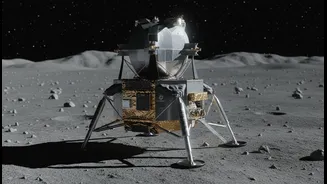
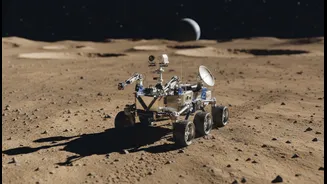
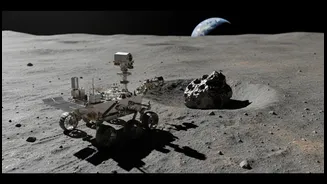
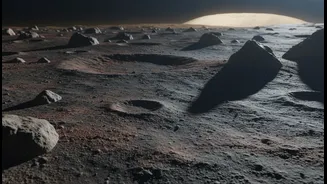
On August 23, 2023, India etched its name in the annals of space exploration, becoming the first nation to soft-land a spacecraft near the Moon's south pole. The site, located at approximately 69°S latitude, was named Shiv Shakti Point. This achievement
was more than just a landing; it was the establishment of a scientific outpost in a previously unexplored and strategically vital region of the Moon. The lander, Vikram, and the rover, Pragyan, conducted a series of in-situ experiments for about 12 days, gathering invaluable data before entering sleep mode. In March 2024, the name received official international recognition from the International Astronomical Union (IAU), which approved it as 'Statio Shiv Shakti', cementing its place on global lunar maps.
An Unexpected Link to Earth
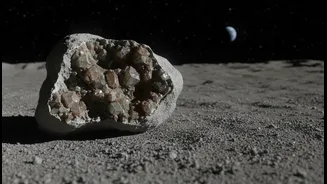
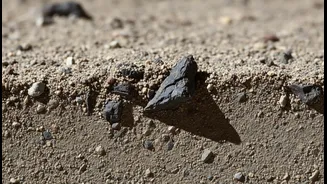
Recent analysis of the data collected by the Pragyan rover's Alpha Particle X-ray Spectrometer (APXS) has yielded a groundbreaking discovery. In a study published by researchers from the Physical Research Laboratory (PRL), Ahmedabad, the soil composition at Shiv Shakti Point shows a striking resemblance to a lunar meteorite found on Earth. The meteorite, known as ALHA 81005, was discovered in Antarctica in 1981 and was the very first rock confirmed to have originated from the Moon. The geochemical match in elements like aluminium oxide, iron, and magnesium suggests that the landing site and the meteorite came from similar geological environments. This doesn't mean the meteorite came from that exact spot, but it forges a crucial link between samples studied on Earth and a specific, known location on the Moon, a connection that has historically been difficult to make.
Uncovering a Complex Past
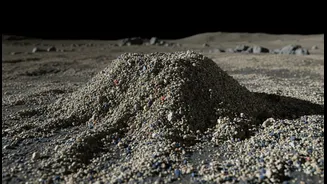
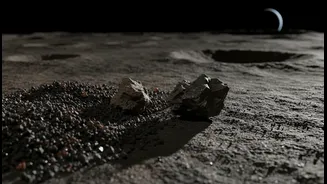
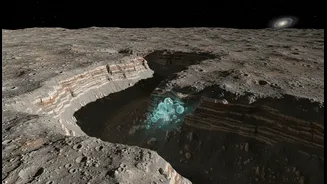
The findings go deeper than just a meteorite connection. The soil at Shiv Shakti is not uniform; it's a complex mixture of materials, some of which appear to have been excavated from deep within the Moon's crust. Scientists believe these materials were thrown to the surface by ancient, powerful impacts, most notably the event that formed the massive South Pole-Aitken (SPA) basin billions of years ago. This means Shiv Shakti Point offers access to primitive mantle materials that are not present in the samples returned by the Apollo missions. The data supports the long-held Lunar Magma Ocean hypothesis, which theorizes that the Moon was once covered in a sea of molten rock that cooled and separated into the crust and mantle we see today. The presence of these deep-crust fragments makes the site a prime location for understanding the Moon's fundamental formation.
A Hub of Surprising Activity
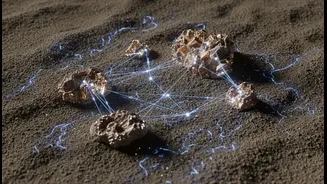
Beyond geology, Chandrayaan-3 revealed that the lunar south pole is a surprisingly dynamic environment. First-of-their-kind measurements of the near-surface plasma—a mix of charged particles—showed that the electrical environment is far more active than previously thought. Data from the Vikram lander's instruments indicated that the density of electrons is significantly higher than expected, creating an energised layer just above the surface. This discovery is vital for planning future human and robotic missions, as a charged environment can impact everything from communications and equipment functionality to astronaut safety. The findings provide critical ground truth that will help refine models of how the Moon interacts with solar wind and its surroundings, essential knowledge for establishing any long-term presence.