




A New Era in Low Earth Orbit
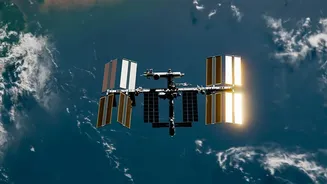
For over two decades, the International Space Station has been the sole human outpost in low Earth orbit (LEO). However, with its planned decommissioning around 2030, a critical need has emerged for new destinations. Instead of building another government-owned
station, NASA is turning to the private sector. Through its Commercial LEO Destinations (CLD) program, the agency is funding and supporting several companies to design, launch, and operate their own space stations. The goal is for NASA to become just one of many customers, purchasing services like research time and crew accommodation. This shift marks the beginning of a true commercial economy in space, moving from reliance on government infrastructure to a market of private providers.
Axiom Space: Building on a Legacy
Axiom Space is taking a unique, phased approach. The company plans to first attach its own modules to the International Space Station, starting as early as 2027. These modules will initially expand the ISS's capabilities, but are designed to eventually detach and become a free-flying commercial station, the Axiom Station, before the ISS is retired. The first module, focused on providing power and thermal control, is already in advanced fabrication. This strategy allows Axiom to begin operations using the existing infrastructure of the ISS while methodically building out its independent platform, which will eventually include habitation modules, a research and manufacturing facility, and a glass-walled Earth observatory.
Sierra Space: Inflatable Innovation
Sierra Space is pioneering a different kind of structure: large, inflatable habitats. Their Large Integrated Flexible Environment (LIFE) modules are built from high-strength, soft fabrics that launch in a compressed state and inflate in orbit to the size of a three-story building. This technology allows for a much larger pressurized volume to be launched on a single rocket compared to traditional metallic structures. The LIFE habitat has undergone extensive ground testing with NASA's support, including burst pressure tests to ensure its durability against the vacuum of space and hypervelocity impact tests to optimize protection against micrometeoroids. These modules are a key component of the Orbital Reef station concept.
Orbital Reef: A Business Park in Space
A collaboration led by Blue Origin and Sierra Space, Orbital Reef is envisioned as a "mixed-use business park" in orbit. The concept aims to provide an open-platform destination for a wide range of customers, from researchers and industrial clients to space tourists. The station's architecture will leverage Blue Origin's large-diameter modules and launch capabilities alongside Sierra Space's inflatable LIFE habitats. Designed to support a crew of up to ten people, Orbital Reef aims to create a vibrant commercial ecosystem where multiple users can conduct their business simultaneously. While the project has faced some developmental hurdles, it remains a major contender in the race to establish a permanent commercial presence in LEO.
Vast: The Quest for Artificial Gravity
Vast is a newer player with an ambitious long-term goal: to create space stations that generate artificial gravity. Prolonged exposure to weightlessness takes a significant toll on the human body, causing issues like muscle atrophy and bone density loss. Vast's solution is to build large, spinning structures where the centrifugal force simulates gravity. As a first step, the company is developing Haven-1, a single-module station planned for launch around 2027. While Haven-1 will be a microgravity environment, it will serve as a technical and operational stepping stone toward the larger, spinning stations of the future. Vast's vision is focused on enabling long-term human habitation in space, a critical step for humanity's expansion into the solar system.
The Mission: Research, Manufacturing, and More
The primary driver for these new commercial stations is the continuation of the vital scientific research conducted on the ISS. Microgravity provides a unique environment for breakthroughs in biology, pharmaceuticals, and materials science. Companies will be able to rent lab space for everything from disease research to developing new alloys. Beyond science, these platforms will open up new opportunities for in-space manufacturing, where products can be made with a perfection unattainable in Earth's gravity. And while research is the anchor tenant, these stations are also being designed to accommodate private astronauts and space tourists, creating a diverse economic foundation for life in orbit.