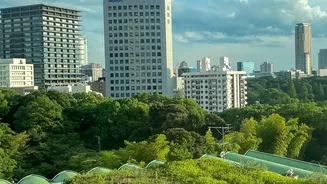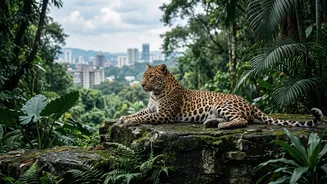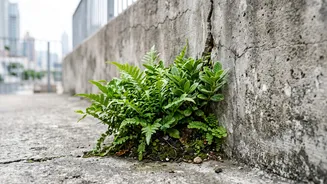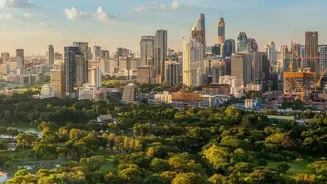






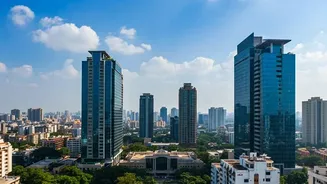
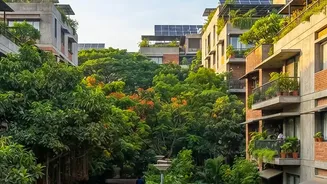
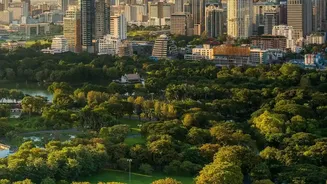
Look past the traffic and towers, and you’ll find another world thriving in our cities. A hidden ecosystem exists where wild animals, displaced from their natural homes, are cleverly adapting to the concrete jungle, living among us in surprising ways.
The New Concrete Jungle
As Indian cities rapidly expand, they swallow forests, grasslands, and wetlands. This relentless urbanisation fragments natural habitats, forcing wildlife to make a choice: retreat or adapt. For a growing number of species, the city itself has become the new frontier. These urban environments, with their endless supply of food from garbage, shelter in abandoned buildings, and a lack of natural predators, present an unexpected opportunity. From leopards using railway lines as stealth corridors to monkeys finding refuge in temple complexes, animals are learning to navigate the human-dominated landscape. This shift transforms our cities into complex, shared ecosystems, blurring the lines between the built and the wild.
Mumbai’s Elusive Leopards
Perhaps the most dramatic example of urban adaptation is the leopard population of Mumbai. Within the sprawling metropolis of 20 million people lies Sanjay Gandhi National Park (SGNP), a vast forest that is home to one of the densest leopard populations in the world. Camera trap surveys in 2024 confirmed at least 54 leopards living across the SGNP landscape. These big cats are masters of coexistence, often active at night. They navigate the fringes of the city, preying on stray dogs, which can make up a significant portion of their diet, as well as pigs and other livestock. While their presence is a testament to their resilience, it also highlights the delicate balance required to manage life on the edge where forest meets city.
Delhi’s Monkey Business
In Delhi, the relationship with urban wildlife is more conspicuous and often more fraught. Rhesus macaques are a common sight, from the rooftops of Lutyens' Delhi to the narrow lanes of the old city. Historically revered and often fed by residents due to their association with the god Hanuman, these monkeys have become incredibly bold. However, their adaptation has a downside. Feeding by humans has been linked to increased aggression, and the monkeys are known for raiding homes and markets for food. This has led to a persistent human-wildlife conflict, a 'simian siege' that has authorities struggling with solutions, from deploying langur cutouts to relocation programs that have had mixed success. The situation serves as a stark reminder that coexistence requires careful management from both humans and animals.
A Wider Urban Menagerie
The phenomenon isn't limited to leopards and monkeys. Across India, a diverse array of animals has found a niche in urban settings. Nilgai (blue bulls) can be seen grazing in green patches and near biodiversity parks in Delhi. Snakes, such as the common rat snake, play a crucial role in controlling rodent populations in gardens and construction sites. Palm civets and mongooses dart through residential areas, while birds like black kites and parakeets have become ubiquitous in the skies above our cities. Even smaller creatures, from geckos on our walls to spiders in our gardens, are part of this intricate urban web of life. Each species adapts in its own way, carving out a living in a world not originally designed for it.
An Uneasy But Necessary Truce
Living alongside wild animals is not without its challenges. Human-wildlife conflict is a growing reality, stemming from crop raiding, attacks on livestock, and, in rare but serious cases, threats to human safety. The expansion of roads and railways creates deadly obstacles, while fear and misinformation can lead to the persecution of harmless species. However, conservationists argue that the answer isn't removal but smarter coexistence. This involves better urban planning, such as creating green corridors that allow animals to move safely, improved waste management to reduce easy food sources, and public awareness campaigns. Ultimately, the goal is to shift from a mindset of conflict to one of mutual respect, recognising that these animals are not merely visitors but residents of our shared urban home.