





The New Shape of Rain
The predictable, steady monsoon that has shaped India's ecology and economy for centuries is becoming a thing of the past. Scientific evidence points to a new, more volatile pattern: fewer rainy days overall, but with sudden, extreme downpours concentrated
in shorter periods. This means long dry spells are increasingly punctuated by intense rainfall events, a combination that creates a dual threat of both drought and flooding. This shift is not uniform across the country, with different regions experiencing different changes, but the overall trend is one of instability. This erratic behaviour is a defining feature of India's changing climate, moving the risk from simply too much or too little rain to a fundamental collapse of timing.
Western Ghats: A Hotspot Under Pressure
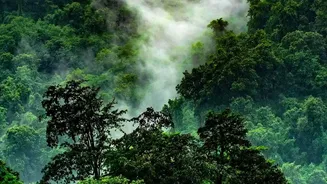
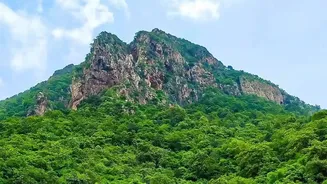
The Western Ghats, a UNESCO World Heritage site and a global biodiversity hotspot, are on the front lines. These mountains, which act as a barrier to the monsoon winds, are now experiencing more frequent extreme rainfall events. This intense rain saturates the soil on forested slopes, leading to an increase in landslides that can destabilise large areas of forest. At the same time, prolonged dry spells between these deluges are disrupting the delicate breeding cycles of unique species, like the Matheran Wrinkled Frog, whose eggs dry out without continuous moisture. Scientists have identified several forested regions in the Ghats as 'climate change hotspots', where rising temperatures and significant rainfall changes threaten to transform these ecosystems.
Himalayan Forests on the Move
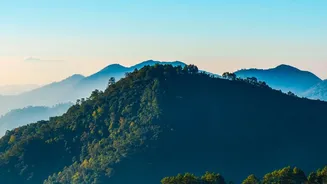
In the Himalayas, the impacts are just as dramatic. Warming temperatures and reduced snow depth are causing vegetation to shift to higher altitudes. Studies have documented alpine plants and shrubs moving upwards by several metres per year in some regions. While this might sound like greening, it represents a profound ecosystem disruption. As trees and shrubs colonise higher slopes, they can alter the water cycle, soil stability, and the habitats of existing alpine species. These changes, combined with altered precipitation patterns, are also linked to a 'browning' trend in some areas, where vegetation is becoming less healthy. The combination of melting glaciers and more intense rainfall increases the risk of flash floods and landslides, further imperilling these fragile mountain forests.
The Dry Heart of India Feels the Heat
Central India's vast deciduous forests are uniquely adapted to seasonal dryness, but the new rainfall patterns are pushing them to their limits. A recent study in the Panchmarhi Biosphere Reserve found that the reserve lost a significant portion of its forest cover over the past few decades, driven by a combination of human pressure and climate shifts. Rising temperatures and a change in rainfall—with less post-monsoon precipitation—have increased the risk of forest fires and altered the lifecycle of key species. Teak forests, in particular, have seen steep losses in canopy cover. The health of these central Indian forests is critical, as their degradation can affect regional rainfall distribution, which has knock-on effects for a country still heavily reliant on agriculture.
Resilience in a Shifting Climate
Despite these immense pressures, India's forests are not passive victims. The Forest Survey of India's assessments show an ongoing, albeit complex, trend of overall greening in many parts of the country. Some research suggests that certain forests, particularly in wetter regions, show surprising resilience to short-term droughts. However, scientists caution that this resilience has its limits. Biodiversity is seen as a key factor; a forest with a wide variety of species is more likely to contain plants that can withstand the new conditions. Ultimately, the response is not uniform. While some areas may see a temporary increase in carbon storage due to warmer, wetter conditions, these same factors bring greater risks from fires and other disturbances.