





The Legend of the Air-Purifying Plant
The belief that houseplants can clean indoor air isn't just a hopeful rumour; it's rooted in a 1989 NASA study. Tasked with finding ways to maintain air quality in sealed environments like space stations, researchers found that certain plants could absorb
harmful volatile organic compounds (VOCs) from the air in a controlled lab chamber. Chemicals like formaldehyde, benzene, and xylene, commonly found in furniture, cleaning products, and paints, were measurably reduced by plants including Snake Plants and Pothos. This groundbreaking study launched these humble houseplants into wellness superstardom, promising a natural, low-cost alternative to electric air purifiers.
From Lab to Living Room: A Reality Check
Unfortunately, the effects seen in a sealed lab chamber don't quite translate to the average home or office. Subsequent analysis and reviews of the research have pointed out that your home is not an airtight container. Natural ventilation from open windows, doors, and even small gaps means the air is constantly being exchanged, a process that dilutes pollutants far more effectively than a few plants can. Studies estimate you would need a staggering number of plants—anywhere from ten to a thousand per square metre—to replicate the air-cleaning capacity of a standard building's ventilation system. So, while plants do absorb toxins, their impact on the overall air quality in a typical room is minimal.
The True Power: Mood and Focus
While they may not be miracle air filters, the benefits of having plants like Snake Plants and Pothos are very real—they just have more to do with your brain than your lungs. The presence of indoor plants has been repeatedly shown to have a positive psychological impact. Studies have found that interacting with plants can reduce physiological and psychological stress. In a work setting, the presence of plants has been linked to increased productivity, better concentration, and improved attention spans. One study found that workers were 12% faster on a computer task and felt less stressed when plants were in the room. This concept, known as biophilia, suggests that a connection to nature, even just a potted plant on your desk, helps calm our nervous systems, leading to better focus and a greater sense of well-being.
Spotlight On: The Resilient Snake Plant
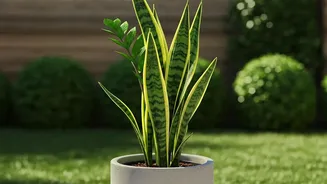
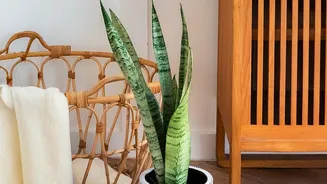
The Snake Plant (Sansevieria trifasciata) is famous for being nearly indestructible, making it perfect for beginners. Its stiff, architectural leaves add a modern touch to any room. What makes it particularly suited for the bedroom is its ability to perform Crassulacean Acid Metabolism (CAM) photosynthesis. Unlike most plants, it continues to convert carbon dioxide into oxygen at night, which might contribute to a fresher feeling in the room while you sleep. It tolerates low light and infrequent watering, thriving on a bit of neglect. For best results, let the soil dry out completely between waterings.
Spotlight On: The Versatile Pothos
Golden Pothos (Epipremnum aureum), also known as Devil's Ivy, is a fast-growing, trailing vine that looks beautiful in hanging baskets or draped over shelves. It’s incredibly easy to care for and is known for its ability to thrive in a variety of light conditions, though it prefers bright, indirect light. Pothos is also a great communicator; its leaves will start to droop slightly when it needs water, taking the guesswork out of your care routine. Through a process called transpiration, it can also release moisture into the air, acting as a natural, albeit mild, humidifier. One important note: Pothos is toxic to pets if ingested, so be sure to place it out of reach of curious cats and dogs.