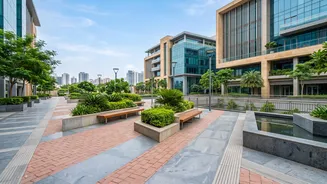







For decades, the soundtrack of urban India has been the roar of traffic. But a quiet revolution is taking place on the streets of several cities, as planners begin to reclaim these car-dominated arteries and transform them into spaces for people.
A New Philosophy for City Streets
A fundamental
shift is underway in Indian urban planning. The long-held belief that wider roads and more flyovers are the answer to congestion is being replaced by a 'people-first' approach. This new vision reimagines streets not just as channels for vehicles, but as vital public spaces that can enhance community life, public health, and economic activity. Initiatives like the national 'Streets for People Challenge', launched by the Ministry of Housing and Urban Affairs, are inspiring cities to create walking-friendly designs. The goal is to develop 'Healthy Streets' that are safe, accessible, and enjoyable for everyone, especially pedestrians and cyclists. This move is driven by the understanding that walkable, vibrant public realms lead to more liveable and sustainable cities.
Chennai’s Groundbreaking Experiment
Chennai has been a pioneer in this movement. The transformation of a 1.4-kilometre stretch of Theyagaraya Road in T. Nagar, popularly known as Pondy Bazaar, is a landmark example. Once a chaotic hub of traffic and haphazard parking, the area was converted into a pedestrian plaza. The project, executed under the Smart Cities Mission, involved widening footpaths from a mere 2-3 feet to as much as 10 feet, adding seating, play equipment for children, and landscaping. Initially, there was resistance from traders who feared a loss of business if cars were restricted. However, trial runs demonstrated that creating a pleasant, walkable environment could actually attract more visitors and boost sales. The plaza was designed to be inclusive, with features accessible to senior citizens and persons with disabilities.
Bengaluru and Pune Follow Suit
Inspired by such successes, other cities are embracing pedestrianisation. In Bengaluru, a pilot project on the bustling Church Street temporarily closed the 750-metre road to vehicles on weekends. The results were dramatic: an impact assessment study by the Indian Institute of Science noted a significant increase in pedestrian footfall, with many visitors coming specifically to enjoy walking freely. More than half of the shop and restaurant owners reported an increase in customers. The project, part of a 'Clean Air Street' initiative, demonstrated how such interventions could improve both the local economy and air quality. Similarly, Pune has experimented with 'walking plazas' by temporarily closing streets to traffic, turning them into zones for cycling and community activities, proving the concept’s adaptability across different urban contexts.
The Benefits Beyond the Footpath
The positive impacts of these projects extend far beyond simply providing more space to walk. Studies show that well-designed pedestrian infrastructure can increase retail sales by up to 30%. These spaces foster a sense of community by creating places for people to gather, socialise, and relax. Safety is another major benefit. By separating people from fast-moving traffic and improving lighting, these 'Healthy Streets' can lead to a reduction in accidents and crime. Furthermore, encouraging walking and cycling over motorised transport contributes directly to better air quality and public health, helping to reduce emissions and promote physical activity. Research from Chennai's footpath improvements estimates that thousands of tonnes of CO2 emissions are prevented annually.
Not a Road Without Obstacles
Despite the clear benefits, the path to pedestrianisation is not always smooth. A significant challenge is maintaining these spaces after the initial launch. In some cases, like Pondy Bazaar, the initial success has been compromised over time by encroachments from vendors and shop displays, illegal parking, and a lack of consistent enforcement, turning a pedestrian haven back into a chaotic corridor. These issues highlight the need for sustained management, political will, and community ownership to ensure the long term success of such projects. Overcoming initial resistance from vehicle users and some commercial establishments also requires careful planning and stakeholder engagement, demonstrating the economic and social upside through pilot projects and clear communication.