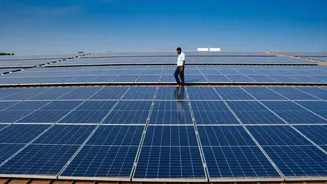









The Big Picture: India's Green Job Boom
India is in the midst of a massive green energy transition, with a goal to build 500 GW of clean energy capacity by 2030. This isn't just about fighting climate change; it's about creating a new economic engine. Schemes like the PM-Surya Ghar: Muft Bijli
Yojna, which aims to solarize one crore households, are accelerating demand for a skilled workforce. However, a significant gap exists between the country's ambitious targets and the number of trained professionals available to execute them. To bridge this gap, the government, through the Ministry of New and Renewable Energy (MNRE) and the Ministry of Skill Development and Entrepreneurship (MSDE), is heavily promoting skill-building programs. These initiatives are designed to create a pipeline of talent ready to build, install, and maintain the country's growing solar infrastructure.
Your Entry Point: The Suryamitra Programme
The flagship initiative for aspiring solar technicians is the Suryamitra Skill Development Programme. Run by the National Institute of Solar Energy (NISE), this program's primary goal is to train youth as solar PV technicians, creating a dedicated workforce for installation, operation, and maintenance. First launched in 2015, the programme has been a cornerstone of India's solar skilling efforts, having trained tens of thousands of 'Suryamitras' (friends of the sun) across the country. It is a fully residential programme that is free of cost for participants, covering boarding and lodging. This makes it a highly accessible entry point for those looking to start a career in the green-collar sector without a significant financial investment.
What You Will Learn: From Theory to Rooftop
The Suryamitra curriculum is a comprehensive, 600-hour course spread over approximately three months. It provides a mix of classroom theory and extensive hands-on practical training. You’ll learn the fundamentals of solar technology, including PV system design, installation procedures, and safety protocols. The training covers everything from wiring and mounting panels to commissioning and maintaining solar power plants. A key component of the program is on-the-job training and industrial visits to solar farms and substations, ensuring that participants gain real-world experience. The course also includes modules on soft skills and entrepreneurship, preparing you not just for a job but for a long-term career, potentially even starting your own solar business.
The Jobs on Offer: More Than Just an Installer
While the primary role trained for is a Solar PV Technician, the skills you acquire open doors to various jobs. Graduates are equipped for roles in construction and commissioning, operations and maintenance (O&M), and even manufacturing support. You could find yourself working for an Engineering, Procurement, and Construction (EPC) company on large-scale solar parks or for a local business focused on rooftop installations for homes and offices. The green economy is projected to create millions of jobs in the coming years across project development, grid integration, and services. With new technologies like battery storage and AI-driven maintenance becoming more common, the demand for skilled technicians with a solid foundation in solar energy will only continue to grow.
Eligibility and How to Apply
The Suryamitra programme is designed to be inclusive. The minimum educational qualification is typically a 10th Pass plus an ITI in relevant trades like Electrician, Wireman, Electronics Mechanic, or Fitter. The age group is generally between 18 and 30 years. Preference is given to unemployed youth, women, and candidates from rural backgrounds. To apply, you need to keep an eye out for announcements from NISE, State Nodal Agencies (SNAs), or the designated training centres themselves, which are advertised in local media. The Pradhan Mantri Kaushal Vikas Yojana (PMKVY) also offers solar energy courses, and you can register on the Skill India Digital portal (skillindiadigital.gov.in) to find training centres near you. Upon successful completion and assessment by bodies like the Skill Council for Green Jobs (SCGJ), you receive a government-recognized certificate, significantly boosting your employability.