







The Old Playbook Is Now Obsolete
For decades, campus recruitment in India followed a familiar script. Companies would visit a select list of colleges, conduct pre-placement talks, and then put students through a multi-stage process of aptitude tests, group discussions, and personal interviews.
A student's college tier, branch, and academic scores were the primary gatekeepers. This manual, resource-intensive process was manageable but inefficient, especially for companies needing to sift through thousands of applications to find the right talent. Today, that model is fading fast. Companies are leveraging AI to make recruitment faster, broader, and more data-driven. This shift means that the old strategies students relied on are no longer enough.
Meet Your New First Interviewer: The Algorithm
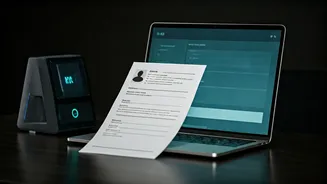
Before a student even speaks to a human recruiter, they now face a series of AI gatekeepers. The first is the Applicant Tracking System (ATS), which scans resumes for keywords and qualifications, rejecting those that don't match the job description. Following this, candidates might face AI-proctored online assessments that test technical and cognitive skills while monitoring for cheating. Many companies now use asynchronous video interviews where candidates record answers to pre-set questions. AI tools like HireVue then analyze not just what is said, but also tone of voice and facial expressions to gauge confidence and communication skills. Other platforms like Pymetrics use gamified assessments to measure soft skills and cognitive traits, moving evaluation far beyond the academic transcript.
A Shift from Degrees to Demonstrable Skills
One of the most significant changes driven by AI is the move from a degree-first to a skills-first hiring mindset. AI tools allow recruiters to screen for specific, practical skills regardless of the candidate's college or background, levelling the playing field for students from Tier-2 and Tier-3 cities. Recruiters are now looking for demonstrated abilities in areas like data analytics, AI literacy, and problem-solving. This means internships, live projects, and certifications have become more important than ever. For students, it's no longer enough to have a good GPA; they must prove they can apply their knowledge in practical, measurable ways. Platforms like Superset and VMock are now used by students and colleges to optimize resumes and prepare for these algorithm-driven selection processes.
Fairer and Faster, or Fundamentally Flawed?
The proponents of AI in recruitment argue it reduces human bias, increases efficiency, and allows companies to reach a wider talent pool. By automating repetitive tasks, human recruiters can focus on more strategic work like candidate engagement. However, the system is not without its critics. A major concern is algorithmic bias, where AI systems trained on historical hiring data may perpetuate existing prejudices against certain demographics, penalizing candidates for career gaps or non-traditional backgrounds. Furthermore, a significant number of candidates feel the process has become impersonal, worrying that AI misses the qualitative nature of their skills and that the human element is lost. There's also the challenge of the digital divide, as students with limited access to good technology or stable internet may be at a disadvantage.