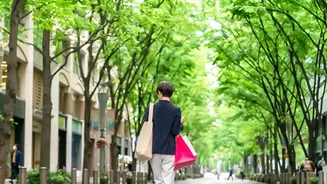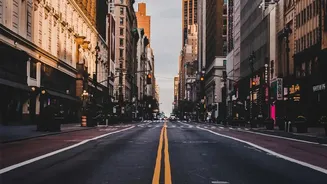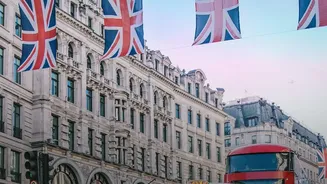



One of the world's most famous shopping destinations has undergone a historic transformation. In late October 2026, London's Oxford Street went traffic-free, swapping iconic red buses for people. This is more than just a local traffic update.
The Big Shift on Oxford Street
On October
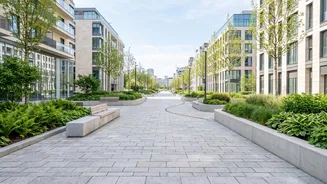
26, 2026, a nearly one-kilometre stretch of Oxford Street, from Orchard Street to Great Portland Street, closed to buses, taxis, and private cars. The move, years in the making after previous attempts were blocked, is designed to combat congestion, improve air quality, and revitalise the public's experience of a street that, despite its commercial success, was often criticised for being overcrowded and unpleasant to walk along. Early data from the first week showed a significant uptick in business, with one payment firm reporting a 19% jump in transactions and a 28% rise in spending value compared to the previous year. While shoppers have largely praised the calmer, safer environment, the transition hasn't been without teething problems. Issues include confusion for cyclists, disruption to bus routes, and concerns from some about accessibility. Officials see this as a trial phase, with plans to add more seating, trees, and public squares in the coming months based on feedback.
The Pioneer: Copenhagen's Strøget
London is following a path well-trodden by other major cities. Perhaps the most famous pioneer is Copenhagen. Back in 1962, the city converted its main thoroughfare, Strøget, into a pedestrian-only zone as an experiment. At the time, the idea was met with fierce opposition. Businesses feared that 'no cars' would mean 'no customers'. But the experiment was a resounding success. Shoppers flocked to the street, cafes spilled out onto the pavement, and a new public life emerged. The temporary trial was made permanent in 1964. Today, the Strøget network is the heart of the city, covering nearly 100,000 square metres and demonstrating that prioritising people can be a massive economic and social victory. It proved that a historic city centre, once dominated by traffic, could be reclaimed for pedestrians without destroying its commercial vitality.
The Revival: Melbourne's Laneways
Melbourne offers a different but equally inspiring story. The city's grid was historically dissected by a network of small, functional laneways used for service and waste disposal. For decades, these were neglected, underused spaces. Starting in the early 1990s, the city began a concerted effort to revitalise them as part of a broader strategy to bring people back into the city centre. By cleaning them up, encouraging small cafes and unique shops to move in, and promoting vibrant street art, Melbourne transformed these forgotten alleys into its most celebrated feature. The laneways are now thriving, human-scale spaces that offer crucial connections and serve as destinations in their own right, filled with culture, food, and art. The project shows how even the overlooked parts of a city can be reimagined to create immense public value and economic benefit.
The Spectacle: Tokyo's Shibuya Crossing
While not a pedestrianised street in the traditional sense, Tokyo's Shibuya Crossing is the ultimate example of prioritising pedestrian movement. Often cited as the world's busiest intersection, it's a 'scramble crossing' where all vehicle traffic stops simultaneously, allowing a massive wave of people—sometimes up to 2,500 at once—to surge across from every direction. This organised chaos is a spectacle, but it's also incredibly efficient at moving huge numbers of people through a major commercial and transport hub. The crossing, which celebrated its 50th anniversary in 2023, has become an iconic symbol of modern Tokyo, proving that pedestrian-centric design can take many forms, from quiet, leisurely streets to high-energy, high-volume intersections. It’s a powerful statement about the place of people in the heart of a megacity.