


The Warming Finisher: Garam Masala
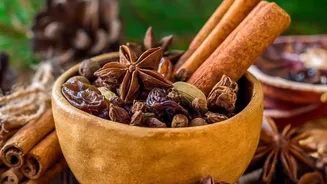
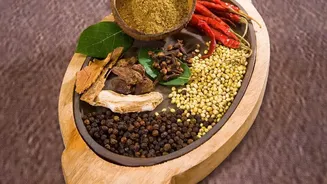
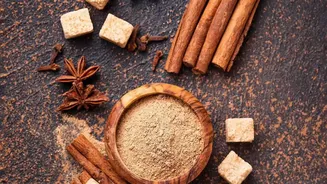
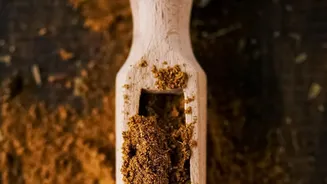
Perhaps the most famous Indian spice blend, Garam Masala translates to 'warm spices'. This North Indian staple is not about chilli heat, but about a deep, aromatic warmth from a combination of spices like cinnamon, cloves, cardamom, cumin, coriander,
and black pepper. Recipes vary widely by region and even by family, with some versions including nutmeg or black cardamom for a smokier note. Unlike many other masalas, Garam Masala is typically used as a finishing spice. Adding a teaspoon towards the end of cooking preserves its volatile aromas, lending a final flourish to dals, vegetable curries, and meat dishes like butter chicken or rogan josh. It can also be mixed into marinades or sprinkled over roasted vegetables just before serving for an instant flavour boost.
The Southern Staple: Sambar Powder
No South Indian kitchen is complete without a jar of Sambar Powder, also known as Sambar Podi. This blend is the heart and soul of sambar, the iconic lentil and vegetable stew served with rice, idli, and dosa. Its unique profile comes from a mix of roasted spices and lentils. Key ingredients include coriander seeds, cumin, dried red chillies, black pepper, fenugreek seeds, and turmeric, along with roasted chana dal and toor dal which add a nutty, savoury depth. While its primary role is in making sambar, this versatile powder is often used as an all-purpose seasoning in South Indian cooking. It adds a wonderful dimension to dry vegetable stir-fries (poriyal), tamarind-based curries, and even as a simple seasoning for rice with a dollop of ghee.
The Tangy All-Star: Chaat Masala
If you love the zesty, lip-smacking flavour of Indian street food, you are a fan of Chaat Masala. This is a finishing spice, meant to be sprinkled on dishes right before serving. Its defining characteristic is a tangy, sour, and slightly funky taste derived from two key ingredients: amchur (dried mango powder) and kala namak (black salt). This base is supported by other spices like roasted cumin, coriander, and a hint of chilli. Chaat Masala's uses are nearly endless. It is the signature seasoning on popular 'chaat' dishes like bhel puri and aloo tikki. Beyond street food, a sprinkle can liven up a simple fruit salad, a bowl of yoghurt (raita), roasted potatoes, or even a glass of fresh lemonade for a refreshing, savoury twist.
The Eastern Tempering Blend: Panch Phoron
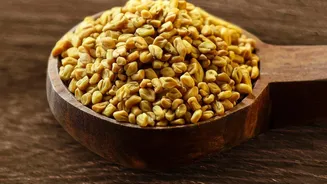
Hailing from Eastern India, particularly Bengal and Odisha, Panch Phoron means 'five spices'. Unlike the other blends on this list, it is not a powder. It is a mix of five whole seeds, used in equal parts: fenugreek (methi), nigella (kalonji), cumin (jeera), black mustard (rai), and fennel (saunf). Its application is also unique. Panch Phoron is used for tempering, or 'tadka'. The whole seeds are added to hot oil at the beginning of the cooking process. As they sizzle and pop, they release their distinct aromas and infuse the oil with a complex flavour that is at once nutty, sweet, and slightly bitter. This fragrant oil then becomes the base for dals, vegetable preparations, fish curries, and pickles, lending them a signature Bengali taste.
The Maharashtrian Speciality: Goda Masala
Goda Masala is a cornerstone of Maharashtrian cuisine. The name translates to 'sweet masala', but this refers to a mellow, rounded sweetness rather than a sugary taste. It's an aromatic blend known for its gentle warmth and low heat. What sets it apart are ingredients like dried coconut, sesame seeds, and the unique, earthy fragrance of dagad phool (stone flower). These are combined with more common spices like coriander, cumin, cinnamon, and bay leaves. The spices are slow-roasted to develop a deep, nutty, and almost smoky profile before being ground. Goda Masala is the soul of many classic Maharashtrian dishes, including 'masale bhaat' (spiced rice), 'amti' (a tangy dal), and various vegetable curries like those made with eggplant or sprouted beans.