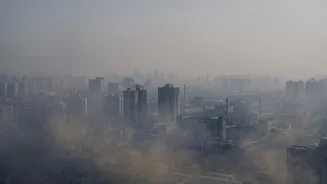







The Deceptive Veil of Haze
It’s easy to assume that a thick layer of smog shields us from the sun's harmful effects. While the haze might reduce the intensity of visible light and heat, it offers a false sense of security. This grey shroud is a cocktail of pollutants, primarily
fine particulate matter (PM2.5), ozone, nitrogen dioxide, and other harmful chemicals. More importantly, it is not an effective barrier against all types of ultraviolet (UV) radiation. While UVB rays, which are responsible for sunburn, may be partially scattered by clouds and pollution, UVA rays are far more persistent. These rays penetrate deep into the skin, accelerating aging, causing wrinkles, and contributing to long-term damage.
Pollution: A Threat of Its Own
The problem with Delhi's haze isn't just the UV radiation that gets through; it's the pollution itself. Microscopic particles, especially PM2.5, are small enough to lodge in your pores and can even penetrate the skin's outermost layer. This infiltration triggers a process called oxidative stress, where unstable molecules known as free radicals attack healthy skin cells. This assault weakens the skin's natural barrier, leading to increased sensitivity, dryness, and inflammation. Over time, this constant environmental stress can manifest as premature aging, stubborn dark spots (hyperpigmentation), and can worsen conditions like acne and eczema. When combined, UV exposure and pollution create a synergistic effect, meaning their collective damage is far greater than the sum of their parts.
Your Sunscreen as a Double-Duty Shield
This is where sunscreen becomes your skin’s most valuable player. Its primary job is, of course, to protect you from UV radiation. But in a polluted environment, it serves a crucial secondary function: acting as a protective barrier between your skin and airborne pollutants. A layer of sunscreen, particularly a physical or mineral formula containing zinc oxide or titanium dioxide, creates a shield on the skin’s surface. This shield can help prevent particulate matter from adhering to and penetrating the skin. Think of it less as a sunblock and more as a 'pollution block' that also happens to defend against UV rays. Consistent use ensures your skin's primary defence system isn't constantly fighting a two-front war against both sun and smog.
Choosing Your Daily Armour
Not all sunscreens are created equal, especially when you're battling urban pollution. To get the best protection, you need to be strategic. First, always opt for a 'broad-spectrum' formula, which protects against both UVA and UVB rays. Look for an SPF (Sun Protection Factor) of 30 or higher. Just as important is the PA rating, which indicates the level of UVA protection. In a high-exposure environment like Delhi, a rating of PA+++ or PA++++ is highly recommended. For an extra layer of defence, consider sunscreens fortified with antioxidants like Vitamin C, Vitamin E, or niacinamide. These ingredients help neutralize the free radicals generated by pollution and UV light before they can damage your skin cells.
Beyond the Sunscreen Bottle
While sunscreen is your frontline defence, a holistic approach is key to maintaining skin comfort during the hazy season. The most critical step is cleansing. At the end of the day, a thorough double cleanse—starting with an oil-based cleanser to break down sunscreen and pollutants, followed by a gentle water-based face wash—is essential to ensure your skin is truly clean. This prevents particles from sitting on your skin overnight, which can lead to clogged pores and irritation. Additionally, incorporating antioxidant-rich serums into your routine can further bolster your skin's resilience. Finally, staying hydrated and maintaining a healthy diet supports your skin's natural barrier function from the inside out, making it better equipped to handle the environmental stressors outside.