



Humidity: The Silent Enemy of Solar
For India’s ambitious solar energy goals, the sun is only half the story. The other, more challenging, part of the climate is humidity. In coastal cities, during the monsoon, and across much of the subcontinent, the air is heavy with moisture. For solar panels,
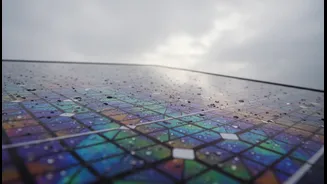
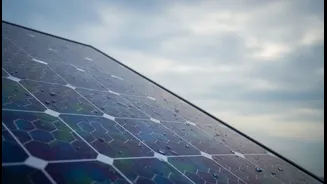
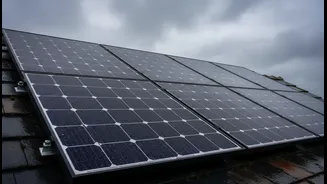
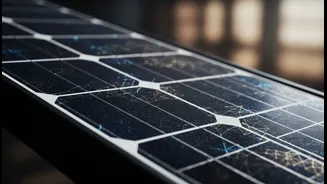
this is a significant problem. High humidity can lead to a host of issues that degrade a panel's performance and shorten its lifespan. Moisture can seep into the panel's structure, causing corrosion of vital electrical components and leading to a phenomenon known as delamination, where the protective layers of the panel begin to separate. This moisture also encourages dust and grime to stick to the panel’s surface, blocking precious sunlight. In some cases, it can even foster the growth of mould or algae. Studies have shown that these effects can lead to power output losses of 10-15% and significantly accelerate the degradation of the panels.
A Breakthrough in Materials: Perovskites
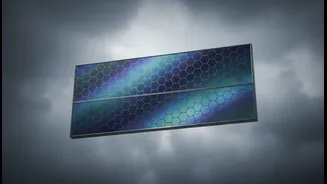
The solar industry has long been dominated by silicon-based panels. While effective, they have limitations, and their performance can suffer in high heat and humidity. Enter perovskites, a class of materials with a specific crystal structure that has scientists and engineers incredibly excited. Perovskite solar cells (PSCs) have shown remarkable potential, with lab efficiencies skyrocketing in just over a decade, positioning them as a serious contender to silicon. Their key advantages are that they are cheaper to manufacture, can be made flexible, and can be tuned to capture different parts of the solar spectrum. However, early versions of perovskite cells had a major weakness: they were notoriously unstable and would quickly break down when exposed to moisture.
Engineering for Resilience
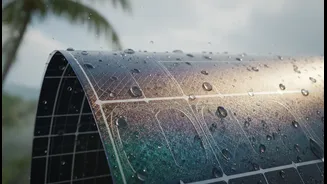
The headline challenge for researchers has been to make perovskites both efficient and durable in real-world conditions. Recent breakthroughs are finally cracking the code. Scientists are developing new formulations and structures that protect the sensitive perovskite material from humidity. One promising technique involves sandwiching the primary light-absorbing perovskite layer between two protective layers of a different, more water-resistant type of perovskite film. Researchers in India, from institutions like IIT Kharagpur and IIT Delhi, are also at the forefront, developing special chemical treatments that make the cells hydrophobic (water-repelling) and more stable. One such treatment, using a compound called TOAB, helped an unencapsulated test cell retain over 90% of its initial efficiency for hundreds of hours in a high-humidity environment.
What This Means for Indian Rooftops
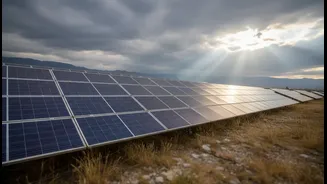
The development of humidity-resistant solar sheets could be a game-changer for India. The country has massive solar ambitions but faces significant challenges, including grid integration and the high cost of battery storage. Much of the population lives in regions with high seasonal or year-round humidity, making panel degradation a serious concern. More durable and efficient panels mean a better return on investment for homeowners and businesses. For large-scale solar farms, it means more reliable power generation and lower maintenance costs. These new flexible, lightweight designs also open up new possibilities beyond traditional rooftops. Imagine solar-powered vehicle surfaces, wearable electronics, or even building facades and windows that generate power.
The Path from Lab to Mass Market
While these developments are incredibly promising, there are still hurdles to overcome before these new solar sheets are widely available. The primary challenge is scaling up production from the lab to an industrial level while keeping costs low. Long-term durability still needs to be proven over the 20-25 year expected lifespan of a conventional solar panel. Some perovskite formulations also use lead, which raises environmental and regulatory concerns that need to be addressed. However, the pace of innovation is rapid. Some companies are already moving toward commercial production of perovskite-silicon tandem cells, which combine the best of both technologies. The progress made in solving the humidity problem suggests that these advanced solar technologies are moving closer to commercial reality, offering a powerful tool in the global transition to clean energy.