

The Old Assumption of Stability
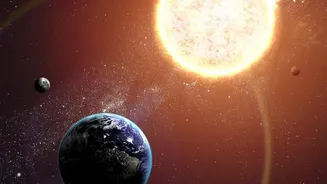
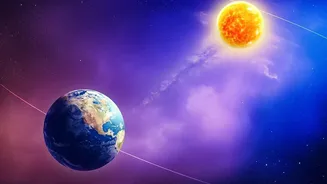
For decades, astronomers believed the end of our Sun's life, while catastrophic for Earth, would be a relatively gentle affair for the outer planets. In about five billion years, the Sun will run out of hydrogen fuel, swell into a red giant, and then
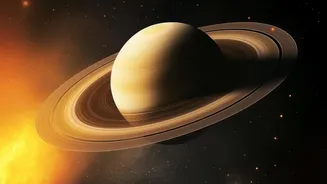
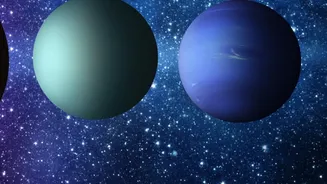
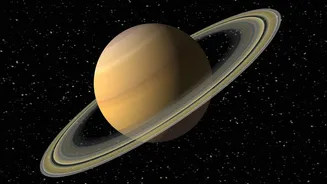
shrink into a white dwarf. As it loses mass, its gravitational pull weakens, causing Jupiter, Saturn, Uranus, and Neptune to drift into wider, but still stable, orbits. Previous models suggested this new configuration could remain intact for a hundred billion years or even longer. This long-held view was based on the assumption that the Sun would shed its mass smoothly and evenly in all directions.
A New, More Chaotic Picture
A recent study published in The Astrophysical Journal Letters challenges this picture of calm. Researchers now believe that as stars like our Sun age, they don't just lose mass smoothly; they can eject it in thousands of uneven bursts or clumps of plasma. Each lumpy ejection gives the dying star a tiny 'kick' or recoil, like the push you'd feel from a powerful fire hose. While each individual kick is small, the cumulative effect of thousands of these events over millions of years can cause the star to wobble and drift. This 'random walk' motion disrupts the star's gravitational lock on its planets, introducing a powerful element of chaos.
Simulating a Cosmic Billiards Game
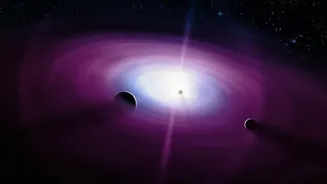
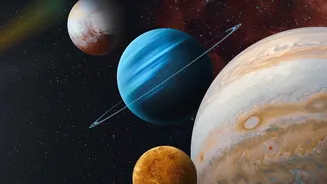
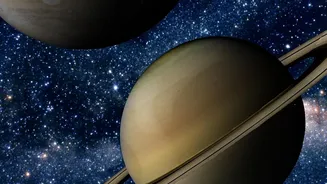
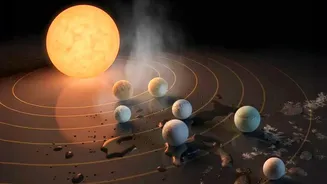
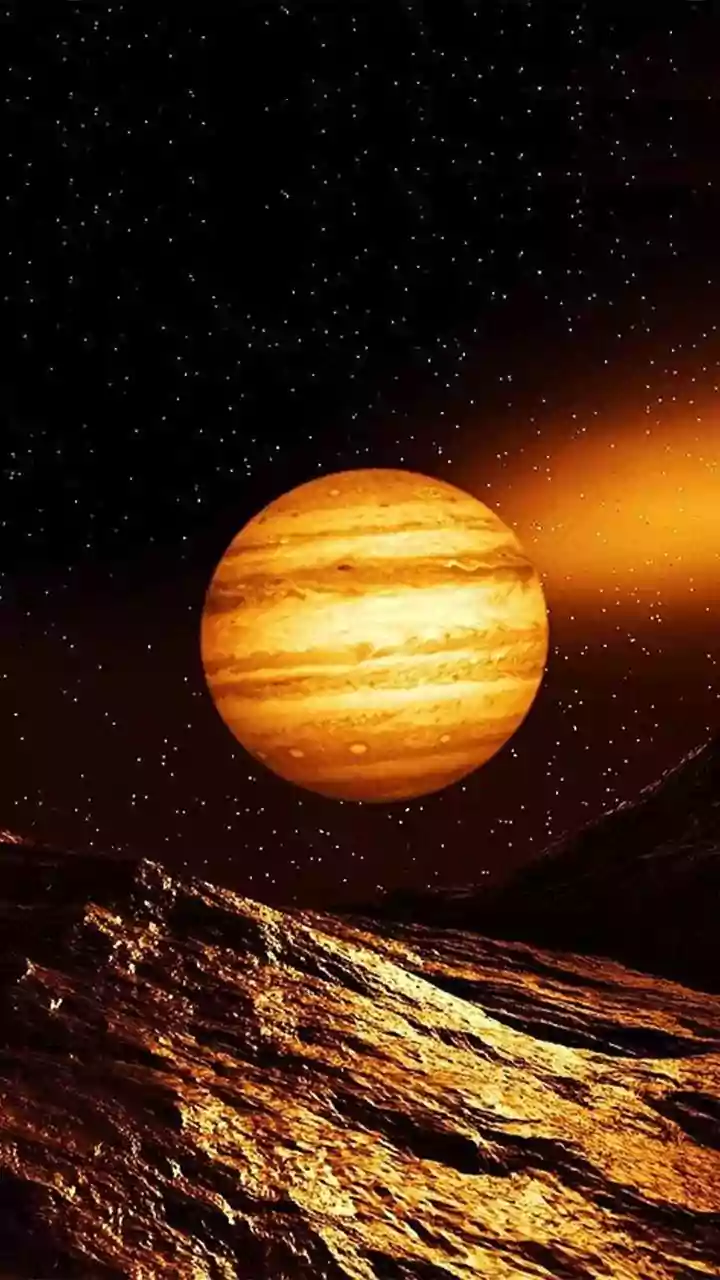
To understand the consequences, scientists ran hundreds of complex computer simulations. In scenarios where the Sun lost mass smoothly, the outer solar system remained largely stable, confirming older models. However, when they introduced uneven, clumpy mass loss, the results were dramatic. The simulations, totaling 672 different runs, showed the giant planets' orbits becoming dangerously unstable. In many scenarios, the planets were flung into new, elongated orbits. Some simulations showed Uranus and Neptune swapping places, while others saw Saturn ejected from the solar system entirely. In the most extreme models, where the ejected clumps of mass were largest, a staggering 96% of the simulated systems ended with the giant planets colliding with each other.
A Sharply Reduced Timeline for the Solar System
Perhaps the most startling finding is how quickly this chaos can unfold. Previous estimates placed the timeline for major instability in the outer solar system at around 100 billion years or more after the Sun becomes a white dwarf. The new study collapses that timeline dramatically. The research suggests that instability could begin even before the Sun completes its red giant phase. About 40% of the simulations showed major disruptions happening before the Sun even became a white dwarf. For the majority of systems, widespread instability and planet-shattering collisions are predicted to occur within just one to three billion years of the Sun's death—a billion times sooner than previously thought.
What This Means for Our Understanding of the Universe
These findings force a wholesale replacement of our understanding of the long-term evolution of planetary systems. The stability of a system in its old age is not just a question of gravity, but is profoundly linked to the specific, messy details of how its host star dies. It suggests that many planetary systems around other white dwarfs—the dead cores of Sun-like stars—may have had violent and chaotic pasts. While this cosmic drama is set billions of years in our future, it provides a new lens through which to view the universe. The quiet, clockwork cosmos we once imagined is being replaced by a picture that is far more dynamic, unpredictable, and ultimately, more interesting.