
A New Era for Indian Space
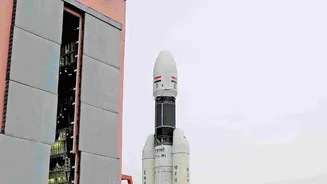
Following the historic success of its Chandrayaan missions, India has firmly established itself as a major player in space exploration. But the next chapter in the nation's lunar ambitions is not just being written by the Indian Space Research Organisation
(ISRO). A strategic shift is underway, with ISRO now actively encouraging the private sector to take over manufacturing and launch services. This has created a vibrant ecosystem, giving rise to an estimated 450 space-tech startups across the country as of 2026. This move is designed to free up the national agency to focus on deep-space R&D and monumental goals, such as establishing a space station by 2035 and landing an Indian astronaut on the Moon by 2040, while startups drive the commercialisation of space.
The Blueprint of Ambition
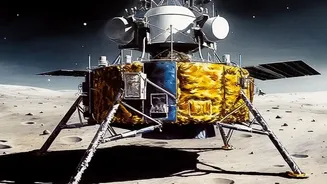
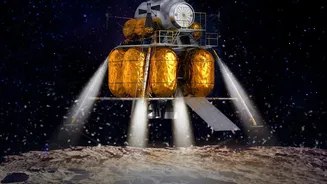
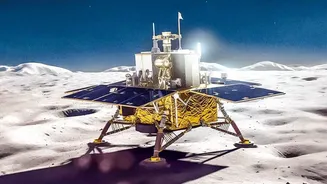
The dream of a private Indian moonshot is not new. The pioneering effort was made by TeamIndus, a Bengaluru-based startup that emerged as a serious contender for the Google Lunar XPrize in the last decade. Though the competition ended in 2018 without a winner, TeamIndus laid a crucial blueprint. Backed by industry titans like Ratan Tata and Nandan Nilekani, the team of young engineers and retired ISRO veterans developed a lander and a lightweight rover named ECA, short for 'Ek Choti Si Asha' (A Small Hope). Their goal was to land on the moon, travel 500 meters, and transmit high-definition video back to Earth. While they ultimately faced funding hurdles and had to drop out of the race, their journey demonstrated that private Indian companies had the audacity and technical know-how to aim for the Moon.
Frugal Innovation for the Final Frontier
The key to making commercial lunar missions viable is cost. This is where Indian startups are applying a principle of 'jugaad', or frugal innovation, to the high-stakes world of space technology. The headline's 'hacks' refer to these clever, cost-saving engineering solutions. For example, to test its ECA rover's mobility, TeamIndus didn’t import expensive simulated lunar soil; instead, they sourced 16 tonnes of dust from nearby stone quarries to mimic the loose soil of the lunar surface. This spirit of resourcefulness extends to design philosophy. Rovers are being designed with lightweight aluminum bodies, and other startups are pioneering the use of single-piece 3D-printed engines, which dramatically cuts down on complexity, weight, and manufacturing costs. By simplifying designs and leveraging indigenous components, these companies are aiming to drastically lower the price tag of lunar exploration.
Building the Ecosystem for Lunar Delivery
A rover is useless without a ride to the Moon. Recognizing this, a new generation of startups is focused on building the 'highways' to space. Companies like Chennai-based Agnikul Cosmos and Hyderabad-based Skyroot Aerospace are developing small-lift launch vehicles designed to offer quick, affordable, and dedicated flights for small satellites and payloads. Their success is critical for the entire ecosystem, as they will provide the delivery service for future rovers. Agnikul, for instance, has successfully tested its semi-cryogenic 3D-printed engine and is working towards reusable rocket stages to further drive down costs. Meanwhile, talent from past projects is seeding new ventures. Kepler Aerospace, a startup building satellite swarms for surveillance, was co-founded by an engineer who had previously worked on a lunar nano-rover project, showcasing how expertise is building and circulating within India’s growing space economy.