






The Era of Appointment Television
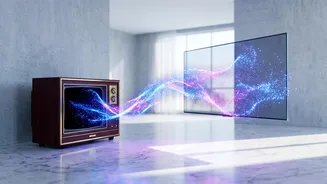
For decades, the rhythm of household life was set by television schedules. The early 2000s, in particular, were dominated by the 'saas-bahu' saga. Shows like 'Kyunki Saas Bhi Kabhi Bahu Thi' and 'Kahaani Ghar Ghar Kii' were not just programs; they were cultural
phenomena. Families gathered around a single television set, and the on-screen dramas, conflicts, and celebrations became topics of daily conversation. These serials, often criticised for their repetitive plots and regressive portrayal of women, nonetheless created a powerful, shared cultural experience. They presented a world of joint families, lavish traditions, and clear-cut moral binaries that, for a time, captivated a vast audience, defining an entire generation of entertainment.
The Technological Tipping Point
The shift away from this model was not sudden but accelerated by a technological revolution. The launch of new telecom services post-2016 drastically lowered the cost of mobile data in India. Suddenly, high-speed internet was no longer a luxury. This, combined with the widespread availability of affordable smartphones, created the perfect ecosystem for a new form of media to flourish: Over-The-Top (OTT) streaming. Platforms like Hotstar, followed by global giants Netflix and Amazon Prime Video, began offering a library of content available on-demand. The power dynamic shifted from the broadcaster's schedule to the viewer's convenience. The COVID-19 pandemic further cemented this habit, as lockdowns made streaming the primary source of entertainment.
A New Universe of Stories
Streaming did more than just change how we watch; it changed what we watch. Unbound by the constraints of daily broadcasting schedules and traditional censorship, creators found new freedom. Web series could be concise, with finite seasons and well-developed narrative arcs, a stark contrast to the endlessly stretched-out plots of daily soaps. This resulted in an explosion of diverse genres and bolder storytelling. Critically acclaimed shows explored crime, politics, and complex social issues with a nuance rarely seen on television. This new content attracted a younger, more globalised audience that was hungry for stories reflecting a more modern, complex India. Even the characters evolved, moving away from simple heroes and villains to more layered, relatable figures.
From Shared Screens to Personal Worlds
The most profound cultural shift has been in the viewing experience itself. The living room, once the epicentre of family entertainment, now often plays a secondary role. Entertainment has become a personal and solitary activity, consumed on laptops, tablets, and smartphones. This migration to personal screens has fragmented the shared cultural experience that daily soaps once fostered. While families may still gather to watch content on connected TVs, the dominant trend is individualised consumption. This reflects a broader societal change, where individual choice and personal space are increasingly valued. The remote control war has been replaced by a silent battle for Wi-Fi bandwidth, as each family member retreats into their own digital world.