



Marjaryasana-Bitilasana (Cat-Cow Stretch)
This gentle, flowing sequence is one of the best ways to warm up the spine and release tension. Start on your hands and knees in a tabletop position, with your wrists under your shoulders and your knees under your hips. As you inhale, drop your belly,
lift your chest and tailbone, and look forward into Cow Pose (Bitilasana). As you exhale, round your spine toward the ceiling, tuck your chin to your chest, and press the floor away in Cat Pose (Marjaryasana). Linking your breath with this movement for 5-10 rounds increases spinal fluid circulation, gently massages the muscles of the back and abdomen, and brings awareness to your posture.
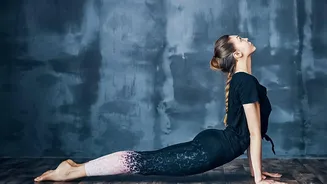
Bhujangasana (Cobra Pose)
Cobra Pose is a foundational backbend that directly counteracts the forward slump of phone use. By strengthening the back and opening the chest, it helps to correct rounded shoulders. Lie on your stomach with your legs extended and place your palms on the floor under your shoulders, keeping your elbows tucked in close to your body. Press the tops of your feet and your pelvis into the floor. On an inhale, use your back muscles to lift your head and chest off the floor, rolling your shoulders back and down. Keep the bend gentle and avoid pushing too hard with your hands. This pose builds strength in the spinal support muscles and stretches the front of the body.
Gomukhasana (Cow Face Pose Arms)
This posture provides an intense and necessary stretch for tight shoulders, targeting both internal and external rotation. You can do this seated or standing. Raise your right arm toward the ceiling, then bend the elbow so your hand drops down your back. Extend your left arm out to the side, rotate it inward so the thumb points down, then bend the elbow to bring the back of your left hand up your spine. Try to clasp the fingers of both hands. If they don’t reach, simply hold onto a strap or towel with both hands. This pose stretches the triceps, deltoids, and rotator cuff muscles, which are often tight and immobile from poor posture. Hold for several breaths before switching sides.
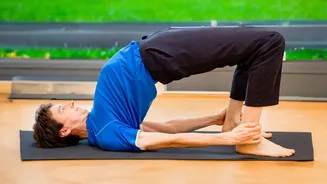
Setu Bandhasana (Bridge Pose)
While tech neck primarily affects the upper body, the tension often extends down the spine. Bridge Pose helps by strengthening the back, glutes, and hamstrings while opening the chest and hip flexors, which get tight from prolonged sitting. Lie on your back with your knees bent, feet flat on the floor hip-width apart, and arms alongside your body with palms down. Press into your feet and arms to lift your hips off the floor. Keep your thighs parallel and interlace your fingers underneath your back if possible, rolling your shoulders under to create a broader opening across the chest. This pose is a gentle inversion and backbend that helps realign the spine.
Supported Matsyasana (Supported Fish Pose)
This restorative pose is the perfect antidote to hunching forward. It passively opens the chest and shoulders, allowing gravity to do the work. Place a yoga block or a rolled-up blanket on the floor to support your upper back, just beneath your shoulder blades. Place a second, lower support (like a pillow or another block) under your head. Lie back over your props and let your arms rest out to the sides with palms facing up. This position creates a significant opening across the pectoral muscles and the front of the shoulders, directly reversing the rounded posture we adopt while looking at screens. Breathe deeply and allow your body to relax into the stretch for several minutes.