

Why Venus, Why Now?
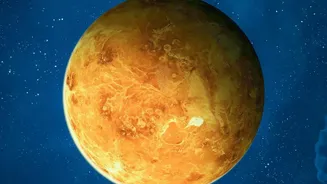
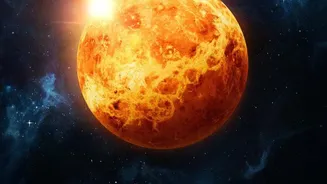
Venus is making a grand appearance in the evening sky throughout August 2026. It's the brightest planet we can see from Earth, and this month, its position makes it exceptionally easy to spot. After spending months climbing higher, Venus reached its greatest
separation from the Sun around mid-August, meaning it lingers in the sky after sunset, shining like a brilliant, solitary beacon. It’s so bright, in fact, that it can often be mistaken for an airplane or a very bright star. But unlike stars, its light is steady and doesn't twinkle, giving it a unique and powerful glow in the deepening twilight.
Your Simple Stargazing Toolkit
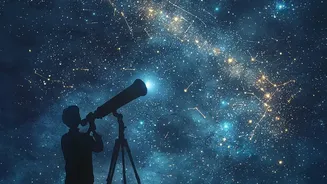
Here’s the best part: you don’t need any fancy equipment to see Venus. The only tools you truly need are your own eyes and a little bit of curiosity. Venus is one of the five planets visible to the naked eye and is by far the most radiant. So, forget about expensive telescopes for now. Just find a comfortable spot with a relatively clear view of the western horizon. This could be a balcony, a terrace, a local park, or any open area away from the direct glare of streetlights. Of course, if you have a pair of binoculars, bring them along! They won't be necessary to find Venus, but they can enhance the view, sometimes even revealing its phase, similar to our Moon.
Step 1: Get Your Timing Right
To catch Venus, timing is crucial. The best window to look for it is during twilight, right after the sun has set. For observers in India, start looking about 30 to 45 minutes after sunset. As the sky transitions from deep blue to inky black, Venus will pop into view as the very first 'star' to appear. It will be visible for roughly 90 minutes after the sun goes down before it, too, dips below the horizon. Don't wait too long, or you might miss it. That post-sunset, pre-darkness window is your golden opportunity to witness the Evening Star in all its glory.
Step 2: Look in the Right Direction
All over the world in August 2026, Venus appears in the western sky. After the sun sets, turn your gaze towards the direction where the sun just disappeared. Scan the horizon, and you'll find Venus shining brightly in the west or west-southwest. Throughout the month, it will be journeying through the constellation of Virgo. On some days, you might even spot the bright star Spica nearby, though Venus will outshine it dramatically. The key is simple: face west after sunset, and look for the most dazzling point of light. You truly can't miss it.
Step 3: Make a Positive Identification
How can you be sure the bright object you're looking at is Venus? Here are a few simple checks. First, its sheer brightness is a dead giveaway. At a magnitude of around -4.4, it is far more brilliant than any actual star in the night sky. Second, as mentioned, planets tend not to twinkle. Stars twinkle because their distant light is distorted by our atmosphere, but Venus is close enough that its light appears as a steady, unwavering glow. Finally, its location is key. If you see an intensely bright object in the west shortly after sunset, you have almost certainly found it. Congratulations!
Upgrade Your View with Technology
While not necessary, a good smartphone app can add another layer of fun and confirmation to your stargazing. Free apps like SkyView, Star Walk 2, and Stellarium use your phone's location and compass to create a real-time map of the sky. Simply point your phone at the bright object, and the app will confirm that you are indeed looking at Venus. These apps are fantastic for beginners, helping you not only identify planets but also learn about the constellations and other celestial objects around them. For those interested in an Indian context, the Bhagol app uses traditional Indian astronomical vocabulary.