




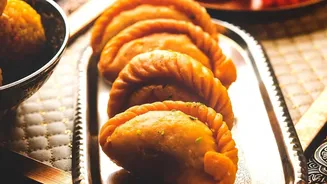
As the festive lights of Diwali draw near, the heart of the celebration is often found in the kitchen, where traditional sweets are crafted with love. Among the myriad of mithai, Kalakand stands out as a simple yet elegant choice.
The Charm of Homemade Kalakand
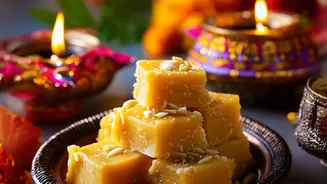
Kalakand is a beloved
Indian milk cake, known for its unique grainy yet moist texture that simply melts in your mouth. While its exact origins are debated, many believe it was invented in Alwar, Rajasthan, in 1947 by a confectioner named Baba Thakur Das. Unlike denser burfis, Kalakand is a soft-set sweet, cherished for its delicate, creamy consistency. Traditionally, making it can be a labour of love, involving the slow reduction of milk. However, simpler methods using readily available ingredients like paneer and condensed milk can deliver the same delightful results in a fraction of the time, making it perfect for busy festive preparations.
Essential Ingredients
This simplified recipe brings together the core components of classic Kalakand without the hours of stirring. You will need:
Paneer (Cottage Cheese): 250 grams. For the best texture, use fresh, soft paneer. If using a store-bought block, ensure it is thoroughly crumbled.
Condensed Milk: One 400g tin. This ingredient sweetens the mithai and provides a creamy base, significantly cutting down the cooking time.
Cardamom Powder (Elaichi): ½ to 1 teaspoon, for that classic aromatic flavour.
Ghee: 1 teaspoon, to grease the setting tray and add a hint of richness.
* Chopped Nuts: Pistachios and almonds for garnish.
Step-by-Step Guide to Perfection
Follow these simple steps for a flawless batch of Kalakand. First, prepare your setting tray by greasing a shallow plate or a small baking tin with ghee. Next, if using a block of paneer, crumble it finely with your hands until it has a grainy texture. In a heavy-bottomed, non-stick pan, combine the crumbled paneer and the entire tin of condensed milk. Begin cooking this mixture on a low to medium flame, stirring continuously. Initially, the mixture will become runny as the condensed milk heats up. Continue to stir and cook. Within 8-12 minutes, the mixture will thicken considerably and start to pull away from the sides of the pan. This is the crucial stage; do not overcook, as you want to retain some moisture for a juicy texture. Turn off the heat and stir in the cardamom powder. Immediately transfer the mixture to your prepared tray, spreading it evenly to about a one-inch thickness.
Tips for a Flawless Finish
To ensure your Kalakand is perfect every time, keep these points in mind. The key to a great Kalakand is its texture, so avoid overcooking the mixture. It should be thick but still visibly moist when you take it off the heat; cooking it until completely dry will result in a hard, chewy sweet. Using a heavy-bottomed or non-stick pan is highly recommended to prevent the milk solids from sticking and burning at the bottom. For the softest texture, use homemade or fresh paneer. If you must use store-bought paneer, grating it can help achieve a finer crumble than doing it by hand. Finally, allow the Kalakand to set properly. While it can be set at room temperature for a few hours, refrigerating it for at least two hours ensures clean, firm cuts.
Garnishing and Serving
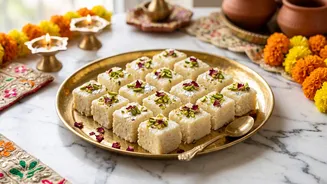
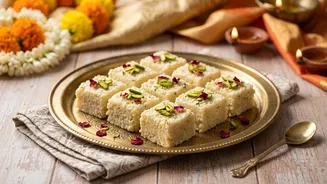
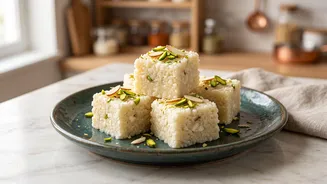
Presentation is key for a festive platter. While the Kalakand is still warm in the tray, sprinkle a generous amount of chopped pistachios and almonds over the top. Gently press the nuts down with a spatula so they adhere to the surface as it sets. For an extra touch of opulence, you can apply edible silver foil (vark) before adding the nuts. Once fully set, use a sharp knife to cut the Kalakand into uniform squares or diamond shapes. Arrange them on your Diwali mithai platter alongside other sweets. Kalakand is best served chilled or at room temperature and should be stored in an airtight container in the refrigerator, where it will stay fresh for up to a week.