




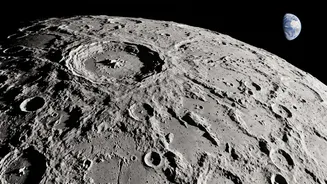

2001: A Space Odyssey (1968)
Stanley Kubrick’s magnum opus is the definitive journey into the unknown. The film is a patient, visual symphony that charts humanity's evolution from its tribal dawn to its next leap forward, all guided by a mysterious black monolith. The deep space
exploration here is a slow, methodical, and awe-inspiring trip to Jupiter, but the real journey is a philosophical one. The film's final act is a legendary, psychedelic sequence that has been interpreted for decades, representing a complete deconstruction of time and consciousness. It's a true cinematic puzzle that uses its futuristic setting to ask the biggest questions about our place in the cosmos without offering any easy answers.
Solaris (1972)
Andrei Tarkovsky’s classic, and its later American remake, offers a different kind of space terror—not one of aliens, but of ourselves. A psychologist is sent to a space station orbiting the mysterious planet Solaris, where the few remaining crew members have been driven to madness. He soon discovers the planet is a sentient entity that materializes figures from the crew’s past and forces them to confront their deepest regrets and desires. It’s a haunting exploration of memory, grief, and the inability to escape one's own mind, even millions of miles from Earth. The film uses its deep space setting to create a claustrophobic psychological trap, making it a profound and deeply unsettling experience.
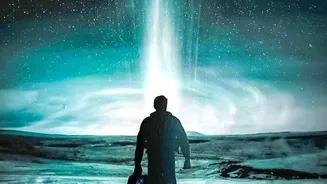
Interstellar (2014)
Christopher Nolan’s epic is a modern blockbuster with a deeply intellectual and emotional core. Set in a near-future where Earth is dying, a team of astronauts embarks on a perilous journey through a wormhole to find a new habitable planet. The film masterfully visualizes complex scientific concepts like relativity, black holes, and multiple dimensions, grounding them in the very human story of a father trying to save his children. The “mind-bending” aspect isn't just about physics; it’s about how love and time can intersect in ways we can barely comprehend, leading to a climax that reframes the entire journey in a powerful and unexpected twist.
Annihilation (2018)
While not entirely set in deep space, this film deals with an otherworldly force that arrives on Earth and creates a zone known as 'The Shimmer.' Inside this quarantined area, the laws of nature are rewritten, and DNA from all living things is refracted and combined. A team of scientists enters The Shimmer to understand what happened to a previous expedition, but the zone begins to affect their bodies and minds in beautiful and terrifying ways. It is a visually stunning and deeply metaphorical film about self-destruction, transformation, and the unknown. The journey into The Shimmer is as alien and disorienting as any trip to another planet, leading to a surreal and unforgettable conclusion.
Blade Runner 2049 (2017)
This breathtaking sequel expands on the original's futuristic world, creating a complex mystery that questions the very nature of identity and memory. While most of the action takes place on a dystopian Earth, the story is rooted in the off-world colonies and the synthetic 'replicants' created for them. The protagonist, a replicant blade runner, uncovers a secret that could shatter society. The film’s mind-bending element comes from its exploration of manufactured memories and the search for a soul in an artificial world. It’s a slow-burn neo-noir with a complex plot that rewards patient viewing, raising powerful questions about what it truly means to be human.