





As winter settles in, finding effective indoor workouts becomes a priority. Instead of just going through the motions, what if you could unlock more power from a classic exercise? It's time to look beyond the basic step-up and focus on the slow-down.
The Power of the Negative
The step-up is a staple in many fitness routines for a reason: it's a fantastic functional exercise for building lower-body strength. However, most people focus entirely on the 'up' motion—the concentric phase where the muscle shortens. The real, often-missed opportunity for building strength and stability lies in the 'down' motion. This is the eccentric phase, where the muscle lengthens under tension. A controlled step-down involves intentionally slowing this lowering phase, fighting gravity instead of succumbing to it. This simple shift in focus turns a standard exercise into a powerful tool for building more resilient muscles and joints.
Why Slowing Down Builds More Strength
Focusing on the eccentric part of an exercise, like a slow and controlled step-down, offers significant benefits. Firstly, our muscles are naturally stronger in the eccentric phase, meaning we can control more load on the way down than we can lift on the way up. By slowing the descent to three or even five seconds, you increase the muscle's time under tension, a key driver for muscle growth (hypertrophy) and strength gains. This controlled movement also enhances neuromuscular control—the communication between your brain and muscles—improving your balance, coordination, and overall stability. It's particularly effective for strengthening tendons and the muscles around the knee, making it a valuable exercise for injury prevention.
A Guide to Perfecting Your Form
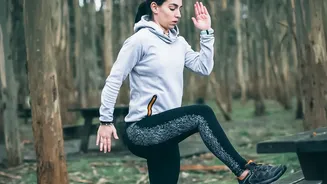
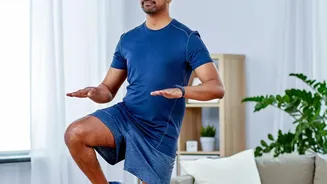
To perform a controlled step-down correctly, you'll need a sturdy box, bench, or the bottom step of a staircase. Start by standing on the step with both feet. Shift your weight onto one leg and lift the other foot. Begin the movement by slowly bending the knee of your standing leg, lowering your free leg toward the floor under full control. Keep your torso upright and your hips level. The goal is to make the descent last for a count of three to five seconds. Lightly tap your heel to the floor without putting weight on it, then drive back up to the starting position using the strength of your standing leg. A common mistake is letting the knee of the standing leg collapse inward; focus on keeping it aligned with your middle toe. If you feel wobbly, it's perfectly fine to hold onto a wall or chair for support.
The Ideal Winter Workout Upgrade
When the weather makes outdoor runs or sports difficult, indoor workouts are essential for maintaining fitness. The controlled step-down is an ideal addition to your winter routine because it requires minimal equipment and can be done in a small space. More importantly, it helps build foundational single-leg strength and stability. This is crucial for maintaining a strong base during the less active months, ensuring your body is prepared and resilient when you return to more dynamic activities like trekking, running, or playing sports in the spring. It's a low-impact, high-reward movement that keeps your joints healthy and your muscles engaged without the need for a gym.
Integrating StepDowns into Your Routine
To get the most out of controlled stepdowns, aim for quality over quantity. Start with two to three sets of 8 to 12 repetitions on each leg, focusing on a slow, deliberate lowering phase. You can incorporate this exercise into your lowerbody workout days. Pair it with other bodyweight movements like squats, glute bridges, and planks to create a balanced, fullbody indoor routine. As you get stronger, you can increase the challenge by using a higher step, holding light dumbbells, or further slowing down the eccentric phase. Remember, the goal is control. If you find yourself rushing the movement or losing balance, reduce the height of the step or go back to using support.