







The Annual Pothole Pandemic
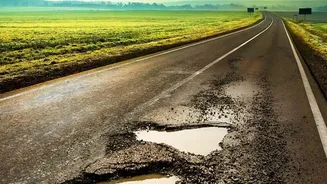
Every year, as the rains lash down, Indian roads begin to crumble. What starts as a tiny crack, weakened by water and stressed by traffic, quickly deteriorates into a bone-jarring pothole. In 2022 alone, potholes were reportedly responsible for nearly
4,500 accidents and over 1,800 deaths across the country. The cycle of damage and repair is a costly one, both in terms of government expenditure and the wear-and-tear on citizen’s vehicles. The traditional approach of patching roads is often a temporary fix, a bandage on a recurring wound. This endless loop of repair work creates traffic snarls, drains public funds, and leaves road users frustrated. But scientists and engineers are now developing a radical solution: roads that can mend themselves.
What Exactly is Self-Healing Asphalt?
Self-healing asphalt is not a single material, but a category of advanced paving mixtures designed to automatically repair minor damage. The core idea is to embed a 'healing' mechanism directly into the road's structure. Think of it like the human body's ability to heal a small cut before it gets infected. This technology works by enhancing standard asphalt with special additives. There are two primary methods being pioneered globally. The first involves mixing tiny capsules, often containing rejuvenating oils like sunflower oil, into the asphalt. The second method involves adding conductive materials, such as steel fibres or iron oxide nanoparticles. Both approaches aim to stop micro-cracks from growing into full-blown potholes.
The Science of a Healing Road
The magic is in how these additives are activated. In the capsule-based method, as a micro-crack forms in the pavement, it breaks open the nearby capsules. The rejuvenating oil is released, seeping into the surrounding aged and brittle binder (the black, sticky glue in asphalt). This oil softens the binder, allowing it to flow and bond back together, effectively sealing the crack from the inside out. The induction heating method works differently. When roads are built with steel fibres or nanoparticles, they can be 'healed' by a special maintenance vehicle that passes over the surface generating a magnetic field. This field heats up the conductive particles, which in turn melts the surrounding asphalt binder just enough for it to flow into the cracks and reseal them. The road essentially gets a reset without needing to be dug up.
Benefits Beyond a Smoother Ride
The most obvious benefit is safer, smoother roads. But the advantages run much deeper. By healing damage automatically, these roads could have a significantly longer lifespan than conventional ones, potentially doubling their service life. This translates into massive long-term savings for governments by reducing the need for constant, disruptive repair work. Fewer road closures mean less traffic congestion and economic loss. Environmentally, using fewer raw materials for repairs and reducing the carbon emissions from heavy construction machinery also presents a significant plus. In essence, it’s a shift from reactive, costly maintenance to proactive, built-in resilience.
Is This a Reality for India?
The prospect of pothole-free roads is particularly exciting for India, and the idea is gaining traction. The National Highways Authority of India (NHAI) is reportedly exploring the technology to improve the durability of its vast network. Moreover, Indian research institutions like the CSIR-Central Road Research Institute (CRRI) and IIT-Madras are actively working on developing variants suited to India's unique challenges, such as heavy traffic loads and extreme weather conditions. However, a major hurdle remains the high initial cost, which can be up to 25% more than traditional asphalt. While proponents argue that lifecycle savings will more than offset the initial investment, this upfront cost is a significant consideration for large-scale implementation.