






A Lifeline From The Stars
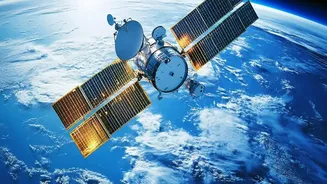
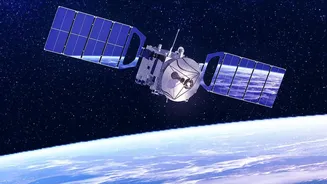
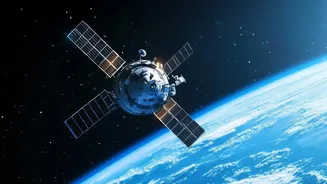
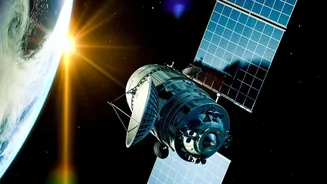
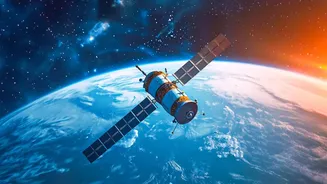
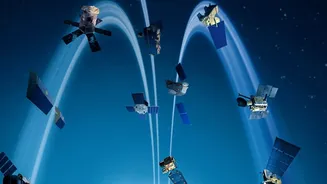
When Russian attacks targeted Ukraine's conventional communication networks, services like SpaceX's Starlink became indispensable. With thousands of small satellites in low Earth orbit, Starlink provided reliable, high-speed internet to civilians, government
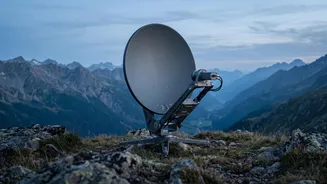
bodies, and, most critically, the military. The portable terminals allowed Ukrainian forces to maintain command and control, coordinate artillery fire, and operate a vast and effective fleet of drones. It was a game-changer, enabling a level of battlefield connectivity that was previously unimaginable and giving Ukraine a significant operational advantage against a larger invading force. This integration of commercial tech into military operations was unprecedented, effectively making a private company a cornerstone of a nation's defense infrastructure.
The Power to Say No
The relationship, however, soon grew complicated. As a private entity, SpaceX, and its founder Elon Musk, held the power to define the service's boundaries. An early, high-profile incident occurred in 2022, when a Ukrainian request to activate Starlink connectivity near Crimea for a naval drone attack was denied. Musk stated that fulfilling the request would make his company 'explicitly complicit in a major act of war'. More recently, in October 2026, Ukrainian forces reported sudden restrictions on Starshield, the military-grade version of the service. A speed cap of 160 km/h was reportedly imposed, which hampered Ukraine's ability to use fast-moving interceptor drones against Russian attacks. These incidents exposed a critical vulnerability: a sovereign nation's military operations could be curtailed by the decisions of a private company or, as was later suggested, its government backers.
When a CEO Becomes a Geopolitical Actor
The controversy has elevated the role of tech executives to that of geopolitical power brokers. The recent speed restrictions on Starshield prompted a flurry of debate over who was responsible. Musk claimed that Starshield systems are owned and controlled by the U.S. government, and that any limits are ultimately decided by the U.S. military and President. This assertion placed the decision within the context of tense relations between Kyiv and Washington over Ukraine's strikes on Russian energy infrastructure. Regardless of who made the final call, the situation highlights how a single individual or company can become a central figure in international conflicts, capable of influencing battlefield outcomes. It blurs the lines between a technology provider and an active participant in a war, a distinction that international law has not yet caught up with.
The Search for Sovereign Solutions
The uncertainty surrounding Starlink and Starshield has forced Ukraine and its allies to confront their dependency head-on. European leaders have acknowledged that they currently lack an immediate alternative to the capability provided by SpaceX. The European Union is now reportedly accelerating plans to develop its own sovereign satellite constellation, known as IRIS², though it is not expected to be fully operational until 2029. In the meantime, Ukraine is exploring other commercial options, such as networks being built by Amazon and Eutelsat's OneWeb, to diversify its communications and reduce reliance on a single provider. The recent disruptions have served as a stark warning for nations everywhere about the risks of outsourcing critical national security infrastructure to private, foreign-owned companies.