






The New Sound of Farming
Imagine a farm where pest control involves no sprays, no chemicals, and no residues. This isn't a far-off dream; for a growing number of innovative agriculturalists, it’s becoming a reality. The technology at the heart of this revolution is acoustic pest control.
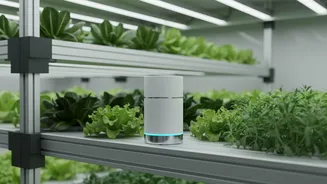
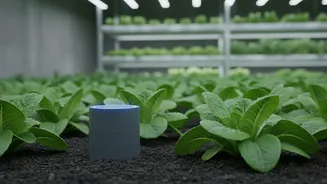
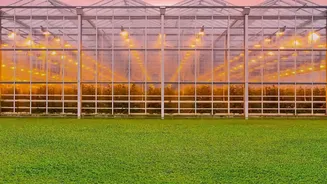
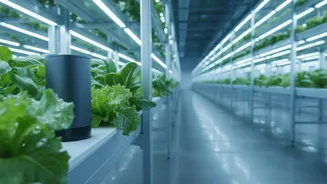
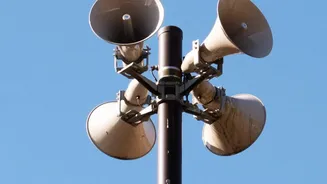
By deploying devices that emit high-frequency ultrasonic waves—far above the range of human hearing—farmers can create an invisible, protective barrier around their crops. These soundwaves create a profoundly uncomfortable and disruptive environment for many of the small insects and animals that would otherwise feast on fresh produce. It’s a clean, energy-efficient method that aligns perfectly with the goals of organic and sustainable farming, especially in controlled environments like the vertical farms and greenhouses sprouting up in urban centers.
How to Annoy a Pest with Physics
So how does a silent sound get rid of a hungry bug? The mechanism is elegantly simple. The ultrasonic waves, typically over 20 kHz, act like a constant, blaring alarm that pests can't stand. This acoustic assault can interfere with their basic life functions. Research has shown it can disrupt their navigation, communication, and feeding habits, encouraging them to leave the area entirely. More dramatically, studies have shown that vibrations generated by the ultrasonic waves can physically dislodge pests like whiteflies and aphids from plant leaves. In some cases, prolonged exposure to these specific frequencies has even been found to reduce the pests' ability to reproduce, slashing the number of eggs laid and preventing future infestations before they start. The goal isn't to kill them, but to make the farm such an irritating place to live that they pack their bags and go elsewhere.
In Use Today: From Greenhouses to Fields
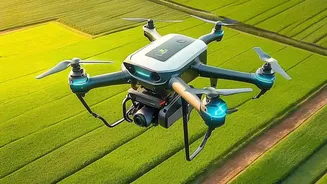
This technology has officially moved from the laboratory to the lettuce patch. While not yet a universal standard, acoustic pest deterrence is being actively used today in specialized agricultural settings. For instance, a study published in the prestigious PNAS journal detailed how ultrasonic emitters installed in strawberry greenhouses successfully prevented moth intrusions. The result was a drastic reduction in egg-laying and plant damage, allowing the farmers to almost completely skip the use of chemical insecticides for controlling those pests. Similarly, research conducted by Japan's National Agriculture and Food Research Organization found that ultrasonic waves could effectively disperse up to 60% of whiteflies, a common agricultural pest that is notoriously resistant to chemicals. These real-world applications prove that sound can be a viable tool in a modern farmer's pest management toolkit.
The Payoff: Clean Crops, Healthy Farms
For organic urban farms, the benefits are enormous. The primary advantage is the ability to manage pests without compromising their chemical-free certification. It offers a solution that leaves zero residue on the crops or in the soil, ensuring produce is as clean as it gets. This method also enhances worker safety by eliminating exposure to potentially harmful pesticides. After the initial installation, these systems are relatively low-maintenance and cost-effective to run compared to the recurring expense of chemical treatments. By integrating sound-based systems, urban farms can bolster their sustainability credentials, offering consumers a product that is not only locally grown but also protected by one of the cleanest methods available.
The Static on the Line
Of course, the technology isn't a perfect silver bullet for every farm and every pest. A key challenge is the potential for pests to acclimate to the sound over time, reducing its long-term effectiveness. To counter this, some systems use variable frequencies to keep the pests on their toes. There is also the matter of upfront investment, as the hardware requires an initial capital outlay that might be steep for smaller operations. Furthermore, the effectiveness can vary significantly depending on the specific pest, the size and layout of the farm, and environmental factors. Widespread adoption will depend on continued research to optimize frequencies for different pests and to develop more affordable, scalable systems that can provide reliable protection across larger, open-field environments.