






The Twin Burdens of Water and Power
Across rural Maharashtra, the story has long been the same. Farmers, the majority of whom are small and marginal landholders, depend heavily on the monsoon for a single yearly crop, typically paddy or millets. After the rainy season, many fields lie fallow,
forcing families into a cycle of seasonal unemployment and distress migration to nearby cities for daily wage work. The alternative, drawing from groundwater or nearby sources, is fraught with its own challenges. Grid electricity for agricultural pumps is notoriously erratic and often supplied only during the dead of night. This leaves farmers with a difficult choice: spend sleepless nights irrigating fields or invest in expensive, polluting diesel pumps, with fuel costs eating into their already thin profits. This precarious situation has made farming an increasingly unsustainable livelihood for many.
A Ray of Hope: The Solar Pump Solution
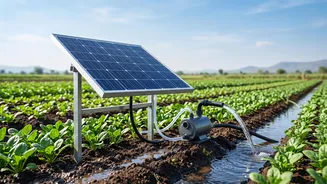
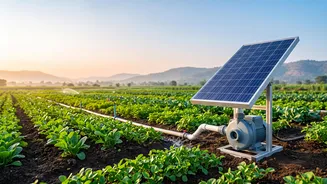
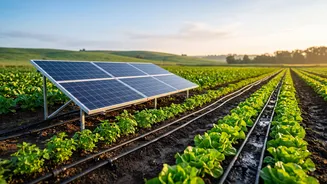
The game-changer has been the solar-powered water pump. These systems, often called micro-pumps due to their suitability for small farms, use photovoltaic panels to convert sunlight directly into electricity to run a pump. This provides a free, reliable, and independent source of power during the daytime, precisely when farmers need it most. Initiatives like the central government's PM-KUSUM scheme and Maharashtra's Mukhyamantri Saur Krushi Pump Yojana have been critical, offering subsidies of up to 95% that make the high initial investment affordable for small farmers. By decoupling irrigation from the unstable grid and expensive fossil fuels, solar pumps are providing farmers with newfound control over their most critical resource: water.
From Scarcity to Surplus
The impact of this technology is profoundly visible in villages like Tulyachapada in Palghar district. Despite being near a dam, farmers here struggled to get water to their fields and primarily grew a single rain-fed crop. Through a project that installed shared solar pumps and a pipeline network, the village underwent a dramatic transformation. Cultivated land expanded from just five acres to over 95 acres. Farmers who once only grew paddy are now cultivating a second, and sometimes third, crop of groundnuts, vegetables, and fruits. Ashok Karade, a farmer in Gadchiroli, reported that the ability to grow a second crop helped his annual income cross Rs 3.5 lakh. This story is being repeated across the state, turning cycles of scarcity into stories of surplus.
The Ripple Effect on Yields and Lives
The ability to irrigate year-round has a direct and powerful effect on crop yields and income. Farmers can now cultivate high-value crops like vegetables and fruits, which were previously too risky. Studies have shown that the shift to solar can increase farm income by 20-30% or more, simply by reducing input costs and enabling multi-cropping. But the benefits extend beyond the fields. With increased financial stability, families can invest in better education and healthcare. Crucially, it has dramatically reduced distress migration, allowing families to stay together in their villages year-round. The social impact is just as significant; farmers no longer have to endure sleepless nights waiting for power, leading to improved quality of life and more time with their families.
Challenges on the Horizon
Despite its clear advantages, the widespread adoption of solar pumps is not without its challenges. The most significant environmental concern is the potential for groundwater over-extraction. With a free and abundant energy source, there is a risk that water could be pumped unsustainably, especially in drought-prone regions. For this reason, many experts advocate for pairing solar pumps with water-saving techniques like drip irrigation. Furthermore, ensuring that subsidies reach the most vulnerable small and marginal farmers, and establishing a robust network for maintenance and after-sales service, remains crucial for the long-term success and scalability of this agricultural revolution.