




From Trading Post to Imperial Capital
The story begins in the late 17th century when the British East India Company established a trading post along the Hooghly River. This strategic location offered excellent access to the sea, crucial for trade in commodities like jute, tea, and textiles.
What started as a cluster of villages—Sutanuti, Gobindapur, and Kalikata—was transformed into a fortified settlement. In 1772, Warren Hastings, the first Governor-General, officially moved the administration from Murshidabad, declaring Calcutta the capital of British India. For the next 140 years, it was the epicentre of British political, commercial, and military power on the subcontinent.
The 'City of Palaces' Emerges
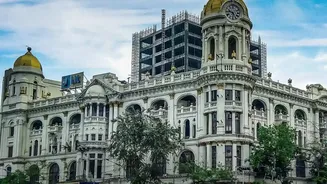
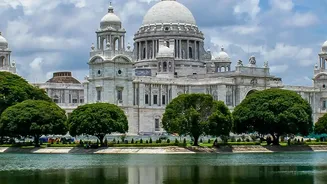
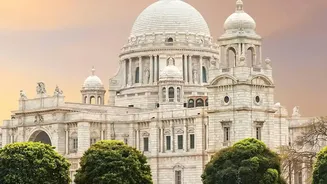
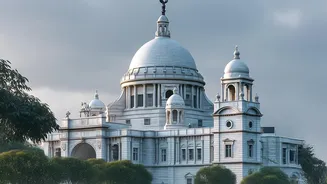
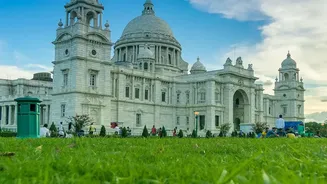
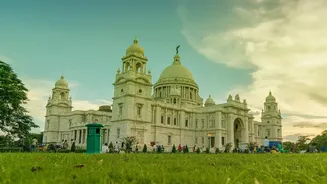
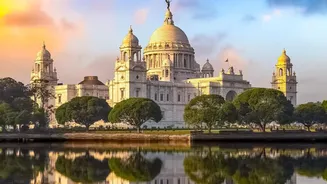
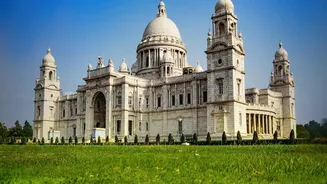
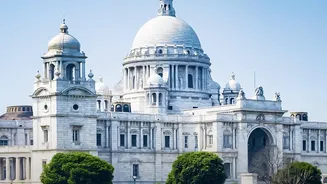
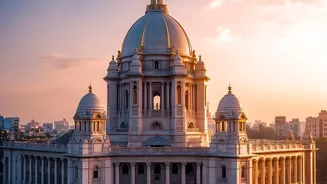
The most visible reason for the 'London of India' comparison is the city's magnificent colonial architecture. The British didn't just rule from Calcutta; they reshaped it in their own image, leading to another famous nickname: the 'City of Palaces'. Grand neoclassical, Gothic, and Victorian buildings began to dominate the landscape, designed to project imperial authority and permanence. The Government House (now Raj Bhavan), modelled on an English country estate, became the seat of the Viceroy. Other iconic structures like the Writers' Building, the General Post Office, and St. Paul's Cathedral solidified the city's European aesthetic. The grandest of all, the Victoria Memorial, a marble masterpiece built in memory of Queen Victoria, became a symbol of the city's imperial status.
A Hub of Culture and Intellect
The parallels to London went beyond architecture. Calcutta became the intellectual and cultural heart of India, much like London was for the Empire. The establishment of institutions like the Asiatic Society, Hindu College (later Presidency College), and the Calcutta Medical College fuelled a period of social and intellectual awakening known as the Bengal Renaissance. This era saw a fusion of Indian and European philosophies and a flourishing of literature, art, and reformist ideas. The city was home to India's first newspaper and became a centre for revolutionary thought, which ironically grew to challenge the very empire that built the city.
The End of an Era and a Lasting Legacy
By the early 20th century, Calcutta had become a hotbed of nationalist agitation. Lord Curzon's partition of Bengal in 1905 intensified the opposition. Partly to distance the administration from this political volatility and also for a more central location, King George V announced in 1911 at the Delhi Durbar that the capital of British India would be moved to Delhi. The formal inauguration of New Delhi in 1931 marked the end of Calcutta's reign as the imperial capital. However, the legacy of its time at the centre of the Raj remains deeply embedded in the city's identity.