






The Numbers In Black and White
According to financial statements released by Singapore Airlines (SIA), which holds a 25.1% stake in the carrier, its share of Air India's loss for the six months ending September 30, 2026, was S$361.7 million. While this figure was an improvement from
the S$429.5 million loss it booked in the same period last year, it paints a stark picture of the Indian airline's financial health. By extrapolating SIA's minority share, analysts have pegged Air India's total loss for the first half of the fiscal year at approximately ₹10,500 crore to ₹10,800 crore. This continues the trend of substantial losses, following a consolidated loss of over ₹22,000 crore for the full fiscal year that ended in March 2026.
An Investment in a New Beginning
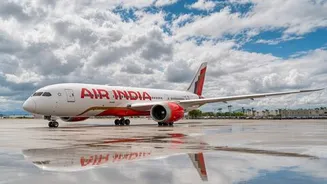
These staggering losses, however, are not happening in a vacuum. They are a direct consequence of one of the most ambitious turnarounds in aviation history. Since acquiring the airline in 2022, the Tata Group has initiated 'Vihaan.AI', a five-year transformation plan to resurrect the Maharaja as a world-class carrier. This involves a complete and costly overhaul. The plan's cornerstones include a historic order for 470 new aircraft from Airbus and Boeing, with commitments for even more, and a massive USD 400 million program to retrofit the interiors of its old widebody fleet. The airline is inducting new aircraft nearly every week, expanding its network, and completely rebuilding its digital infrastructure, from a new website to a generative AI chatbot for customer service. These are front-loaded investments, meaning the costs are borne now for a payoff that is years away.
Flying Against Fierce Headwinds
Compounding the internal investment pressure is a brutal external environment. The global aviation industry has been hit hard by soaring fuel costs. In India, the price of Aviation Turbine Fuel (ATF) has seen steep hikes through 2026, with a significant 13% jump in October alone. For airlines, fuel can account for up to 50% or more of operating costs, and this surge has squeezed margins for every carrier in the market, from regional players like Star Air to market leader IndiGo. This 'double whammy' of high investment costs and high operational expenses makes the path to profitability incredibly challenging. It's a calculated risk, but one taken in a market where even established players are feeling the pressure.
The Long Haul to Profitability
Despite the red ink, Air India's key stakeholders are holding firm. Both Tata Sons and Singapore Airlines have publicly stated that they recognise the transformation will take time and remain committed to the airline's journey. Actions are backing these words. In recent months, the Tata Sons board gave in-principle approval for a fresh capital infusion of over ₹10,000 crore into the airline. This signals a clear intent to continue funding the revival plan through its most cash-intensive phase. The airline's new CEO, Tewolde Gebremariam, has also emphasised a renewed focus on building cost efficiencies and accountability to navigate the current challenges. The consensus is that profitability is not an immediate goal but a milestone that is likely still three to four years away.