
Meet NASA’s Next Cosmic Explorer
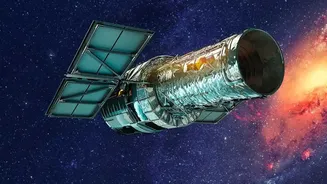
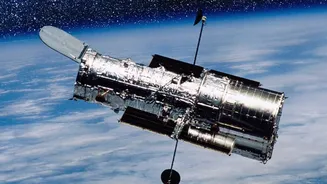
The Nancy Grace Roman Space Telescope is NASA's next flagship mission in astrophysics, set to join the ranks of the legendary Hubble and James Webb Space Telescopes. Named after Nancy Grace Roman, NASA's first chief of astronomy, this observatory has
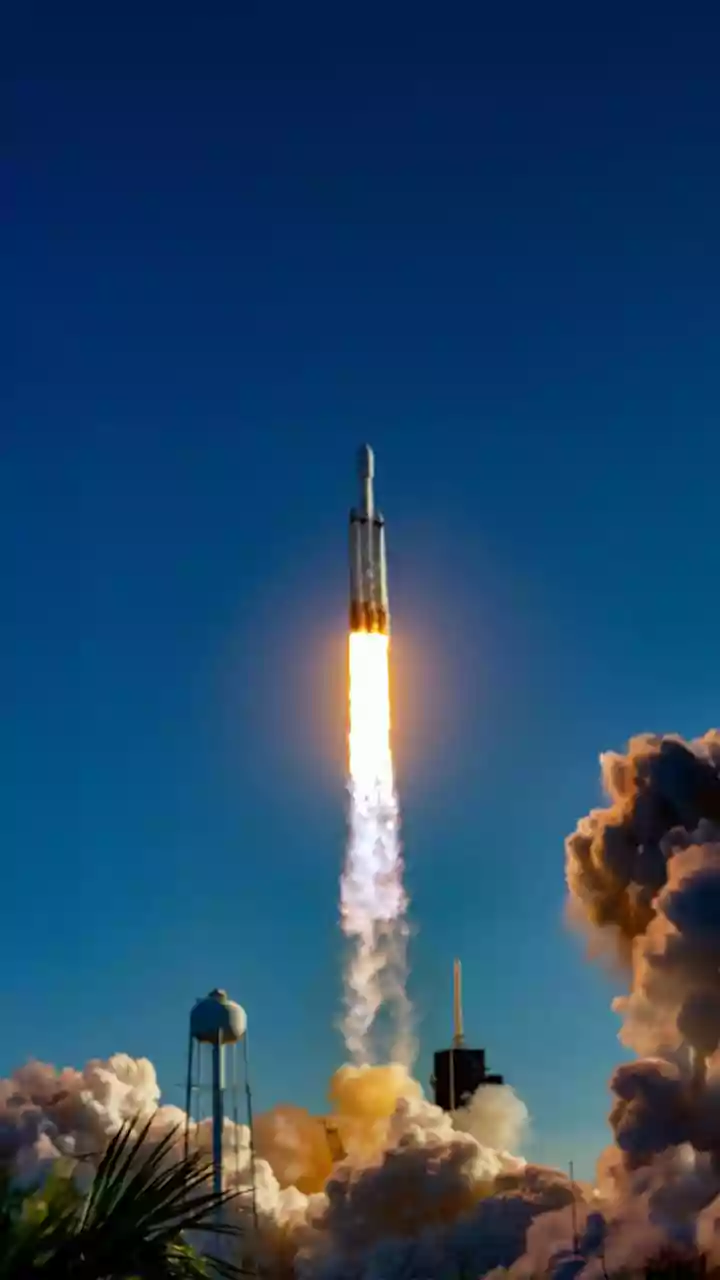
a mirror the same size as Hubble's but with a crucial difference. Its primary instrument boasts a field of view 100 times larger, allowing it to capture enormous panoramas of the sky with incredible speed and detail. Think of it this way: while Hubble and Webb are like looking at the universe through a pinhole to study specific objects in great depth, Roman is like opening the curtains to a vast, panoramic vista. Scheduled for launch on August 30, 2026, aboard a SpaceX Falcon Heavy rocket, Roman is designed to be a survey powerhouse. It will create cosmic maps of unprecedented scale, addressing mysteries from our galactic neighbourhood to the edges of the observable universe.
A Panoramic View of the Cosmos
Roman's greatest strength is its efficiency. Where it might take Hubble years to map a significant portion of the sky, Roman can do it in months. This capability will enable astronomers to tackle science on a statistical scale never before possible from space. The telescope is equipped with two primary instruments: the Wide Field Instrument and a Coronagraph Instrument. The Wide Field Instrument is the main survey camera, a 300-megapixel behemoth that will photograph huge swathes of space in infrared light. The Coronagraph is a technology demonstration designed to block the overwhelming glare of stars, allowing for the direct imaging of the much fainter planets orbiting them—a feat that is incredibly challenging from the ground. This instrument will be about 100 times more powerful than any existing coronagraphs, testing technologies for future missions aiming to find habitable worlds.
Hunting for Cosmic Phantoms
Two of the biggest mysteries in modern physics are dark energy and dark matter. Together, they are believed to make up about 95% of the universe, yet we know almost nothing about them. Roman is designed to change that. Dark energy is the name given to the mysterious force causing the universe's expansion to accelerate. Roman will study this by mapping the 3D positions of millions of galaxies and tracking thousands of exploding stars called supernovae. By measuring how the universe has expanded over cosmic time, scientists can learn more about the nature of dark energy itself. Simultaneously, the telescope will investigate dark matter, the invisible substance whose gravity holds galaxies together. Roman will map its distribution by observing how its gravity bends and distorts the light from distant galaxies, a phenomenon called weak gravitational lensing. This will help scientists understand how dark matter has shaped the structure of the universe from the very beginning.
A Galaxy Full of New Worlds
Beyond the grand cosmic mysteries, Roman is expected to trigger a revolution in the study of exoplanets. Astronomers predict the mission could discover thousands of new planets, potentially more than all previous missions combined. It will use two main techniques. The first is the transit method, where it watches for the tiny dip in a star's light as a planet passes in front of it. But Roman's specialty is a technique called gravitational microlensing. This occurs when a star or planet passes in front of a more distant star, and its gravity acts like a lens, briefly magnifying the background starlight. This method is sensitive enough to find planets much farther from their stars than the transit method can typically detect, and even lone 'rogue' planets that wander through space without a host star. This will provide a more complete census of planetary systems, helping us understand how common planets like those in our own solar system truly are.