
A Divine Connection to Lord Krishna
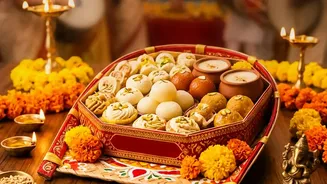
The story of Mathura Peda is deeply intertwined with the city's identity as the birthplace of Lord Krishna. Legend holds that the peda was a favourite of the young god, making it an essential offering, or 'prasad', in temples. This divine association
is central to its identity. The region of Braj, which includes Mathura, has a strong dairy tradition, and milk-based products have always been a core part of its cuisine and religious offerings. The peda evolved from this rich dairy culture, becoming a primary offering during Janmashtami, the festival celebrating Krishna's birth. This spiritual significance elevates it from a mere sweet to a blessed food item, carrying the sanctity of the holy city.
The Art of a Unique Recipe
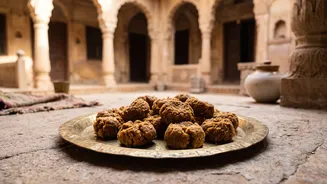
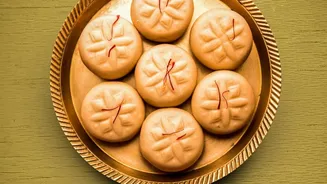
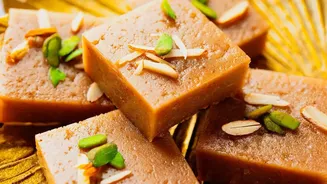
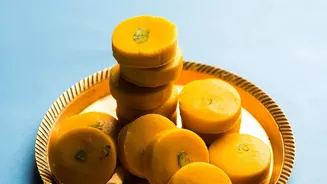
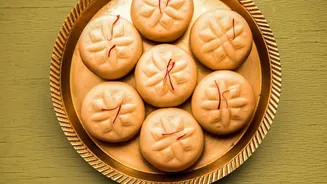
What sets Mathura Peda apart from other varieties is its distinctive preparation and texture. The key ingredient is khoya, or mawa, which is milk solids obtained by slowly simmering milk for hours. For Mathura Peda, this khoya is roasted patiently until it turns a signature light brown colour and develops a rich, caramelized aroma. This slow-roasting process gives the peda a slightly grainy texture and a deep, nutty flavour that is unlike the softer, paler pedas found elsewhere. The roasted khoya is then mixed with sugar, ghee, and aromatic spices like cardamom. Finally, the small, hand-shaped rounds are often rolled in 'tagar' or 'bura', a type of unrefined powdered sugar, which gives them a distinctively sweet and textured coating.
From Sacred Prasad to Cherished Souvenir
The transformation of Mathura Peda into a popular food souvenir is a direct result of pilgrimage. Millions of devotees visit Mathura and the surrounding Braj region annually. For these pilgrims, taking peda home is a way to share the blessings of their spiritual journey. The act of purchasing these sweets has become a ritual in itself, a way to bring back a piece of the sacred city for family and friends. Unlike many other sweets, the well-cooked, drier nature of Mathura Peda gives it a longer shelf life, making it ideal for travel. This practical quality, combined with its deep religious importance, helped cement its status as the go-to edible souvenir for anyone visiting Krishna's homeland.
A Mark of Authenticity and Regional Pride
The fame of Mathura Peda is so widespread that the name 'Mathura' itself has become a brand, synonymous with quality peda. It is often cited in proverbs and folk songs, highlighting its cultural importance. To protect this legacy and ensure its authenticity, efforts have been made to secure a Geographical Indication (GI) tag for Mathura Peda. A GI tag is a legal recognition that certifies a product's origin and the traditional methods used in its creation. While the application is still in process as of late 2026, the move signifies the sweet's importance to the region's cultural and economic identity. This official recognition would help consumers distinguish genuine Mathura Peda from imitations, preserving the heritage and craftsmanship that make it so special.