





A New Strategy for the Red Planet
In a significant strategic shift, NASA has awarded contracts to seven private companies to design the next generation of Martian mobility systems. Announced in early July 2026, the move is part of an initiative called Science Transport and Robotic Innovation
for Deployment and Exploration, or STRIDE. The goal is to spur innovation in robotic mobility, enabling future missions to go farther and explore challenging landscapes that are currently out of reach. The selected companies represent a mix of established aerospace players and ambitious newcomers: AeroVironment, Astrobotic, Venturi Astrolab, Ground Control Robotics, Honeybee Robotics, Intuitive Machines, and MEI Technologies. With a total funding pool of approximately $17 million, these are not contracts to build full-fledged missions, but rather to fund design studies and develop foundational technologies that could revolutionize how we traverse Mars.
The Problem with Six Wheels
For decades, NASA’s approach to Mars surface exploration has centered on large, highly capable, six-wheeled rovers. From the pioneering Sojourner to the car-sized Curiosity and Perseverance, these machines have delivered groundbreaking science. However, they have also shown the limitations of this design. The rugged Martian surface, with its sand pits, steep crater walls, and treacherous rock fields, poses a constant threat. The Spirit rover’s mission famously ended after it became stuck in soft soil, and even the most advanced rovers must navigate with extreme caution, limiting their speed and the areas they can access. The success of the Ingenuity helicopter, which completed 72 flights, proved that another mode of transport was possible and offered a tantalizing glimpse of what aerial scouting could achieve. NASA's new STRIDE initiative is a direct response to this reality, acknowledging that a one-size-fits-all approach is no longer sufficient for the ambitious science goals of the future.
Beyond Rovers: All-Terrain Exploration
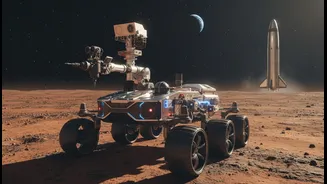
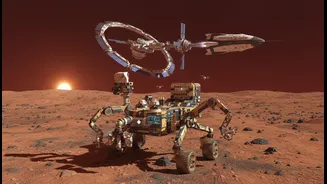
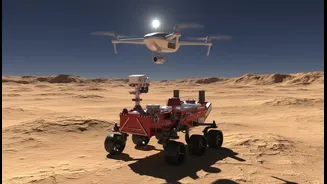
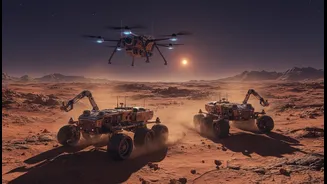
The STRIDE contracts encourage companies to think beyond the traditional rover. The initiative is seeking concepts for both surface and aerial systems capable of carrying scientific payloads. This opens the door to a wide range of innovative designs, from advanced drones that can map terrain and scout ahead for a ground vehicle, to novel rovers with specialized wheels or legs that can climb steep inclines or navigate sandy dunes without getting bogged down. The key objective is to unlock access to scientifically valuable regions that have been dismissed as too dangerous for past missions. These could include the steep slopes of canyons where water ice might be exposed, the rugged terrain around ancient volcanic sites, or the labyrinthine badlands that are impossible to navigate from orbit alone. By developing a toolkit of varied mobility options, NASA can one day pick the right tool for the right job, sending a specialized climber to a cliff face or a drone to explore a network of caves.
A Commercial Model for Mars
Perhaps the most significant aspect of the STRIDE program is its embrace of a commercial, public-private partnership model for deep-space exploration. This approach has already proven wildly successful closer to home. NASA’s Commercial Resupply Services and Commercial Crew programs for the International Space Station effectively outsourced rocket and capsule development to companies like SpaceX and Boeing, leading to lower costs and accelerated innovation. NASA is now betting that the same model can work for the complexities of the Martian surface. Rather than dictating a single design, the agency is leveraging the creativity of the private sector, asking multiple companies to compete and present their best ideas. This diversified investment spreads risk and fosters a competitive ecosystem. It’s a philosophical shift from being the sole architect of exploration to becoming a savvy customer, guiding and funding a burgeoning interplanetary industry that could one day support not just robotic missions, but the arrival of human explorers.