



The Secret is in the Roast
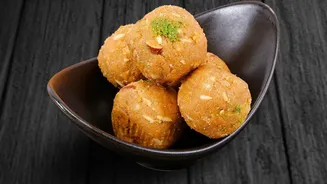
The single most important step in making perfect besan ladoos is roasting the besan (gram flour). This is not a process to be rushed. Roasting on a low, steady flame for 20-30 minutes is crucial. The goal is to cook out the raw, beany taste and develop
a deep, nutty aroma. You'll know it's ready when the colour changes to a uniform golden brown, it smells wonderfully fragrant, and the mixture loosens as the ghee separates slightly. Under-roasting is a primary cause of dense, pasty ladoos that stick to the roof of your mouth, while over-roasting or using high heat can make them taste bitter. Patience here is your greatest tool.
Troubleshooting: Dry and Crumbly Ladoos
If you find your ladoo mixture is too dry and won't bind together, the culprit is almost always not enough ghee. The besan might look like a thick, lumpy paste at first, but as it roasts, it will loosen up. If it remains dry and floury even after significant roasting, you need to add more fat. The fix is simple: add warm, melted ghee, just one teaspoon at a time, until the mixture comes together and can be shaped. Don't add too much at once, as you can easily tip the balance in the other direction. Another reason for dryness can be letting the mixture cool down too much before shaping; if this happens, warming it gently for a few seconds can help.
Troubleshooting: Dense or Greasy Ladoos
On the other end of the spectrum are ladoos that are too dense, soft, or greasy. This can happen for two main reasons. The first is adding too much ghee. If the mixture is excessively greasy and won't hold its shape, the best solution is to place it in the refrigerator for 10-15 minutes. This helps the ghee solidify, making the mixture easier to handle. If it's still too soft, you can add a tablespoon or two of besan that has been separately roasted (with very little ghee) to absorb the excess fat. Never add raw besan, as it will ruin the taste.
The Critical Cooling Period
The second major cause of dense or flat ladoos is adding the sugar when the besan mixture is still too hot. This melts the sugar, creating a sticky, dense, and often greasy consistency. After you finish roasting the besan, you must transfer it to a separate plate or bowl and let it cool. It should be just warm to the touch when you mix in the powdered sugar, not hot. This allows the sugar to integrate without melting, preserving the light, slightly grainy texture that is the hallmark of a great besan ladoo. Using a fine, powdered sugar (like boora or tagar) also contributes to a smoother, melt_in_your_mouth feel.
Getting the Right Texture
A perfect besan ladoo has a slightly grainy, sandy texture that collapses on the tongue, not a smooth, fudge_like one. Some recipes achieve this by using a coarser variety of besan, sometimes sold as 'ladoo besan'. If you only have fine besan, you can add a tablespoon or two of fine semolina (suji) and roast it along with the flour to introduce a bit of texture. A traditional 'halwai' trick is to sprinkle a tablespoon of milk or water over the hot roasted mixture; it will sizzle and froth, creating a more granular 'danedar' texture once it settles.