





The Science of Ripening
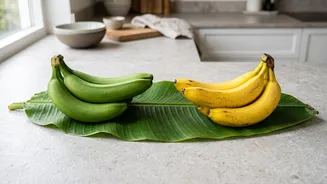
The fundamental difference between a green and a yellow banana lies in how it stores carbohydrates. As a banana ripens, natural enzymes trigger a remarkable chemical change. The vast reserves of starch, which make up most of a green banana's composition,
are progressively broken down into simple sugars—mainly sucrose, with smaller amounts of glucose and fructose. This process is responsible for the sweet taste and softer texture we associate with a ripe, yellow banana. While the total calorie count remains roughly the same throughout, the type of carbohydrate you consume changes dramatically.
Green Bananas: The Resistant Starch Powerhouse
A green banana is defined by its high content of resistant starch. As the name implies, this type of starch 'resists' digestion in the small intestine. Instead, it travels to the large intestine, where it functions like a prebiotic fiber, feeding the beneficial bacteria in your gut. This process offers several health advantages. It promotes a feeling of fullness, which can aid in weight management. More importantly, because the starch isn't rapidly broken down into sugar, green bananas have a low glycemic index (GI), meaning they cause a slower, more gradual rise in blood sugar levels. This makes them an excellent choice for individuals managing blood sugar.
Yellow Bananas: A Source of Quick Energy
As the banana turns yellow, its resistant starch content plummets, replaced by simple sugars. A medium ripe banana can contain around 15-18 grams of sugar. This transformation makes the banana much sweeter and easier to digest for most people. The readily available sugars provide a quick source of energy, making ripe bananas a popular pre- or post-workout snack. While the GI of a yellow banana is higher than a green one, it is still generally considered to be in the low-to-medium range. The fiber content also helps to moderate the absorption of sugar into the bloodstream.
Digestibility and Gut Health Concerns
The choice between green and yellow can also come down to your digestive tolerance. For some, the high resistant starch in green bananas can cause gas or bloating. However, for those with conditions like Irritable Bowel Syndrome (IBS), unripe green bananas are often better tolerated because they are low in FODMAPs—a group of carbohydrates that can trigger digestive symptoms. As a banana ripens and becomes yellow with brown spots, its FODMAP content increases, which can cause issues for sensitive individuals. Ripe bananas, on the other hand, are generally considered easier to digest for the average person due to their lower starch content.
What About Vitamins and Antioxidants?
The core mineral content, including essential potassium and magnesium, remains largely stable during the ripening process. However, there are some minor changes in other micronutrients. Some water-soluble vitamins, like Vitamin C and folic acid, may decrease slightly as the banana ripens. Conversely, the level of antioxidants, which help protect the body's cells from damage, tends to increase as the banana matures and develops brown spots.
The Verdict: Which Banana Is Best for You?
Ultimately, neither green nor yellow bananas are nutritionally superior; they simply offer different benefits. The 'best' choice depends entirely on your personal health goals and digestive needs. If your focus is on managing blood sugar, improving gut health with prebiotics, or staying full longer, a green banana is the ideal pick. If you need a quick energy boost, a sweeter taste, or a snack that's easier on the stomach, a ripe yellow banana is the way to go. For those looking for a middle ground, a yellow banana that's still tinged with green offers a balance of both starch and sugar.