



A Cosmic Fireworks Display
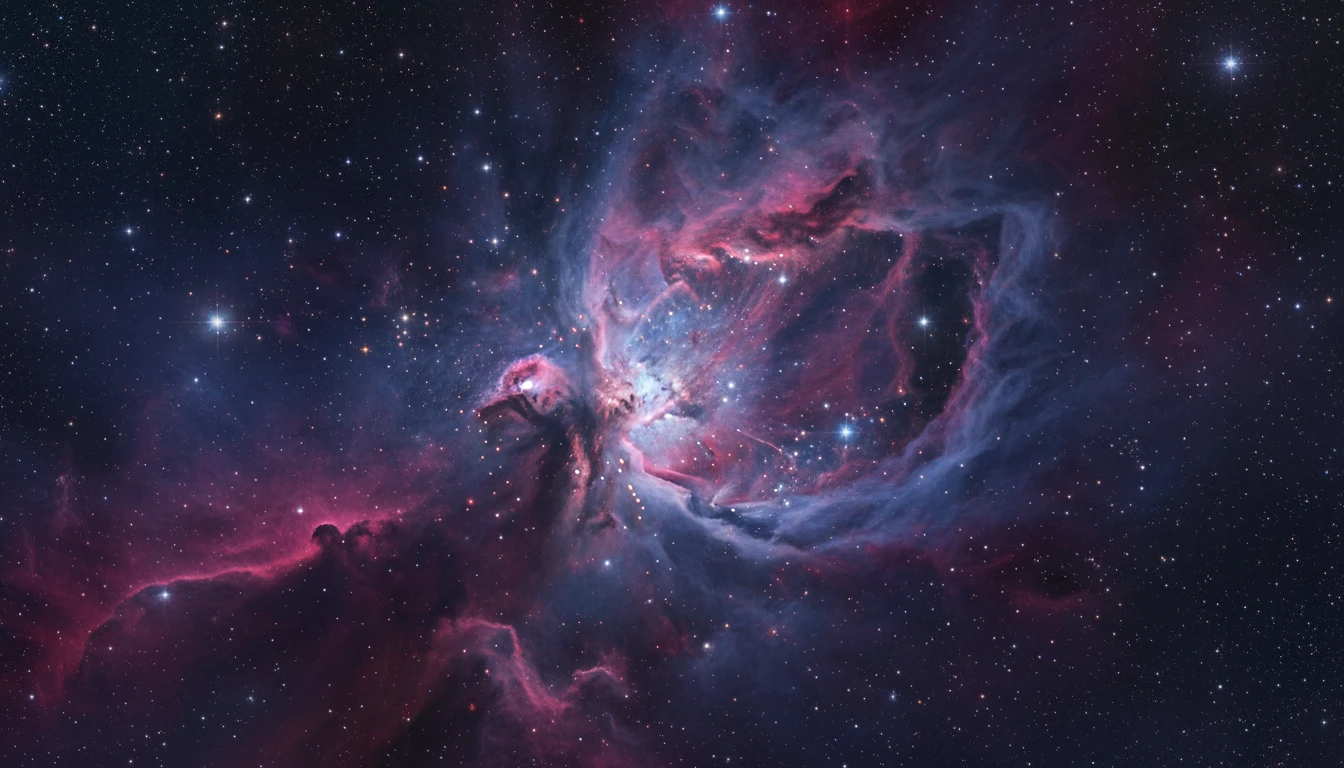
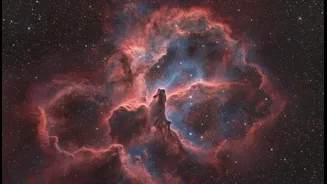
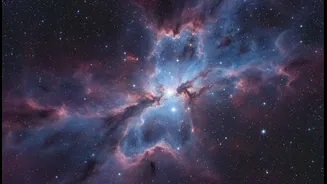
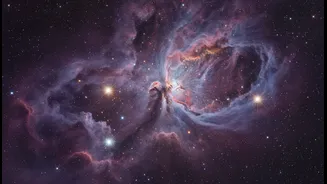
The image that has captured the internet's imagination is a fresh view of LH 95, a sprawling region of cosmic gas and dust located in the Large Magellanic Cloud. This neighbouring dwarf galaxy, a satellite of our own Milky Way, is home to some of the most
active stellar nurseries in our local cosmic neighbourhood. The picture reveals a breathtaking scene where thousands of brilliant blue and white stars sparkle against a backdrop of glowing red clouds, resembling fireworks against drifting smoke. This isn't just a random cloud; it's a dynamic environment where new stars are being born. The region is a stellar association, meaning it contains a mix of young, low-mass stars still in their infancy alongside massive, powerful blue giants that have already reached maturity. It’s a multi-generational portrait of star-life, all happening within one spectacular frame.
The Science Behind the Crimson Glow
So, why is the nebula red? The answer lies in the most abundant element in the universe: hydrogen. The most massive and powerful stars within LH 95 unleash intense ultraviolet radiation. This high-energy light floods the surrounding clouds of hydrogen gas, energizing the atoms within. When these energized hydrogen atoms lose a specific amount of energy, they emit light in a very particular shade of red, a phenomenon known as H-alpha emission. This crimson glow is a tell-tale sign for astronomers that they are looking at a region of active star formation. The darker, thread-like structures seen against the red clouds are dense lanes of cosmic dust, resilient enough to resist being completely eroded by the powerful radiation and stellar winds from the nearby stars. The colours in the image are assigned to represent specific wavelengths of light, allowing scientists to visualise the different processes at play.
The Ageless Wonder Behind the Lens
Delivering this stunning view is the Hubble Space Telescope, a testament to enduring technology and scientific ambition. Launched in 1990, Hubble has been circling our planet for over three decades, far exceeding its original mission timeline. It remains one of the most productive scientific instruments ever built. While newer telescopes like the James Webb Space Telescope have expanded our view of the cosmos, particularly in the infrared, Hubble continues to provide invaluable data and unparalleled images in visible and ultraviolet light. Its ability to capture images like this new one of LH 95 proves its continued relevance. Observing programs like Scylla and ULLYSES use Hubble to specifically study star-forming regions like this one, investigating the properties of young stars and the dust and gas that surround them. Each new image isn't just a pretty picture; it's a return on a long-term investment in human curiosity.
More Than Just a Pretty Picture
Astronomers study these stellar nurseries to understand one of the most fundamental processes in the universe: how stars are born. The LH 95 region is a perfect natural laboratory. By observing the roughly 2,500 young, developing stars in this area, scientists have gained new insights into how long it takes for them to mature. These observations have confirmed that young stars can continue to pull in gas and dust from their birth cloud for millions of years, a crucial stage in their development. Furthermore, the presence of multiple generations of stars existing side-by-side suggests that star formation in such regions happens in waves over an extended period, rather than all at once. These details help astronomers build a more complete timeline of how planetary systems, including our own, come into being. Every filament of gas and every sparkling star in the image holds a clue to the story of cosmic evolution.