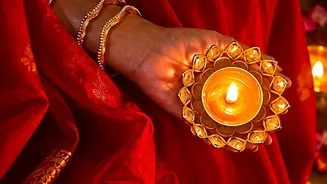


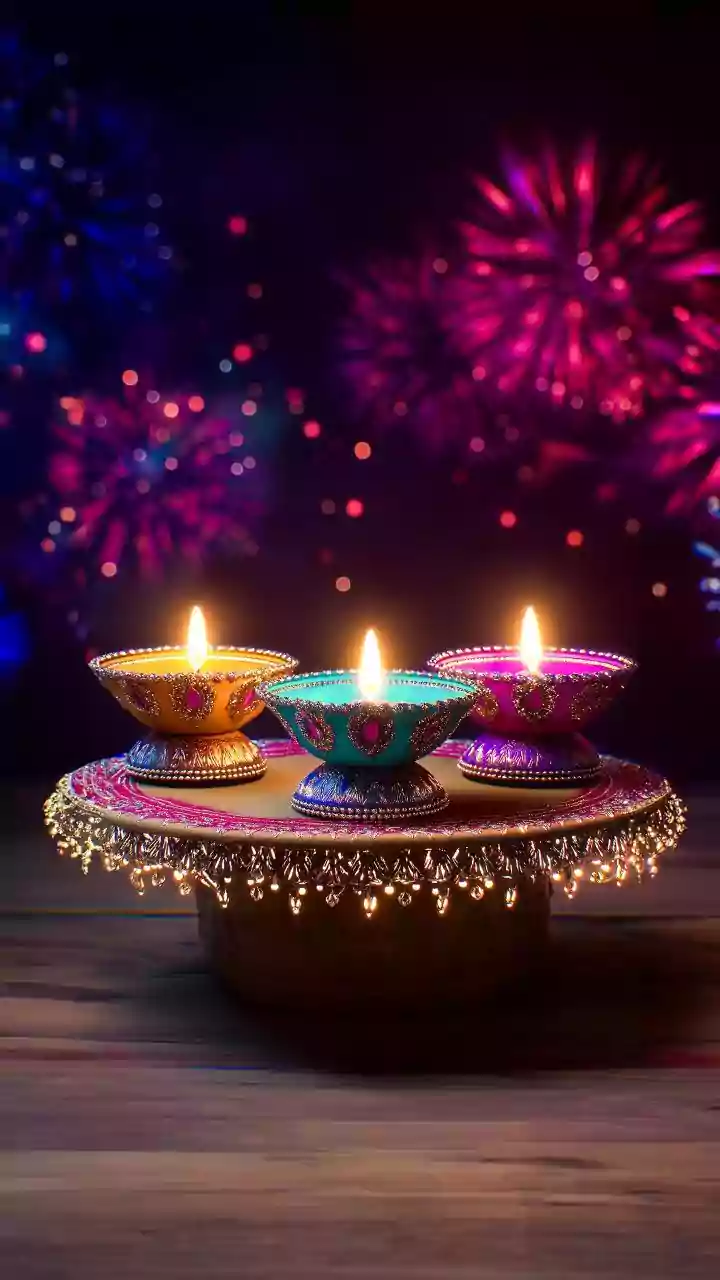
As the festival of lights approaches, homes across India transform into canvases of creativity. Beyond the glow of diyas, a rich tapestry of regional artistic traditions comes to life, each telling a unique story of culture and celebration.
Tamil Nadu: The Geometric Grace of Kolam
In Tamil Nadu,
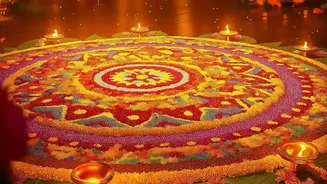
the break of dawn during Diwali is greeted with the creation of the Kolam. This intricate floor art is traditionally drawn by women at the entrance of their homes using rice flour or white stone powder. The designs are not just decorative but deeply symbolic, intended to welcome Goddess Lakshmi and bring prosperity. Kolams are characterised by their geometric patterns, often created around a grid of dots, with lines and loops forming a mesmerising, continuous design. While traditionally made with white rice flour—also serving as a meal for ants and birds—modern Kolams often incorporate vibrant colours, especially during festivals like Diwali, turning every threshold into a masterpiece of devotion and hospitality.
Maharashtra: The Luminous Akash Kandil
Come Diwali, the skies and balconies of Maharashtra are adorned with the gentle glow of the Akash Kandil, or 'sky lantern'. These beautiful lanterns, made from paper and bamboo frames, are a quintessential part of the state's celebration. Hanging an Akash Kandil symbolises the triumph of light over darkness and good over evil, acting as a beacon of hope and festivity. While traditionally handmade, today they are available in countless designs and materials, from simple paper structures to elaborate creations made of cloth or even wool. This craft illuminates homes and signifies a collective celebration that lights up entire neighbourhoods.
West Bengal: Alpona and Shola Pith Artistry
In West Bengal, Diwali coincides with Kali Puja, a major festival celebrated with unique artistic flair. Here, the traditional floor art is known as 'Alpona'. Unlike the geometric Kolam, Alpona is more free-flowing, created with a paste of rice and water that allows for graceful, flowing motifs of flowers, leaves, and other natural elements. Another significant craft is Sholapith, where artisans carve the soft, spongy stem of the shola plant. This eco-friendly material is used to create intricate white decorations for the goddess, including her ornaments and the backdrop (Chala), as well as the traditional headgear for weddings. Its pure white colour is considered auspicious and sacred.
Rajasthan: The Earthy Elegance of Mandana and Lippan
Rajasthan’s artistic traditions are deeply connected to its earthy landscape. During Diwali, rural homes are decorated with 'Mandana' paintings. This folk art is drawn by women on the floors and walls of their mud houses, which are first coated with red clay and cow dung. Using a white paste of chalk or lime, they create stunning geometric and figurative motifs, including peacocks, flowers, and representations of deities, to welcome gods and mark the festivities. Another mesmerising art form, Lippan Kaam (mud and mirror work) from the Kutch region, also finds its way into festive decor. Small mirrors are embedded into wet clay designs, creating a shimmering effect that is believed to ward off evil and brighten homes.
Gujarat''s Delicate Art of Sanji Rangoli
Gujarat celebrates Diwali with a unique and delicate art form known as ''Sanji''. This is the ancient craft of paper cutting, where intricate designs are meticulously cut into paper to create stencils. These stencils are then used to form rangolis on the floor, using vibrant coloured powders. The motifs often depict scenes from the life of Lord Krishna, reflecting the region''s deep Vaishnavite traditions. The creation of a Sanji artwork is a meditative process requiring immense patience and skill. During Diwali, these rangolis transform temple floors and home entrances into elaborate narrative canvases, showcasing a blend of devotion and exquisite craftsmanship.
Uttarakhand--The Ritualistic Aipan
In the Kumaon region of Uttarakhand''s ''Aipan'' is the ritualistic folk art that adorns homes during auspicious occasions,, including Diwali.. Aipan is characterised by its distinctive red and white colours.. The surface is first prepared with ''Geru'', a red ochre paste,, and the patterns are then drawn using a white paste made from rice flour called ''Biswar''. The art is created by women and passed down through generations.. Designs often begin with a central dot,, symbolising the universe,, and expand into patterns of flowers,, divine footprints,, and geometric shapes,, invoking divine power and bringing good fortune into the home.