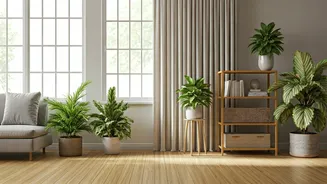







Let There Be Light
The quality of light in your home has a profound impact on your mood and energy levels. Research consistently shows that exposure to natural light helps regulate our internal clocks, leading to better sleep and improved mood. To maximize daylight, keep
window treatments sheer and lightweight. Strategically placed mirrors can also amplify sunlight, brightening darker corners. When the sun goes down, lighting continues to play a key role. Avoid harsh, overhead fluorescent lights, which can feel clinical and draining. Instead, opt for a layered lighting approach. Use a combination of ambient, task, and accent lighting with warm-toned bulbs (around 2,700K) to create a soft, inviting glow that promotes relaxation. Dimmers are an excellent tool for adjusting the mood of a room from functional and bright to cozy and calm.
Bring Nature Inside
Humans have an innate connection to the natural world, a concept known as biophilia. Integrating natural elements into your home can reduce stress, enhance creativity, and improve air quality. The most obvious way to do this is with houseplants. Varieties like snake plants and peace lilies are not only beautiful but are also effective air purifiers. Beyond plants, consider incorporating natural materials and textures. Think wood furniture, stone accessories, jute rugs, and textiles made from cotton, linen, or wool. These materials provide a tactile and visual connection to the outdoors. A color palette inspired by nature—soft greens, earthy browns, and calming blues—can also foster a sense of tranquility and rootedness, making your indoor space feel more alive and harmonious.
The Power of Order
Physical clutter can translate directly into mental clutter. Studies have shown that a disorganized and cluttered environment can increase levels of the stress hormone cortisol, leading to feelings of anxiety and being overwhelmed. Creating order is not about achieving sterile perfection, but about establishing a sense of control and clarity. Start small by decluttering one surface or a single drawer. The goal is to create systems where everything has a home. This reduces the mental load of constantly searching for misplaced items and the visual chaos of untidiness. Organizing is an act of self-care; it carves out physical and mental space for you to think more clearly and relax more deeply. A tidy environment allows your mind to rest, no longer distracted by the 'to-do' list that clutter represents.
Engage Your Senses
A true sanctuary engages all the senses, not just sight. Consider the sounds, smells, and textures that make you feel calm and centered. Sound can be curated with a calming playlist, the gentle hum of a white noise machine, or even a small indoor water feature. To dampen harsh outside noises, use soft furnishings like rugs, curtains, and upholstered furniture, which help absorb sound. Scent is powerfully linked to memory and emotion. Use essential oil diffusers, candles, or fresh herbs to introduce comforting fragrances like lavender, sandalwood, or chamomile. Finally, incorporate a variety of textures. A plush throw blanket, a soft velvet cushion, or a smooth ceramic mug can provide moments of tactile comfort throughout your day, grounding you in the present moment.
Carve Out a Personal Corner
You don't need a whole room to create a sanctuary; even a small, dedicated corner can serve as a personal retreat. This space should be reserved for activities that relax and rejuvenate you, whether it's reading, meditating, journaling, or simply enjoying a cup of tea. Furnish this nook with a comfortable chair, good lighting, and a small table for your essentials. The key is to signal to your brain that this is a place to unwind and disconnect from daily stressors. By setting aside a specific 'zen zone', you are making a conscious commitment to your own well-being. It becomes a powerful anchor in your home—a small, personal haven you can escape to whenever you need a moment of peace.