




Why Rolling Trumps Folding
For generations, travellers have debated the best way to pack. While folding is familiar, rolling is the preferred method for seasoned jet-setters and even the military. The reason is simple: rolling clothes tightly compresses the fabric and squeezes
out trapped air, which significantly reduces the amount of space each item takes up. This allows you to fit more into your carry-on, helping you avoid checked bag fees. Beyond just saving space, rolling can also minimise wrinkles. Unlike folding, which creates hard creases, rolling keeps fabric smooth and consistent, meaning your clothes arrive ready to wear. This method works best for lightweight and casual items like t-shirts, pants, and clothes with polyester or lycra blends.
Mastering the Basic Roll
The standard roll is perfect for most of your casual vacation wear. Start by laying the garment, like a t-shirt or pair of jeans, on a flat surface. Smooth out any wrinkles with your hands, as rolling creases into the fabric will only set them in further. For a shirt, fold the sleeves inward to create a neat rectangle. For pants, fold them in half vertically, leg over leg. From there, begin rolling tightly from the bottom hem upwards. A tight, uniform roll is key to maximizing space and preventing the item from unravelling inside your bag. The result is a compact clothing 'burrito' that can be easily slotted into your luggage.
The Advanced Ranger Roll
For maximum compression, the 'Ranger Roll' or 'Army Roll' is a game-changer. This military-tested technique creates an even tighter bundle that locks itself in place. To start, lay your item flat and fold up the bottom hem by a few inches, creating a 'cuff' on the inside. Then, fold the sides inward to your desired width and roll the item tightly from the top down towards the cuffed end. Once you have a tight cylinder, take the cuff you created at the beginning and flip it over the entire roll. This little pocket holds the bundle together, preventing it from coming undone. This technique is especially useful for t-shirts, underwear, and socks, turning them into small, dense packages.
Know When to Fold or Cube
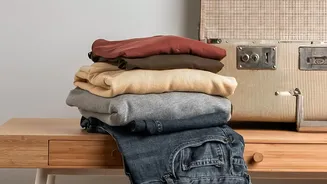
While rolling is a powerful technique, it’s not suitable for every garment. Bulky items like thick sweaters or jackets can actually take up more space when rolled. Similarly, structured clothing such as blazers, formal wear, or stiff button-down shirts should be folded to protect their shape and prevent unwanted creasing. For these items, traditional folding is a better choice. To stay organized, consider using packing cubes. You can place your rolled items in some cubes and your folded garments in others. This not only keeps your suitcase tidy but allows you to separate clothes by type or by outfit, so you can find what you need without disturbing everything else.
Packing Your Carry-On Like a Pro
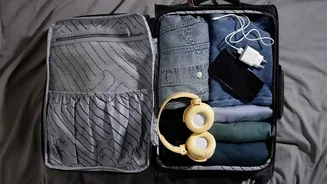
Once your clothes are rolled, the final step is arranging them strategically in your carry-on. Think of it like a game of Tetris. Place heavier rolled items, like jeans, at the bottom of the suitcase near the wheels. This creates a stable base and prevents the bag from tipping over. Then, stack your lighter rolled items on top, fitting them snugly together like puzzle pieces. Fill any gaps with smaller items like socks or underwear. This method not only maximizes every inch of space but also creates a visual inventory, allowing you to see most of your clothes at a glance without having to dig through layers.