



A Dance of Moon and Planets
September offers a wonderful opportunity to watch our Moon interact with several planets. On the mornings of September 6 and 7, look towards the east before dawn to see the waning crescent Moon pair up with a faint Mars. Just a day later, on September 8,
the Moon will be close to Jupiter. The real spectacle occurs on September 14, when a slender crescent Moon has a close encounter with the dazzlingly bright Venus in the evening sky. Many of these alignments are visible to the naked eye, offering a great chance to track the movements of our solar system neighbours from your own backyard.
Venus at Its Brightest
The planet Venus, often called the 'Evening Star', will be impossible to miss this month. On September 22, it reaches its peak brilliance for the year, shining at a stunning magnitude of -4.8. Even from light-polluted cities, Venus will stand out as a radiant beacon in the western sky shortly after sunset. Its extreme brightness is due to its cloud-covered atmosphere reflecting sunlight and its relative proximity to Earth. Look for it as twilight deepens; you won't need any special equipment to enjoy the view.
The Autumnal Equinox
On September 23, the Sun will shine directly over the Earth's equator, marking the Autumnal Equinox for the Northern Hemisphere. This event signals the official start of autumn, with day and night being of nearly equal length across the globe. For skywatchers, the equinox is a welcome milestone as it ushers in progressively longer nights, providing more time for stargazing. Following the equinox, there's often a noted increase in auroral activity, known as the Russell-McPherron effect, though these displays are typically reserved for very high latitudes.
A Double Feature: Neptune at Opposition and the Harvest Moon
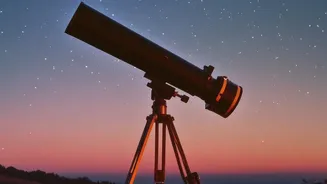
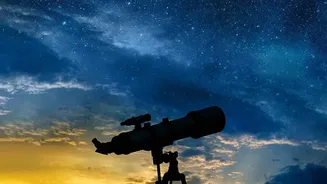
September 26 presents a fantastic double bill for dedicated observers. The eighth planet, Neptune, will be at opposition, meaning Earth is directly between it and the Sun. This is when Neptune is at its closest and brightest for the year. However, due to its vast distance, it will not be a naked-eye object. You will need a good telescope to spot it as a tiny, steady blue-green dot in the constellation Pisces. The main event for most will be the Full Harvest Moon, which also occurs on this date. This is the full moon closest to the autumn equinox and is famed for its beautiful, large, orange appearance as it rises. Look to the eastern horizon just after sunset for this magnificent sight.
Tips for the Best Viewing Experience
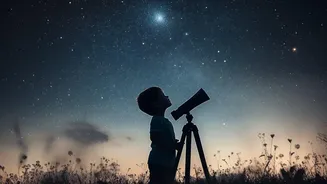
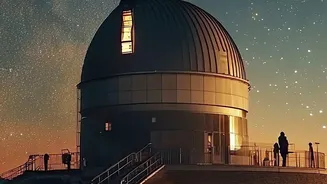
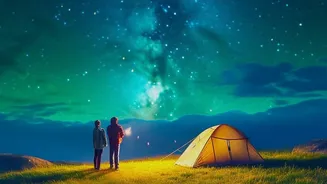
To make the most of these celestial events, your best bet is to find a location away from bright city lights. Light pollution washes out fainter stars and subtle details. Find a spot with a clear, unobstructed view of the horizon, especially for events happening near sunrise or sunset. Give your eyes at least 15-20 minutes to fully adapt to the darkness; this will dramatically increase what you can see. While many of this month's highlights are visible with the naked eye, a simple pair of binoculars can enhance the view of planetary pairings and reveal more details on the Moon's surface.