








A New Era of Overnight Travel
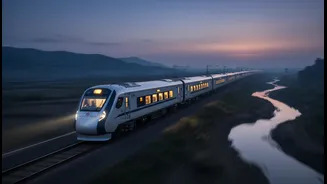
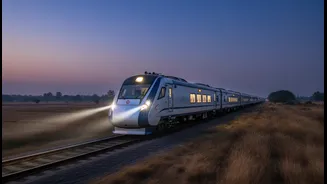
Since their introduction in 2019, Vande Bharat trains have redefined premium train travel in India with their speed and modern amenities. Now, Indian Railways is expanding this popular platform to long-distance overnight journeys. The Vande Bharat sleeper
is a fully air-conditioned train designed for routes between 800 and 1,200 kilometres. The first services were launched in early 2026, marking a significant step in offering a comfortable and fast alternative to existing express trains like the Rajdhani. With a capacity of over 800 passengers across First, Second, and Third AC classes, these trains are built to cater to a wide range of travellers looking for an upgraded overnight experience.
Speed and Time: The Real Test
While a flight is indisputably faster in the air, the total travel time often tells a different story. A one-hour flight can easily become a four-to-five-hour journey when you factor in travel to the airport (often located far from the city centre), security checks, and waiting at the boarding gate. Vande Bharat sleeper trains aim to win on this 'door-to-door' travel time. For an overnight journey, passengers can board a train from a city-centre station in the evening, sleep through the night, and arrive at their destination's city centre the next morning, feeling rested. Though the trains have a top tested speed of 180 kmph, they are expected to run commercially at up to 160 kmph, significantly cutting down journey times compared to older trains.
The Comfort and Experience Factor
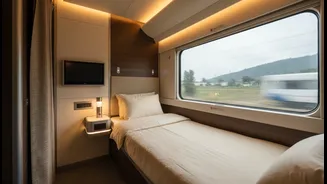
This is where the Vande Bharat sleeper truly aims to outshine air travel. While economy class flights can feel cramped, the new sleeper coaches are designed for comfort. They feature wider, better-cushioned berths, ambient lighting, and individual reading lights and charging points for every passenger. The interiors boast modern aesthetics, advanced bio-vacuum toilets with sensor-based taps, and superior ride quality with reduced noise and vibration. Unlike the hassle of airline baggage restrictions and extra fees, trains offer a far more generous luggage allowance at no additional cost, adding another layer of convenience for passengers.
Decoding the Cost Equation
Cost is a major driver for travel decisions in India. Vande Bharat sleeper fares are positioned to be highly competitive. They are expected to be about 10-15% higher than a comparable journey on a Rajdhani Express, but still significantly cheaper than most airline tickets, especially for last-minute bookings. For example, early reports on the Howrah-Kamakhya route showed ticket prices ranging from approximately ₹960 for 3AC on a shorter leg of the journey to ₹3,640 for 1AC for the full distance. When you eliminate the extra costs associated with flights—such as expensive cab rides to airports and excess baggage fees—the train becomes an even more financially attractive option for many travellers.
Routes and Rollout Plan
The first Vande Bharat sleeper service was launched in January 2026, connecting Howrah and Kamakhya. Shortly after, a second service connecting Varanasi and Chheharta (near Amritsar) was inaugurated in July 2026. Indian Railways has ambitious plans to expand the network. While some manufacturing timelines have seen delays, with certain prototypes now expected by the end of 2026, multiple companies are involved in production to accelerate the rollout. Dozens of new sleeper trains are planned to be introduced over the next couple of years, with major trunk routes like Delhi-Mumbai and Mumbai-Bengaluru already approved for future services.