





A New Blueprint for Mars
NASA is fundamentally changing its approach to exploring Mars by adopting a model that has already proven successful for missions to the International Space Station and the Moon. Instead of building, owning, and operating every component of a mission,
the agency is now looking to buy services from private companies. In this new public-private framework, NASA provides the scientific instruments, and a commercial partner provides the rocket, the spacecraft, and the mission operations to get that science to Mars. This shift allows NASA to act more like a customer purchasing a delivery service, which could dramatically lower the barrier to entry for deep-space science. The agency began formally studying this concept in 2024 to see if the private sector could bring down costs and increase the frequency of missions to the Red Planet.
The Challenge of Rising Costs
This strategic pivot is largely driven by necessity. Traditional, agency-led missions have become increasingly complex and expensive. A prime example is the flagship Mars Sample Return (MSR) mission, a top scientific priority designed to bring Martian rock samples to Earth. Originally estimated to cost around $4 billion to $5.3 billion, projections for MSR have ballooned, with some estimates now reaching as high as $11 billion. These soaring costs have put immense pressure on NASA's planetary science budget, threatening to delay or defund other important research projects. By offloading the transportation and operational aspects of certain missions to the commercial sector, NASA hopes to free up its own resources to focus on core science and more ambitious, long-term exploration goals that are still beyond the scope of private industry.
Commercial Partners Take the Helm
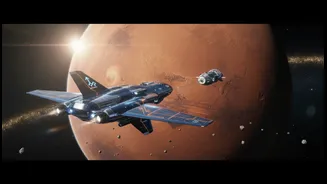
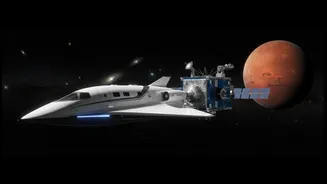
The first major test of this new model is the Aeolus mission, scheduled to launch in 2028. In this pioneering partnership, NASA is providing a sophisticated suite of four scientific instruments, while aerospace company Relativity Space will handle the rest: providing the rocket, building the spacecraft, and managing the flight to Mars. This is a significant milestone, marking the first time a private company has been tasked with an end-to-end commercial delivery to another planet for the agency. This approach mirrors NASA's successful Commercial Lunar Payload Services (CLPS) program, which has enlisted companies like Astrobotic and Firefly Aerospace for Moon missions. Other major players in the commercial space industry, including SpaceX, Blue Origin, and Lockheed Martin, are also developing capabilities and concepts for future commercial Mars services, signaling a vibrant and competitive market ahead.
What Science Gets Cheaper?
The public-private model is particularly well-suited for smaller, more focused science missions that can be accomplished with standardized spacecraft. The Aeolus mission, for instance, will carry instruments to create the first daily, global map of Martian winds, temperature, dust, and clouds. This atmospheric data is not only scientifically valuable but also critical for planning the safe entry, descent, and landing of future robotic and human missions. The model enables a higher cadence of such targeted missions, allowing scientists to gather vital data more often than the once-a-decade rhythm of larger, more complex flagship programs. By leveraging commercial capabilities, NASA can pursue a continuous flow of scientific information from orbiters, landers, and other platforms.
More Than Just Financial Savings
The benefits of this model extend far beyond the bottom line. For NASA, it's a strategic move that acts as a "force multiplier for science," as Administrator Jared Isaacman noted. It allows the agency to accelerate discovery and get critical data to researchers faster. For commercial partners like Relativity Space, a successful Mars mission provides invaluable flight heritage and proves their deep-space capabilities, making them highly competitive for future contracts. Ultimately, this approach is designed to cultivate a robust commercial space economy that extends into deep space. By stimulating private investment and innovation, NASA is laying the groundwork for a future where government agencies and commercial entities work together to explore Mars and beyond.