


The First Domino: A Glacier Crumbles
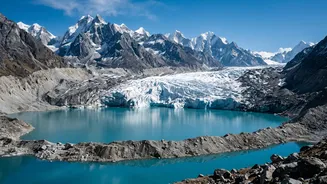
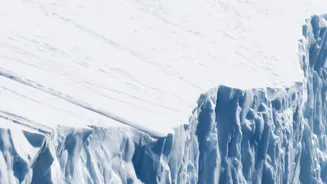
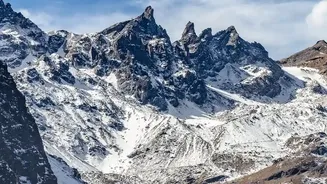
It begins high in the mountains, often silently. A section of a glacier, weakened by rising temperatures, breaks away. This isn't just a gentle slide; it's a colossal failure of ice and rock, sometimes involving millions of cubic metres of material, crashing
down with immense force. In the Himalayas, this phenomenon is becoming increasingly common. As global warming accelerates, the permafrost that acts as a natural cement, holding rock and ice together on steep slopes, begins to thaw. This destabilises entire mountainsides. What follows is not merely an avalanche of snow, but a powerful torrent of rock and ice that hurtles down valleys, gaining speed and destructive energy with every metre it falls.
The Cascade: From Ice Fall to Landslide
The immense energy of the initial collapse is the trigger for the next stage. As the mass of ice and rock slams into the slopes below, it acts like a hammer blow, dislodging vast quantities of soil, rock, and other loose material. This initiates a massive landslide. In a region as geologically active and steep as Nepal, many slopes are already unstable, scarred by previous earthquakes or heavy monsoon rains. The force of the glacial collapse is often all that is needed to push them past their breaking point. This is no longer just a fall of ice; it has transformed into a much larger, more complex hazard—a fast-moving river of earth and stone, fundamentally reshaping the landscape as it descends.
The Final Form: A Destructive Debris Flow
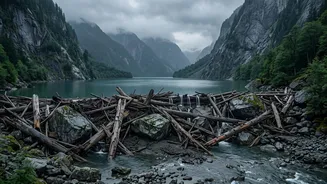
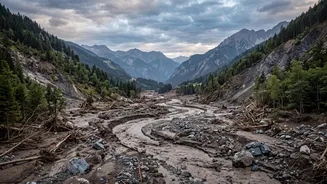
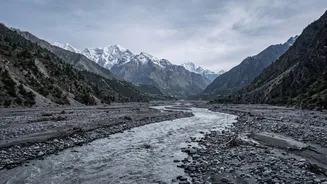
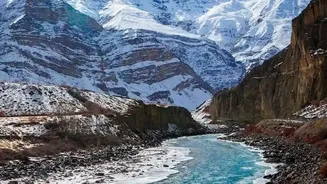
The most destructive phase often occurs when this landslide material reaches a river. The mix of rock and soil combines with the river's water, sometimes forming a temporary dam that blocks the flow. When this unstable dam inevitably bursts, or if the landslide simply crashes directly into the channel, it creates a debris flow. This is a thick, concrete-like slurry that moves at high speed, carrying with it boulders the size of cars, trees, and anything else in its path. Unlike a clear water flood, a debris flow has immense erosive power and momentum, capable of destroying bridges, obliterating buildings, and burying entire towns under metres of thick sediment. It's this final, terrifying form that often causes the most widespread devastation miles downstream.
Case Study: The 2021 Melamchi Disaster
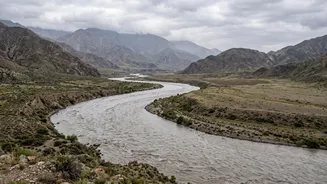
The catastrophic flood on the Melamchi River in June 2021 serves as a tragic, real-world example of this deadly sequence. While heavy monsoon rain played a role, researchers believe a complex chain of events high in the mountains was the primary cause. It is thought that a landslide, likely triggered by a combination of factors including glacier and permafrost melt, dumped enormous amounts of sediment into the river. This created a devastating debris flow that surged downstream, burying parts of Melamchi Bazaar, destroying homes, and wiping out a significant portion of Nepal's largest water supply project. The disaster highlighted the extreme vulnerability of communities and infrastructure located downstream from these high-altitude hazards.
A Shared Threat Across the Himalayas
This phenomenon of cascading disasters is not unique to Nepal. The entire Hindu Kush Himalaya region, including northern India, is at risk. Events like the 2012 Seti River flood in Nepal and the 2021 Chamoli disaster in India's Uttarakhand share similar characteristics: a high-altitude failure that triggers a deadly flow downstream. As glaciers continue to retreat at an accelerating rate, they are creating and expanding thousands of glacial lakes, many of which are unstable. These lakes pose a threat of Glacial Lake Outburst Floods (GLOFs), which can trigger the same deadly chain reaction of landslide and debris flow, with potentially transboundary consequences for millions who live in the Himalayan foothills and plains.