

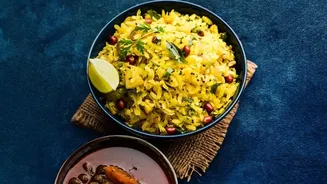
Vazhaithandu Poriyal (Banana Stem Stir-fry)
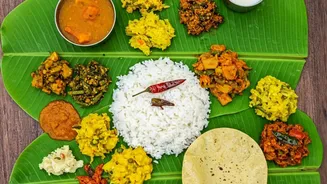
Don't discard the banana plant's inner stem after harvesting the fruit. In South India, this fibrous, crunchy, and mild-tasting core is transformed into a delicious and healthy stir-fry. Finely chopped banana stem is cooked with mustard seeds, lentils,
curry leaves, and a generous amount of fresh coconut. It's a masterclass in using the whole plant, offering a delightfully crunchy texture and a host of health benefits, including being rich in fibre.
Patra or Alu Vadi (Colocasia Leaf Rolls)
Known as Patra in Gujarat and Alu Vadi in Maharashtra, this dish uses large colocasia (or taro) leaves, which many wouldn't think to cook with. The leaves are smeared with a thick, spicy, and tangy paste of gram flour (besan), tamarind, jaggery, and spices. They are then rolled up, steamed, and either sliced and served or shallow-fried for a crispy finish. The result is a complex snack that hits sweet, sour, and spicy notes all at once.
Kathal or Panasakaya Koora (Raw Jackfruit Curry)
While ripe jackfruit is enjoyed as a fruit, its raw, unripe version has a uniquely meaty texture that makes it an incredible vegetable. Used across India, dishes like Kathal ki Sabzi or Panasakaya Koora treat raw jackfruit like a star. The raw fruit is cubed and cooked in a rich, spiced gravy, often with onions, tomatoes, ginger, and garlic, absorbing all the flavours to create a hearty, satisfying curry that can rival any meat-based dish.
Kumro Phool Bhaja (Pumpkin Flower Fritters)
Yes, you can eat flowers, and they are delicious! In Bengal and Kerala, delicate pumpkin blossoms are a seasonal delicacy. These bright yellow flowers are carefully cleaned, dipped in a simple batter of chickpea or rice flour seasoned with spices, and then fried until golden and crisp. The result, known as Kumro Phool Bhaja, is a wonderfully light and crunchy snack, often enjoyed with evening tea or as a side with a dal and rice meal.
Turai Ke Chilke Ki Sabzi (Ridge Gourd Peel Stir-fry)
This dish is the ultimate example of 'waste not, want not'. Instead of being thrown away, the peels of the ridge gourd (turai) are turned into a flavourful chutney or stir-fry, particularly in Andhra and other parts of India. The peels are stir-fried with spices, sometimes with lentils, coconut, or peanuts to add texture and flavour. It's a surprisingly tasty and nutritious dish that proves some of the best parts of a vegetable are the ones we usually discard.
Moringa Phool Sabzi (Drumstick Flower Curry)
While drumsticks (moringa) are a common ingredient in sambar, their delicate white flowers are often overlooked. However, these blossoms are edible and highly nutritious. In various parts of India, drumstick flowers are cooked into a simple but flavourful sabzi or curry, often stir-fried with onions, peas, and mild spices. Sometimes, they are also scrambled with eggs or made into cutlets. The flowers have a subtle flavour and a soft texture when cooked.
Kamal Kakdi Ki Sabzi (Lotus Stem Curry)
Lotus stem, or kamal kakdi, with its unique porous texture and mild, sweet taste, is a delicacy in many North Indian cuisines, especially in Sindhi and Punjabi households. The stems are sliced into rounds, revealing their beautiful natural pattern, and cooked in a variety of ways. A popular preparation involves a tangy tomato and onion-based gravy, where the crunchy texture of the lotus stem provides a wonderful contrast to the soft potatoes it is often paired with.
Kantola Sabzi (Teasel Gourd Stir-fry)
Teasel gourd, also known as spiny gourd or Kantola, is a monsoon vegetable that isn't as widely known as other gourds. It looks like a small, spiky bitter gourd but has a much milder taste. A simple stir-fry, or sabzi, is a popular way to prepare it. Sliced kantola is pan-fried with mustard seeds, curry leaves, and spices, sometimes with the addition of coconut, tamarind, and jaggery for a more complex flavour profile.